





Silicon Carbide (SiC) stands at the forefront of advanced materials, revolutionizing industries from automotive to aerospace, and most notably, semiconductors. Its exceptional properties – high thermal conductivity, extreme hardness, chemical inertness, and excellent high-temperature strength – make it indispensable for demanding applications. However, harnessing these properties requires sophisticated processing, and at the heart of this lies Silicon Carbide Sintering. This article explores the intricate world of SiC sintering, detailing various methods like pressureless sintering, hot pressing, and Spark Plasma Sintering (SPS), and their critical role in achieving high-performance components, especially for the burgeoning semiconductor industry. We will delve into the challenges of densifying SiC and how advancements in furnace technology are pivotal for success.
The Unrivaled Properties of Silicon Carbide for Advanced Applications
Silicon Carbide (SiC) is a compound semiconductor material composed of silicon and carbon. Its unique atomic structure, characterized by strong covalent bonds, imparts a suite of properties that are unmatched by many traditional materials. For instance, SiC boasts a wide bandgap, allowing devices to operate at much higher temperatures, voltages, and frequencies than silicon-based counterparts. This makes it ideal for power electronics, high-frequency devices, and harsh environment sensors.
Why SiC is Crucial for Semiconductors
In the semiconductor industry, the drive towards greater efficiency, smaller footprints, and higher power density is relentless. SiC-based power devices, such as MOSFETs and Schottky diodes, offer significantly lower switching losses and superior thermal performance. This translates into more compact, lighter, and more efficient power converters for electric vehicles, renewable energy systems, and industrial power supplies. Furthermore, SiC’s radiation hardness makes it suitable for space and defense applications where reliability under extreme conditions is paramount. Achieving the desired material properties and structural integrity for these high-stakes applications hinges entirely on effective Silicon Carbide Sintering processes.
Challenges in Silicon Carbide Sintering
Despite its remarkable properties, SiC is notoriously difficult to densify. Its highly covalent bonding, low self-diffusion coefficient, and high dissociation temperature (around 2500°C) make traditional sintering methods challenging. Without proper densification, SiC components can suffer from porosity, which severely compromises their mechanical strength, thermal conductivity, and electrical performance. The goal of Silicon Carbide Sintering is to achieve full density while maintaining a fine grain structure and preventing grain growth, which can degrade mechanical properties.
Overcoming Densification Hurdles
To overcome these challenges, various sintering aids and advanced techniques are employed. Sintering aids, typically boron and carbon or aluminum and carbon, are added in small quantities to lower the activation energy for diffusion and promote liquid phase formation at grain boundaries, facilitating material transport and densification at lower temperatures. However, the precise control of these aids and the sintering atmosphere is crucial to avoid undesirable phases or excessive grain growth.
Key Silicon Carbide Sintering Technologies
The quest for high-performance SiC components has led to the development and refinement of several advanced sintering techniques, each with its advantages and specific applications.
Pressureless Sintering (PLS)
Pressureless sintering is the most economically attractive method due to its scalability and ability to process complex shapes. It involves heating a green body (compacted SiC powder) with sintering aids in a controlled atmosphere (typically argon or vacuum) to high temperatures (2000-2250°C). While it offers cost benefits, achieving near-full density (typically >95%) with fine grain size can be challenging, often requiring precise control over powder characteristics, sintering aids, and furnace atmosphere. PLS is widely used for producing SiC components such as mechanical seals, nozzles, and structural parts.
Hot Pressing (HP)
Hot pressing combines high temperature with uniaxial pressure to enhance densification. The applied pressure significantly aids in compacting the SiC powder, reducing porosity and promoting grain boundary diffusion. This method is highly effective in producing fully dense (typically >99%) SiC with fine grain structures, leading to superior mechanical properties. Hot pressing is performed in specialized furnaces, often from a hot pressing furnace manufacturer, at temperatures ranging from 1900-2200°C and pressures up to 100 MPa. Its main drawbacks include limitations in component size and shape complexity, and higher processing costs compared to PLS. It is frequently used for high-performance applications like cutting tools, ballistic armor, and specialized semiconductor components where exceptional mechanical properties are critical.
Spark Plasma Sintering (SPS)
Spark Plasma Sintering, also known as Field Assisted Sintering Technique (FAST), is a relatively newer but rapidly growing technology. SPS utilizes pulsed direct current and uniaxial pressure to rapidly heat and densify materials. The electric current passes directly through the graphite die and the powder compact, generating localized heating and plasma discharges between powder particles. This allows for extremely fast heating rates and short holding times, minimizing grain growth and achieving high densities at lower temperatures compared to conventional methods. An SPS furnace manufacturer can provide systems capable of sintering SiC to near-theoretical density (often >99.5%) with very fine grain sizes, resulting in enhanced mechanical, thermal, and electrical properties. SPS is particularly attractive for research and development, and for producing complex, high-performance SiC components for microelectronics, thermoelectric devices, and advanced ceramics. Its ability to preserve nanostructures and achieve superior properties makes it invaluable for next-generation semiconductor applications.
Other Advanced Sintering Methods
Beyond these primary methods, other techniques contribute to the landscape of Silicon Carbide Sintering. Reaction Bonding (RB-SiC) involves infiltrating a porous carbon preform with molten silicon, which reacts to form SiC and fills the pores. This method allows for complex shapes and near-net-shape manufacturing with minimal shrinkage. Liquid Phase Sintering (LPS) of SiC uses additives that form a liquid phase at sintering temperatures, facilitating particle rearrangement and densification. This often involves oxide or nitride additives and can achieve high densities at relatively lower temperatures.
The Pivotal Role of Furnace Technology
The success of any SiC sintering process is inextricably linked to the capabilities of the furnace technology employed. Whether it’s the high-temperature stability required for pressureless sintering, the precise pressure and temperature control of hot pressing, or the rapid heating and cooling cycles of SPS, the furnace is the heart of the operation. A reliable vacuum furnace manufacturer or industrial vacuum furnace supplier plays a crucial role in providing the specialized equipment needed for these demanding processes.
Advancements in Vacuum Furnaces for SiC Sintering
Modern vacuum furnaces for SiC sintering feature advanced heating elements (e.g., graphite or tungsten), sophisticated temperature control systems, and robust vacuum pumping capabilities to achieve and maintain ultra-high vacuum environments. These features are critical for preventing contamination, controlling the sintering atmosphere, and ensuring uniform heating throughout the compact. For processes like hot pressing and SPS, the integration of high-pressure systems within the vacuum chamber requires specialized engineering expertise, often found with a dedicated hot pressing furnace manufacturer or SPS furnace manufacturer. The ability to precisely control temperature ramps, hold times, and cooling rates is paramount for optimizing microstructure and achieving the desired material properties for Silicon Carbide Sintering.
HAOYUE Furnace Technical Parameters for Silicon Carbide Sintering
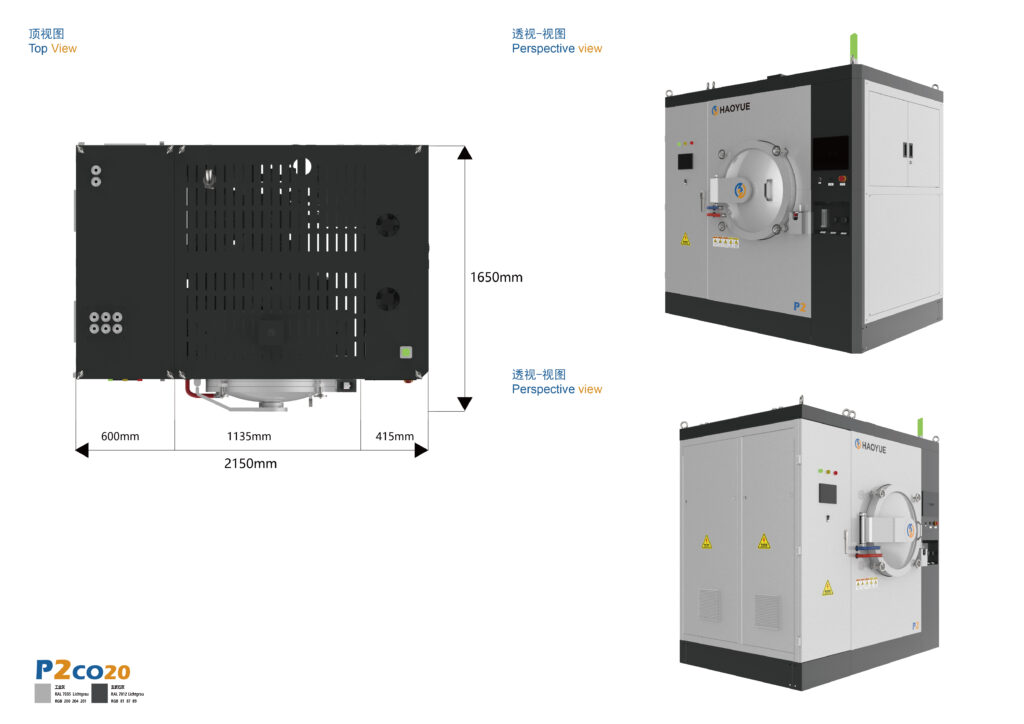
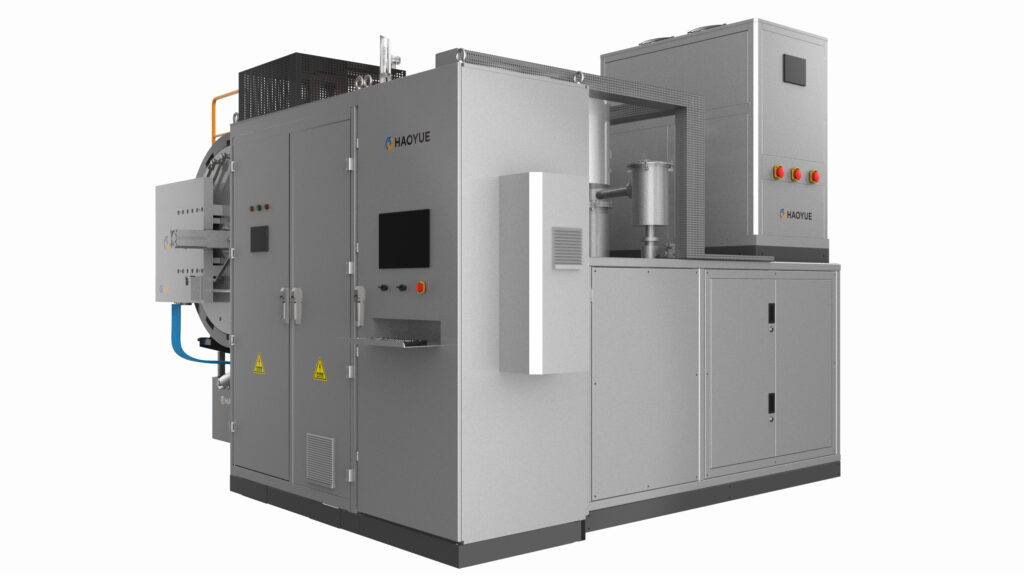
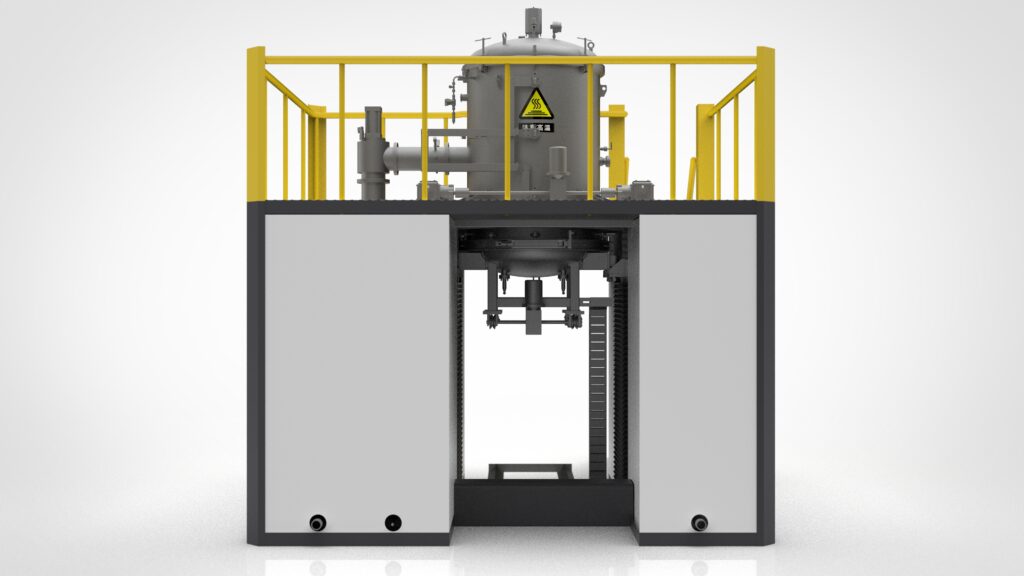
HAOYUE, as a leading industrial vacuum furnace supplier, offers advanced furnace solutions specifically designed for high-performance ceramic sintering, including Silicon Carbide. Our systems are engineered to meet the stringent requirements of SiC densification, ensuring optimal material properties for critical applications.
Typical HAOYUE Hot Pressing Furnace Specifications:
- Max Temperature: Up to 2300°C
- Working Temperature: 1800°C – 2200°C (customizable)
- Vacuum Level: 6.0 x 10⁻³ Pa (high vacuum)
- Pressure Range: 5 MPa – 200 MPa (adjustable uniaxial pressure)
- Heating Zone Size: Customizable, e.g., Ø200mm x H250mm, Ø300mm x H300mm
- Heating Elements: High-purity graphite or Molybdenum
- Temperature Uniformity: ±5°C
- Control System: PLC with HMI, fully automatic operation, data logging
- Cooling System: Internal and external water cooling, rapid cooling options
- Atmosphere: Vacuum, inert gas (Ar, N2)
Typical HAOYUE SPS Furnace Specifications:
- Max Temperature: Up to 2200°C
- Working Temperature: 1000°C – 2000°C
- Vacuum Level: 5.0 x 10⁻³ Pa
- Pressure Range: 5 kN – 200 kN (servo-hydraulic system)
- Pulsed DC Current: Up to 10,000 A (customizable)
- Heating Rate: Up to 1000°C/min
- Cooling Rate: Up to 200°C/min (water-cooled platen)
- Die Size: Customizable, e.g., Ø50mm, Ø100mm
- Control System: Advanced digital control for current, voltage, pressure, and temperature
- Atmosphere: Vacuum, inert gas (Ar)
Real Overseas Project Cases for Silicon Carbide Sintering
HAOYUE has a proven track record in delivering high-performance furnace solutions for Silicon Carbide Sintering to clients worldwide, enabling them to push the boundaries of material science and engineering.
Case Study 1: High-Density SiC for Ballistic Applications (Europe)
A leading European defense contractor approached HAOYUE seeking a robust hot pressing furnace to produce ultra-high-density SiC plates for advanced ballistic armor. The requirement was for SiC with a density exceeding 99.5% and a fine grain structure to maximize hardness and fracture toughness. HAOYUE supplied a custom-designed hot pressing furnace manufacturer system with enhanced pressure capabilities (up to 150 MPa) and a large heating zone (Ø400mm x H400mm) capable of uniform temperature distribution at 2150°C. The system included advanced vacuum control to prevent oxidation and ensure material purity. The client successfully achieved the desired SiC properties, leading to a significant improvement in their armor’s protective capabilities and securing a competitive edge.
Case Study 2: Nanostructured SiC for Semiconductor Substrates (Asia)
An Asian research institute specializing in next-generation semiconductor materials partnered with HAOYUE to acquire an SPS furnace for synthesizing nanostructured SiC substrates. Their objective was to develop SiC with tailored electrical and thermal properties for high-frequency power electronics. The HAOYUE SPS system, with its rapid heating/cooling rates and precise control over current and pressure, allowed the researchers to sinter SiC powders at lower temperatures and shorter durations, effectively suppressing grain growth and preserving the nanoscale features. This resulted in SiC materials with superior electron mobility and thermal conductivity, opening new avenues for compact and efficient semiconductor devices. The institute praised the system’s reliability and its contribution to their groundbreaking research in Silicon Carbide Sintering.
Case Study 3: Large-Scale SiC Components for Chemical Processing (North America)
A major North American chemical processing equipment manufacturer required large-scale SiC components, such as pump impellers and seal rings, known for their exceptional corrosion and wear resistance. They needed a high-capacity pressureless sintering furnace capable of processing multiple large parts simultaneously. HAOYUE delivered a custom industrial vacuum furnace with a large, uniform heating zone (Ø600mm x H800mm) and advanced inert gas recirculation for optimal atmosphere control during the Silicon Carbide Sintering process. The furnace achieved excellent temperature uniformity at 2200°C, ensuring consistent densification across all components. This enabled the client to significantly increase their production throughput while maintaining the high quality and performance demanded by their industry.
Frequently Asked Questions about Silicon Carbide Sintering
Q1: What are the primary advantages of SiC components in semiconductor applications?
A1: SiC components offer significant advantages in semiconductor applications due to their wide bandgap, high thermal conductivity, and high breakdown electric field. These properties enable devices to operate at higher temperatures, voltages, and frequencies, leading to higher power density, greater efficiency, and reduced cooling requirements compared to traditional silicon-based devices. This is crucial for power electronics, electric vehicles, and renewable energy systems.
Q2: Why is densification so challenging for Silicon Carbide?
A2: Densifying Silicon Carbide is challenging primarily due to its strong covalent bonds and low self-diffusion coefficient. SiC does not melt but rather dissociates at very high temperatures (above 2500°C), making liquid phase sintering difficult without additives. The high activation energy for atomic diffusion means that very high temperatures are required, which can lead to excessive grain growth and degradation of mechanical properties if not carefully controlled. Advanced sintering techniques and aids are essential to overcome these hurdles.
Q3: What is the main difference between hot pressing and Spark Plasma Sintering (SPS) for SiC?
A3: Both hot pressing and SPS use uniaxial pressure during sintering, but they differ significantly in their heating mechanisms and rates. Hot pressing uses external resistance heating to uniformly heat the sample, typically with slower heating rates and longer hold times. SPS, on the other hand, uses pulsed direct current passing directly through the powder compact and die, leading to extremely rapid internal heating and very short sintering cycles. This rapid heating in SPS helps to minimize grain growth and achieve higher densities at relatively lower temperatures, making it ideal for nanostructured materials and applications requiring precise microstructure control. An SPS furnace manufacturer specializes in these rapid thermal processing systems.
Q4: How do sintering aids improve Silicon Carbide Sintering?
A4: Sintering aids, such as boron and carbon, or aluminum and carbon, are crucial for facilitating the densification of SiC. They work by forming a liquid phase at grain boundaries at lower temperatures than SiC’s dissociation point, which enhances material transport mechanisms like liquid-phase diffusion and particle rearrangement. Additionally, these aids can reduce the activation energy for solid-state diffusion, promoting neck growth between particles and pore elimination. The careful selection and precise quantity of sintering aids are vital to achieve high density without introducing undesirable phases or excessive grain growth.
Q5: What role does a vacuum furnace manufacturer play in SiC component production?
A5: A vacuum furnace manufacturer provides the specialized equipment essential for Silicon Carbide Sintering. These furnaces offer the high temperatures, controlled atmospheres (vacuum or inert gas), and often the integrated pressure systems required for methods like pressureless sintering, hot pressing, and SPS. Their expertise ensures the precise control of temperature, pressure, and vacuum levels, which are critical for achieving the desired densification, microstructure, and purity of SiC components. Without advanced furnace technology, the high-performance properties of SiC could not be fully realized for demanding applications like semiconductors.
The journey to unlocking the full potential of Silicon Carbide for high-performance applications, particularly in the semiconductor industry, is a testament to continuous innovation in material science and furnace technology. From the foundational understanding of SiC’s unique properties to the intricate dance of temperature, pressure, and sintering aids, each step is critical. As the demand for more efficient, robust, and compact electronic devices grows, the role of advanced Silicon Carbide Sintering techniques and the specialized equipment from an industrial vacuum furnace supplier will only become more pronounced. The ability to precisely control the microstructure and achieve near-theoretical density ensures that SiC components can reliably perform in the most challenging environments, driving forward the next generation of technological advancements.
Related Products & Services
- SPS Spark Plasma Sintering System – High-performance SPS solutions from HaoYue Group.
- SPS Spark Plasma Sintering System
- Vacuum Hot Press Furnace
Looking for high-quality vacuum furnace solutions? Contact HaoYue Group today.
Related Products & Services
- SPS Spark Plasma Sintering System – High-performance SPS solutions from HaoYue Group.
- SPS Spark Plasma Sintering System
- Vacuum Hot Press Furnace
Looking for high-quality vacuum furnace solutions? Contact HaoYue Group for more information.
Related Products & Services
Looking for high-quality vacuum furnace solutions? Contact HaoYue Group for more information.
Frequently Asked Questions
What makes Silicon Carbide a superior choice for semiconductor applications over traditional materials?
Silicon Carbide's wide bandgap enables devices to operate at higher temperatures, voltages, and frequencies compared to silicon-based materials. This results in lower switching losses and better thermal performance, making SiC ideal for power electronics and high-frequency devices.
Why is densification a significant challenge in Silicon Carbide Sintering?
Densification is tough due to SiC's highly covalent bonding, low self-diffusion coefficient, and high dissociation temperature. These factors make traditional sintering challenging, often leading to porosity that compromises mechanical strength and thermal conductivity.
How do sintering aids contribute to the Silicon Carbide sintering process?
Sintering aids like boron and carbon help lower the activation energy for diffusion and promote liquid phase formation at grain boundaries. This facilitates material transport and densification at lower temperatures, crucial for overcoming SiC's densification challenges.
What role does Spark Plasma Sintering (SPS) play in Silicon Carbide processing?
Spark Plasma Sintering (SPS) allows for rapid heating and cooling rates, providing precise control over the sintering process. This helps achieve full density and a fine grain structure in SiC components, improving their mechanical and thermal properties.
Why is Silicon Carbide preferred for space and defense applications?
Silicon Carbide's radiation hardness and ability to perform reliably under extreme conditions make it ideal for space and defense applications. Its superior thermal and electrical performance ensures dependable functionality in harsh environments.
What are the advantages of pressureless sintering for Silicon Carbide components?
Pressureless sintering is economically attractive due to its scalability and ability to process complex shapes. It involves heating SiC powder with sintering aids in a controlled atmosphere, offering cost benefits while aiming for near-full density.