





Achieving optimal silicon carbide (SiC) properties is a meticulous process, heavily reliant on two fundamental pillars: the quality and characteristics of the raw materials, and the precision and capability of the sintering furnace. For procurement engineers, a detailed guide on these considerations is not just beneficial, but essential for ensuring the final product meets stringent performance demands. The journey to superior SiC components begins long before the actual sintering, with careful attention to SiC powder characteristics and the strategic use of sintering additives, both of which profoundly impact the final product quality. Effective vacuum sintering furnace manufacturer selection and understanding critical furnace features, especially high-temperature stability and atmosphere control, are paramount for successful silicon carbide sintering.
The Foundation: Raw Material Considerations for Silicon Carbide Sintering
Silicon carbide is celebrated for its exceptional hardness, high-temperature strength, chemical inertness, and excellent thermal conductivity. These properties make it indispensable in industries ranging from aerospace and automotive to semiconductors and nuclear energy. However, unlocking its full potential hinges on the quality of the starting SiC powder and the intelligent application of sintering aids.
Silicon Carbide Powder Characteristics: Purity, Particle Size, and Morphology
The inherent properties of the SiC powder dictate much of the final sintered product’s performance. Procurement engineers must scrutinize several key characteristics:
- Purity: High purity SiC powder (typically >99.5%) is crucial. Impurities, even in trace amounts, can act as grain growth inhibitors, create defects, or lead to undesirable secondary phases during sintering, compromising mechanical strength and thermal properties. Oxygen content, in particular, must be minimized as it can form SiO2, hindering densification.
- Particle Size and Distribution: Finer powders (sub-micron to nanometer range) offer a larger surface area, promoting higher diffusion rates and lower sintering temperatures. A narrow particle size distribution is preferred to ensure uniform packing density in the green body, which translates to homogeneous shrinkage and reduced porosity in the final product. Agglomeration of fine particles, however, can lead to non-uniform density and defects.
- Particle Morphology: The shape of SiC particles can influence green body packing density and sintering behavior. Equiaxed or spherical particles generally pack more efficiently than irregularly shaped ones, leading to higher green densities and better densification during silicon carbide sintering.
The Role of Sintering Additives in Silicon Carbide Sintering
Unlike many ceramics, SiC is difficult to sinter to full density without external assistance due to its strong covalent bonding and low self-diffusion coefficients. Sintering additives are therefore critical, facilitating densification at lower temperatures and preventing excessive grain growth. The most common additives include boron (B), carbon (C), and aluminum (Al), often used in combinations.
- Boron (B): Typically added as elemental boron or boron carbide (B4C), boron plays a vital role in inhibiting grain boundary mobility. It segregates to grain boundaries, reducing their energy and thereby suppressing grain growth. This allows for higher densification before coarsening becomes dominant.
- Carbon (C): Often introduced as a carbon black or phenolic resin, carbon acts as an oxygen scavenger. It reacts with surface SiO2 layers on SiC particles, forming volatile CO or SiO, which removes oxygen impurities that would otherwise hinder densification. Carbon also helps to prevent decomposition of SiC at high temperatures.
- Aluminum (Al): When used in conjunction with boron and carbon, aluminum (often as AlN or Al2O3) can further enhance densification by forming a liquid phase at grain boundaries at lower temperatures, facilitating mass transport. However, its use requires careful control as it can lead to undesired phase formation or reduced high-temperature strength if not properly managed.
The precise combination and concentration of these additives are critical and depend on the desired final properties and the specific SiC powder used. An experienced vacuum furnace manufacturer can often offer insights into optimal additive strategies.
The Crucible of Creation: Furnace Selection for Optimal Silicon Carbide Sintering
Once the raw materials are meticulously prepared, the next critical step is selecting the right furnace. Silicon carbide sintering demands extreme conditions, primarily ultra-high temperatures and precisely controlled atmospheres, to achieve dense, high-performance components.
Critical Furnace Features for High-Performance SiC Sintering
- High-Temperature Capability: SiC typically sinters at temperatures between 1900°C and 2300°C, often requiring even higher temperatures for specialized applications. The furnace must be capable of reliably reaching and sustaining these temperatures for extended periods without degradation of its internal components.
- Atmosphere Control: This is perhaps the most critical feature. SiC is prone to decomposition and oxidation at high temperatures. Therefore, sintering is almost exclusively performed under vacuum or in an inert gas atmosphere (e.g., argon).
- Vacuum Sintering: A high vacuum environment (typically 10^-3 to 10^-5 mbar) is excellent for removing volatile impurities and preventing oxidation. It also helps in the removal of gaseous reaction products from sintering additives. A robust vacuum sintering furnace manufacturer will design systems with powerful pumping capabilities and leak-tight chambers.
- Inert Gas Sintering: For certain applications or to mitigate SiC decomposition at very high temperatures, a slightly positive pressure of an inert gas like argon is used. This helps suppress the evaporation of silicon from the SiC lattice.
- Heating Elements and Insulation: Furnaces operating at SiC sintering temperatures typically use graphite or refractory metal (e.g., tungsten, molybdenum) heating elements. Graphite is common due to its high melting point and good electrical conductivity, but it reacts with oxygen, necessitating vacuum or inert atmospheres. Multi-layer graphite felt or carbon fiber composite insulation provides excellent thermal efficiency at these extreme temperatures.
- Temperature Uniformity and Control: Achieving consistent properties across the entire SiC component or batch requires exceptional temperature uniformity throughout the hot zone. Advanced control systems with multiple thermocouples or pyrometers and precise power modulation are essential to maintain tight temperature tolerances and execute complex sintering profiles.
- Rapid Heating and Cooling Rates: While not always critical for densification, the ability to achieve controlled rapid heating and cooling can optimize microstructure and reduce processing time, enhancing throughput.
Types of Furnaces for Silicon Carbide Sintering
Several types of high-temperature furnaces are employed for silicon carbide sintering, each offering distinct advantages:
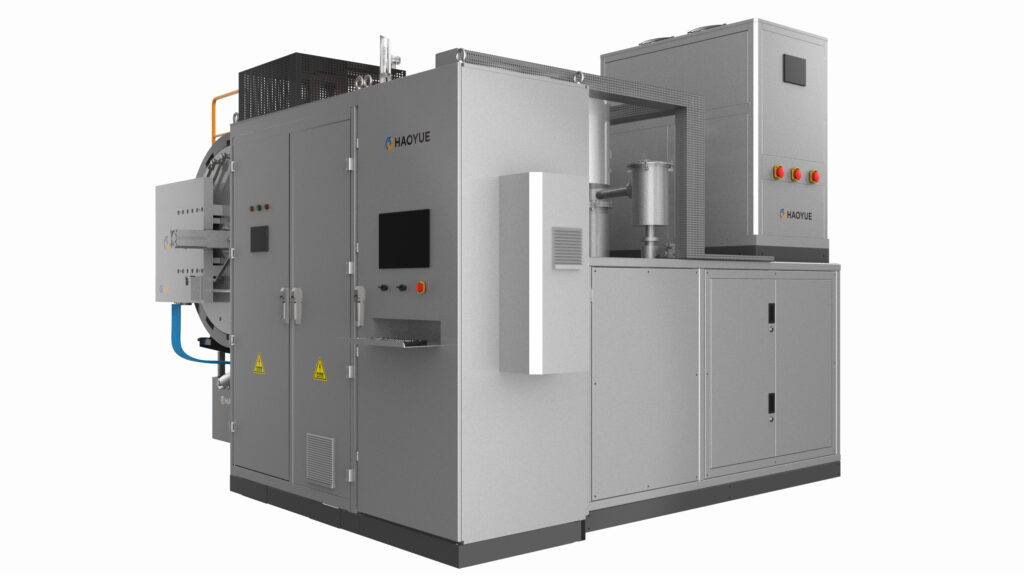
- Vacuum Sintering Furnaces: These are the workhorses for producing pressureless sintered SiC. They provide the necessary high vacuum and ultra-high temperatures, allowing for the removal of gaseous byproducts and prevention of oxidation. A reputable vacuum sintering furnace manufacturer will offer customizable solutions for specific SiC applications.
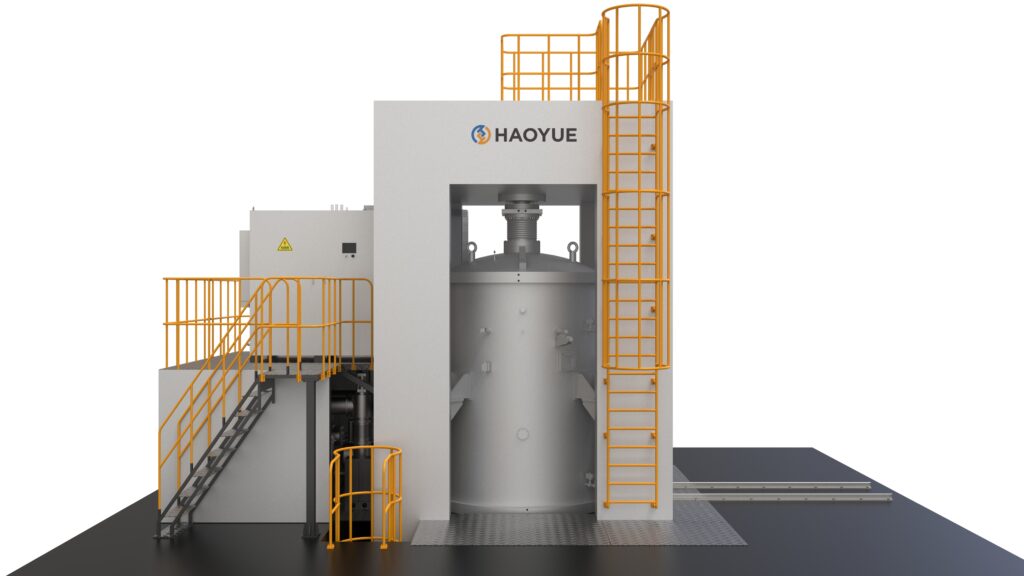
- Hot Pressing Furnaces: For applications requiring maximum density and fine grain size, hot pressing is often employed. In a hot pressing furnace, the SiC powder compact is simultaneously subjected to high temperature and uniaxial pressure. This combination significantly enhances densification by accelerating mass transport mechanisms and suppressing grain growth. This method is particularly effective for difficult-to-sinter materials and for achieving near-theoretical density. Partnering with a specialized hot pressing furnace manufacturer is crucial for this advanced technique.
- Spark Plasma Sintering (SPS) Furnaces: SPS, also known as Field Assisted Sintering Technique (FAST), is a relatively newer method that uses pulsed direct current to rapidly heat and densify materials under pressure. The rapid heating rates (up to hundreds of degrees Celsius per minute) and shorter dwell times minimize grain growth, leading to very fine-grained, high-density SiC. While capital intensive, SPS offers significant advantages in terms of processing time and microstructural control. An SPS furnace manufacturer can provide systems capable of processing SiC efficiently.
- Hot Isostatic Pressing (HIP) Furnaces: While not a primary sintering method for SiC, HIP is often used as a post-sintering densification step. After initial sintering, components with closed porosity can be subjected to high temperature and isotropic gas pressure in a hot isostatic press manufacturer furnace to eliminate residual porosity, further improving mechanical properties.
Partnering with Expertise: The Role of Specialized Manufacturers
Given the complexity and stringent requirements of silicon carbide sintering, partnering with experienced and specialized furnace manufacturers is not merely a convenience but a strategic necessity. A leading industrial vacuum furnace supplier or a dedicated vacuum heat treatment furnace manufacturer brings invaluable expertise in designing, building, and optimizing equipment for these demanding applications. They can provide guidance on furnace selection, customization, and process parameters, ensuring that the chosen system aligns perfectly with the material characteristics and desired output. Their knowledge extends to integrating advanced control systems, ensuring robust safety features, and providing ongoing technical support, all of which are critical for consistent, high-quality SiC production.
HAOYUE Furnace Technical Parameters for SiC Sintering (Example)
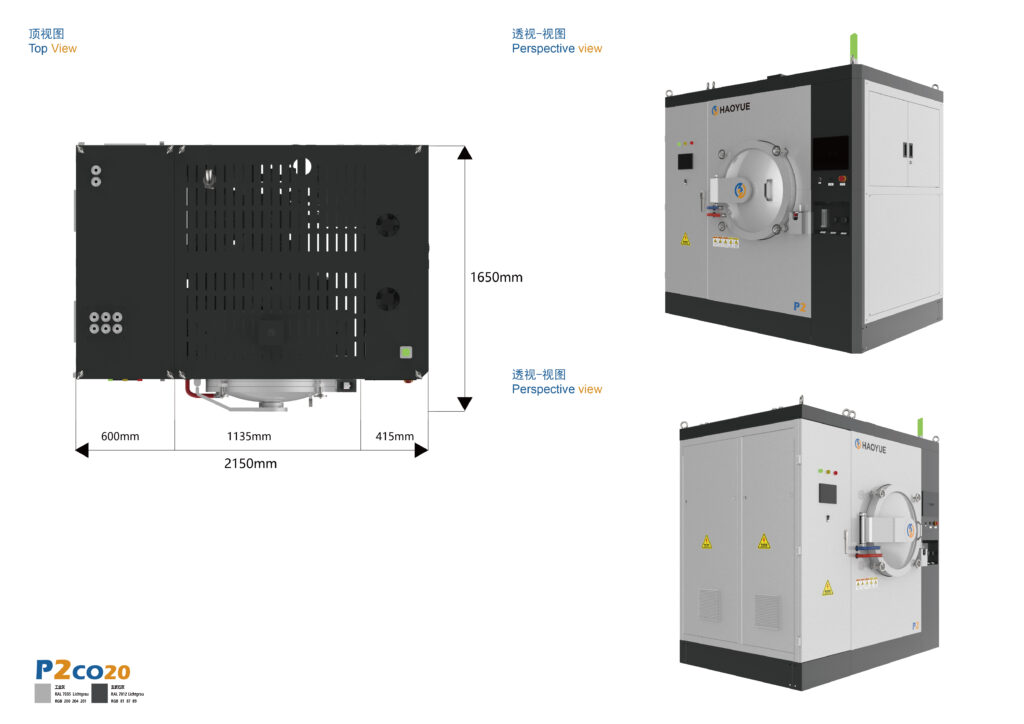
HAOYUE, as a leading manufacturer in high-temperature processing solutions, offers advanced vacuum furnaces perfectly suited for silicon carbide sintering. A typical technical configuration for a HAOYUE SiC sintering furnace might include:
- Model: HAOYUE HV-SiC-2200-VIG
- Max. Operating Temperature: 2200°C (up to 2300°C for short durations)
- Working Zone Dimensions: Ø300mm x H400mm (customizable)
- Ultimate Vacuum: 5 x 10^-4 Pa (5 x 10^-6 mbar)
- Leak Rate: < 5 x 10^-3 Pa·L/s
- Temperature Uniformity: ±5°C within working zone at 2000°C
- Heating Elements: High-purity graphite (or optional Tungsten/Molybdenum)
- Insulation: Multi-layer graphite felt and carbon fiber composite
- Cooling System: Internal heat exchanger with high-flow inert gas (e.g., Argon) forced convection cooling
- Control System: PLC-based with touch screen HMI, multi-segment programmable temperature profiles, data logging, and remote monitoring capabilities.
- Protective Atmosphere: Vacuum, Argon, Nitrogen (selectable)
- Power Supply: Three-phase, 380V/50Hz (customizable per region)
Real Overseas Project Cases for HAOYUE SiC Furnaces
HAOYUE has successfully deployed its advanced furnace solutions for silicon carbide sintering across various international markets, empowering manufacturers to push the boundaries of material science:
Case Study 1: High-Purity SiC Components for Semiconductor Industry (Germany)
A leading German semiconductor equipment manufacturer required a specialized vacuum sintering furnace for producing ultra-high-purity silicon carbide components, critical for plasma etching chambers. HAOYUE delivered a custom HV-SiC-2200-VIG furnace with enhanced vacuum integrity and precise temperature control. The system enabled the client to consistently achieve SiC parts with >99.99% purity, sub-micron grain size, and excellent plasma resistance, significantly improving the performance and lifespan of their etching equipment. The robust design and reliable operation of the HAOYUE furnace led to a 20% increase in production yield for their SiC components.
Case Study 2: Large-Scale SiC Armor Plate Production (South Korea)
A South Korean defense contractor sought a large-capacity hot pressing furnace to manufacture high-density silicon carbide armor plates for ballistic protection. HAOYUE collaborated closely with the client to design and install a custom hot pressing furnace (HY-HP-SiC-1800) capable of processing large SiC green bodies under high pressure (up to 100 MPa) and temperatures up to 2100°C. The furnace featured a specialized hydraulic system and advanced pyrometric temperature sensing for uniform heating across the large working area. This solution allowed the client to produce SiC armor plates with significantly improved fracture toughness and ballistic performance, meeting stringent military specifications and reducing manufacturing costs by optimizing the densification process.
Frequently Asked Questions (FAQ)
Q1: Why is SiC so difficult to sinter to full density?
A1: Silicon carbide has strong covalent bonds and a low self-diffusion coefficient, meaning atoms do not easily move and rearrange at typical sintering temperatures. This makes it resistant to densification. Additionally, SiC can decompose at very high temperatures, further complicating the process. Sintering aids and controlled atmospheres are essential to overcome these challenges.
Q2: What are the main advantages of using vacuum sintering for SiC?
A2: Vacuum sintering offers several key advantages for SiC. It effectively removes volatile impurities and gaseous reaction products (like CO from carbon additives), which would otherwise hinder densification. It also prevents oxidation of SiC at high temperatures, which is crucial for maintaining material integrity and performance. The low partial pressure in a vacuum environment can also suppress some decomposition reactions.
Q3: How do sintering additives like Boron and Carbon work in SiC sintering?
A3: Boron (often as B4C) primarily acts as a grain growth inhibitor by segregating to grain boundaries, allowing more time for densification before grains coarsen excessively. Carbon (e.g., carbon black) is a critical oxygen scavenger; it reacts with surface SiO2 layers on SiC particles, forming volatile CO or SiO, thereby removing oxygen that would impede sintering and promote undesirable phases.
Q4: Can SiC be sintered without any pressure?
A4: Yes, SiC can be pressureless sintered, but it typically requires the use of sintering additives (like B+C or B+C+Al) and very high temperatures (1900-2300°C) in a controlled atmosphere (vacuum or inert gas). Pressure-assisted techniques like hot pressing or SPS achieve higher densities and finer microstructures, often at lower temperatures or in shorter times, but pressureless sintering is widely used for cost-effective production of complex shapes.
Q5: What are the key considerations for furnace maintenance in SiC sintering applications?
A5: Due to the extreme temperatures and often corrosive environments (from volatile byproducts), regular maintenance is crucial. This includes inspecting and replacing heating elements (graphite or refractory metals) and insulation (graphite felt) for wear and degradation. Vacuum pump oil changes, leak detection, and calibration of temperature sensors are also vital to ensure consistent performance and prolong furnace lifespan. A robust maintenance schedule from your vacuum furnace manufacturer is highly recommended.
The successful production of high-performance silicon carbide components is a testament to the synergistic interplay between advanced material science and cutting-edge engineering. From the meticulous selection and preparation of SiC powders and sintering additives to the precision and control offered by state-of-the-art sintering furnaces, every step is critical. Procurement engineers, by understanding these intricate details and by forging strong partnerships with specialized vacuum brazing furnace manufacturer or other high-temperature furnace experts, can ensure the delivery of SiC materials that meet the ever-increasing demands of modern industries, paving the way for innovations in high-temperature, high-strength applications.
Related Products & Services
- Vacuum Sintering Furnace – Advanced sintering solutions from HaoYue Group.
- SPS Spark Plasma Sintering System – High-performance SPS solutions from HaoYue Group.
- SPS Spark Plasma Sintering System
Looking for high-quality vacuum furnace solutions? Contact HaoYue Group today.
Related Products & Services
- Vacuum Sintering Furnace – Advanced sintering solutions from HaoYue Group.
- SPS Spark Plasma Sintering System – High-performance SPS solutions from HaoYue Group.
- SPS Spark Plasma Sintering System
Looking for high-quality vacuum furnace solutions? Contact HaoYue Group for more information.
Related Products & Services
- Vacuum Sintering Furnace – Advanced sintering solutions from HaoYue Group.
- SPS Spark Plasma Sintering System
- SPS Spark Plasma Sintering System
Looking for high-quality vacuum furnace solutions? Contact HaoYue Group for more information.
Frequently Asked Questions
Why is high purity SiC powder crucial for silicon carbide sintering?
High purity SiC powder, typically greater than 99.5%, is essential because impurities can inhibit grain growth, create defects, and lead to undesirable secondary phases during sintering. These issues compromise the mechanical strength and thermal properties of the final product, making purity a critical factor for achieving optimal silicon carbide properties.
How does particle size and distribution affect the silicon carbide sintering process?
Finer SiC powders with sub-micron to nanometer range sizes offer larger surface areas, promoting higher diffusion rates and requiring lower sintering temperatures. A narrow particle size distribution ensures uniform packing density in the green body, leading to homogeneous shrinkage and reduced porosity in the final product. However, agglomeration can cause non-uniform density and defects.
What role do sintering additives play in the densification of silicon carbide?
Sintering additives such as boron, carbon, and aluminum are critical for facilitating densification of SiC at lower temperatures. These additives help overcome SiC's strong covalent bonding and low self-diffusion coefficients, preventing excessive grain growth and aiding in achieving full density in the sintered product.
How does the morphology of SiC particles influence the sintering process?
The shape of SiC particles affects the packing density and sintering behavior of the green body. Equiaxed or spherical particles typically pack more efficiently than irregularly shaped ones, resulting in higher green densities and better densification during sintering. This efficient packing is crucial for achieving a high-quality final product.
Why is atmosphere control in sintering furnaces important for silicon carbide?
Atmosphere control in sintering furnaces is vital because it influences the chemical reactions and phase stability of the materials being sintered. For silicon carbide, maintaining the right atmosphere helps prevent unwanted reactions, such as oxidation, and ensures the additives perform effectively, leading to optimal densification and material properties.