





This article explores the critical applications of vacuum sintering furnaces in producing high-performance components for aerospace and advanced ceramic industries. It delves into the processing technology, highlighting how vacuum conditions prevent oxidation and ensure material purity, crucial for powder metallurgy parts. We’ll discuss how a leading vacuum sintering furnace manufacturer innovates to meet stringent industry demands, often working in conjunction with a hot isostatic press manufacturer to achieve optimal densification and mechanical properties. Procurement engineers should consider throughput and precise temperature control when evaluating an industrial vacuum furnace supplier.
The Unseen Revolution: Why Vacuum Sintering is Critical for Aerospace
The aerospace industry operates at the pinnacle of engineering, where every component must meet extraordinary standards for strength, durability, and reliability. From jet engine turbine blades to structural airframe parts and rocket propulsion systems, the materials used must withstand extreme temperatures, pressures, and corrosive environments. Traditional manufacturing methods often fall short in delivering the purity and integrity required for these demanding applications. This is where vacuum sintering emerges as a transformative technology.
Vacuum sintering, a specialized form of powder metallurgy, involves heating compacted powder metal parts to just below their melting point in a controlled vacuum environment. The vacuum prevents oxidation and contamination, which are common issues in atmospheric sintering and can severely compromise material properties. By removing interstitial gases and volatile impurities, vacuum sintering ensures the creation of components with superior density, reduced porosity, enhanced mechanical strength, and improved corrosion resistance. This process is indispensable for advanced materials like superalloys, refractory metals, and ceramics, which are the backbone of modern aerospace technology.
Advanced Materials and Their Demanding Requirements
Aerospace components frequently utilize materials such as nickel-based superalloys for hot sections of engines, titanium alloys for lightweight structural parts, and specialized ceramics for thermal protection systems. Each of these materials presents unique challenges during processing:
- Superalloys: Known for their excellent strength at high temperatures, superalloys often contain reactive elements like aluminum and titanium, which readily oxidize. Vacuum sintering protects these elements, ensuring the formation of a homogeneous microstructure crucial for performance.
- Titanium Alloys: Valued for their high strength-to-weight ratio, titanium alloys are highly susceptible to contamination by oxygen and nitrogen. A vacuum sintering furnace manufacturer provides equipment that maintains ultra-high vacuum levels, preventing embrittlement and maintaining ductility.
- Advanced Ceramics: Materials like silicon carbide and silicon nitride offer extreme hardness and wear resistance. Sintering ceramics in a vacuum can achieve higher densities and improved mechanical properties by removing binders and impurities without degradation.
The precision offered by vacuum sintering means that components can be manufactured with complex geometries and intricate internal structures, which are often impossible to achieve with conventional casting or machining alone. This capability opens doors for innovative designs that enhance performance and reduce weight, directly impacting fuel efficiency and operational costs in aircraft and spacecraft.
The Technology Behind High-Performance Sintering Furnaces
A state-of-the-art vacuum sintering furnace manufacturer leverages cutting-edge technology to deliver the precise control and reliability required by industries like aerospace. Key features of these advanced furnaces include:
Precision Temperature Control and Uniformity
Achieving uniform temperature distribution throughout the furnace chamber is paramount for consistent material properties. Advanced vacuum furnaces incorporate multiple heating zones, sophisticated insulation, and precise temperature sensors to maintain gradients within very narrow tolerances. This ensures that every part in a batch undergoes identical thermal cycles, preventing warping, cracking, or inconsistent densification. The ability to program complex temperature profiles, including ramp rates, dwell times, and cooling rates, is essential for optimizing the microstructure and mechanical properties of diverse materials.
High Vacuum Levels and Gas Management
The heart of vacuum sintering lies in its ability to create and maintain high vacuum levels. Modern furnaces employ multi-stage pumping systems, often combining roughing pumps with high-vacuum pumps (e.g., diffusion pumps or turbo-molecular pumps), to achieve pressures down to 10-5 Pa or lower. Beyond just vacuum, precise gas management systems allow for partial pressure sintering, where specific inert gases (like argon or nitrogen) are introduced at controlled pressures. This technique can be crucial for controlling grain growth, preventing evaporation of alloying elements, or facilitating specific chemical reactions during the sintering process.
Automation and Process Control
Contemporary vacuum sintering furnaces are highly automated, featuring advanced PLC (Programmable Logic Controller) systems and human-machine interfaces (HMIs). These systems enable operators to program, monitor, and record every aspect of the sintering cycle. Real-time data logging, alarm systems, and remote diagnostics enhance operational efficiency, ensure process repeatability, and facilitate quality control. Such automation minimizes human error and allows for lights-out operation, reducing labor costs and improving overall productivity.
HAOYUE Furnace Technical Parameters and Offerings
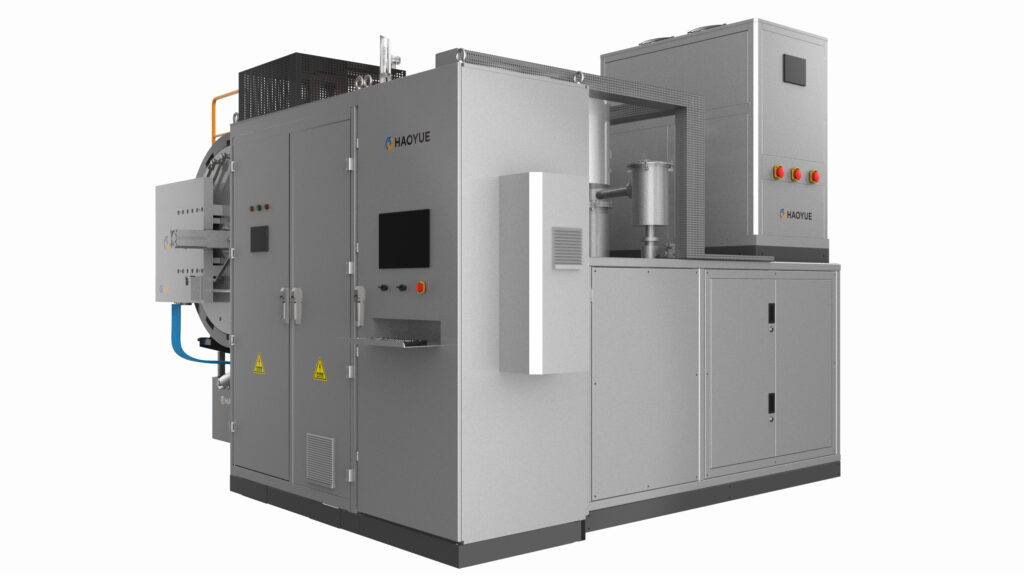
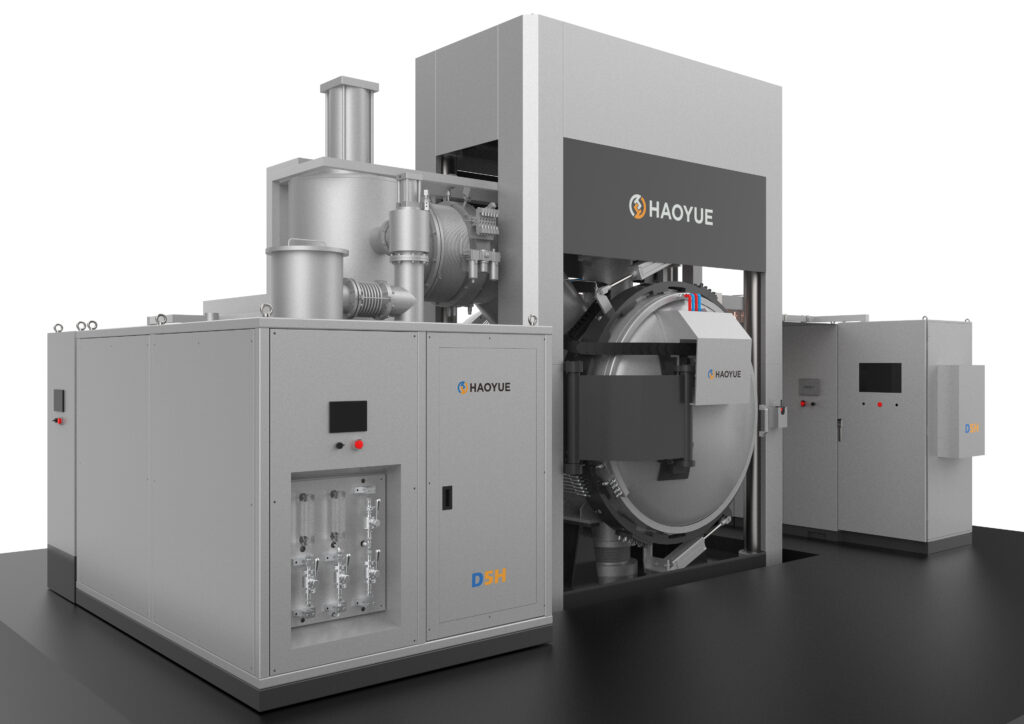
As a prominent vacuum furnace manufacturer, HAOYUE offers a range of high-performance vacuum sintering furnaces designed to meet the rigorous demands of aerospace and other advanced manufacturing sectors. Our furnaces are engineered for reliability, efficiency, and precision, ensuring optimal results for complex material processing.
Typical HAOYUE Vacuum Sintering Furnace Specifications:
- Working Temperature: Up to 2200°C (depending on model and application).
- Heating Elements: Graphite, Molybdenum, or Tungsten, selected based on temperature requirements and process atmosphere.
- Vacuum Level: Achievable vacuum down to 6.7 x 10⁻⁴ Pa (5 x 10⁻⁶ Torr) for ultra-high purity applications.
- Temperature Uniformity: Typically ±5°C or better across the hot zone.
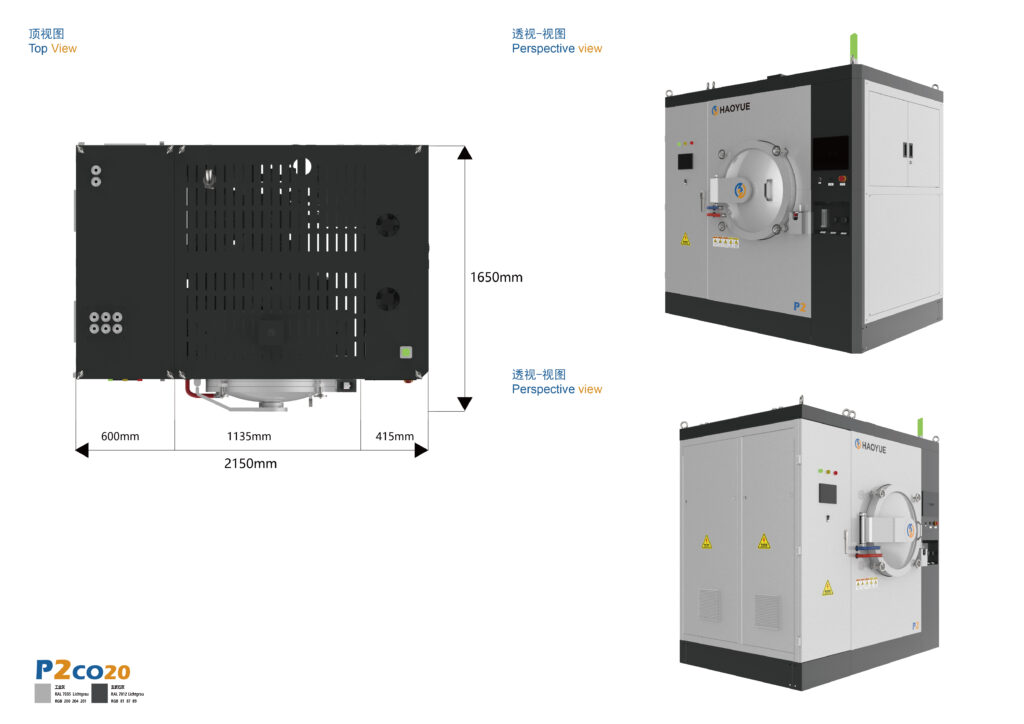
- Hot Zone Dimensions: Customizable to client specifications, ranging from laboratory-scale to large industrial production units.
- Pumping System: Configurable with mechanical pumps, roots pumps, diffusion pumps, or turbo-molecular pumps to achieve desired vacuum levels and pump-down times.
- Control System: PLC-based with touch screen HMI, supporting multi-segment temperature programming, data logging, and alarm functions.
- Cooling System: Internal or external rapid cooling options, including inert gas quench, to optimize material microstructure and reduce cycle times.
- Atmosphere Options: Full vacuum, partial pressure (Argon, Nitrogen), or hydrogen atmosphere capabilities for specific reactive processes.
- Safety Features: Comprehensive interlocks, over-temperature protection, emergency stop, and pressure relief systems in compliance with international standards.
HAOYUE also specializes in custom solutions, working closely with clients to design and manufacture furnaces tailored to unique process requirements. Whether it’s a vacuum heat treatment furnace manufacturer or a vacuum brazing furnace manufacturer, the core principles of precision and reliability remain central to our engineering philosophy.
Real Overseas Project Cases: HAOYUE’s Global Impact
HAOYUE’s commitment to delivering high-quality vacuum technology extends worldwide, with numerous successful installations in demanding industries. These projects underscore our capability to provide robust and effective solutions for advanced material processing.
Case Study 1: High-Density Ceramic Components for European Aerospace Supplier
A leading European supplier of aerospace engine components required a specialized vacuum sintering furnace for producing high-density silicon nitride parts. The challenge was to achieve near-theoretical density while maintaining precise dimensional control and minimizing grain growth. HAOYUE designed and delivered a custom furnace with a high-temperature graphite hot zone and an advanced partial pressure sintering capability. The furnace consistently achieved densities exceeding 99% of theoretical, with exceptional batch-to-batch repeatability, significantly improving the client’s production yield and component performance. This project solidified HAOYUE’s reputation as a reliable vacuum sintering furnace manufacturer in the global market.
Case Study 2: Sintering of Superalloys for North American Turbine Manufacturer
A major North American turbine blade manufacturer needed a large-capacity vacuum sintering furnace for nickel-based superalloy components. The primary requirements were ultra-high vacuum levels to prevent oxygen contamination and rapid cooling capabilities to control microstructure. HAOYUE supplied a furnace equipped with a powerful turbo-molecular pumping system and an integrated inert gas quenching system. The furnace achieved vacuum levels down to 10-5 Pa and reduced cooling times by 40% compared to previous equipment, leading to improved material properties and increased throughput for the client. This successful deployment highlighted our expertise as an industrial vacuum furnace supplier.
Case Study 3: Refractory Metal Parts for Asian Electronics Industry
While not strictly aerospace, this case demonstrates the versatility of HAOYUE’s vacuum sintering technology. An Asian electronics manufacturer required a furnace for sintering tungsten and molybdenum components used in high-power semiconductor devices. These materials demand extremely high temperatures and a highly reducing environment. HAOYUE provided a furnace with a tungsten hot zone capable of reaching 2000°C and precise hydrogen partial pressure control. The solution enabled the client to produce highly pure, dense refractory metal parts with excellent electrical conductivity, showcasing our breadth as a hot pressing furnace manufacturer and sintering specialist.
Considerations for Procurement Engineers
When selecting a vacuum sintering furnace manufacturer, procurement engineers must look beyond the initial purchase price. The total cost of ownership, long-term reliability, and the manufacturer’s ability to provide ongoing support are critical factors. Key considerations include:
- Throughput and Capacity: Evaluate the furnace’s hot zone dimensions, loading capabilities, and cycle times to ensure it meets current and future production demands.
- Energy Efficiency: Modern furnaces with advanced insulation and optimized heating systems can significantly reduce operational costs.
- Maintenance and Service: Assess the manufacturer’s reputation for after-sales support, spare parts availability, and technical assistance.
- Customization Capabilities: Can the manufacturer adapt the furnace design to specific material processes, part geometries, or facility constraints?
- Safety Standards: Ensure the furnace complies with all relevant international safety regulations and certifications.
- Integration with Post-Processing: Consider how the furnace integrates with subsequent processes, such as those provided by an hot isostatic press manufacturer, for further densification.
A thorough evaluation process will ensure that the chosen equipment not only meets technical specifications but also contributes to long-term operational success and cost-effectiveness.
FAQ: Understanding Vacuum Sintering Technology
Q1: What is the primary advantage of vacuum sintering over atmospheric sintering?
A: The primary advantage is the prevention of oxidation and contamination. In a vacuum, reactive elements in the powder metals (like titanium, aluminum, or chromium) are protected from oxygen and nitrogen in the atmosphere, leading to higher purity, superior mechanical properties, and better surface finish of the sintered parts. It also allows for the removal of volatile binders and impurities more effectively.
Q2: What types of materials benefit most from vacuum sintering?
A: Materials that are highly reactive with atmospheric gases, such as superalloys (nickel, cobalt, iron-based), refractory metals (tungsten, molybdenum, tantalum, niobium), titanium alloys, and advanced ceramics (silicon nitride, silicon carbide, zirconia), benefit significantly. These materials are critical in aerospace, medical implants, cutting tools, and electronics.
Q3: How does a vacuum sintering furnace manufacturer ensure temperature uniformity?
A: Manufacturers ensure temperature uniformity through several design features: multi-zone heating systems with independent control, optimized heating element placement, high-quality insulation materials (e.g., graphite felt or metallic shields), and precise temperature measurement using multiple thermocouples or optical pyrometers strategically placed within the hot zone. Advanced control algorithms then adjust power to maintain tight temperature gradients.
Q4: Can vacuum sintering be combined with other processes like Hot Isostatic Pressing (HIP)?
A: Absolutely. Vacuum sintering is often a precursor to Hot Isostatic Pressing (HIP). While vacuum sintering densifies the part by removing porosity, some residual internal porosity might remain. HIP, provided by a hot isostatic press manufacturer, applies high temperature and isotropic gas pressure to completely eliminate internal pores, leading to near-100% theoretical density and significantly improved mechanical properties, especially fatigue life. This combination is common for critical aerospace components.
Q5: What are the key safety features in HAOYUE vacuum sintering furnaces?
A: HAOYUE furnaces incorporate comprehensive safety features including: multiple over-temperature protection systems, pressure relief valves and burst discs for vacuum chamber safety, inert gas purging systems to prevent explosive atmospheres (if hydrogen is used), electrical interlocks on doors and access panels, emergency stop buttons, and advanced diagnostic systems to alert operators to any anomalies. All designs adhere to international safety standards.
Q6: What is the role of an SPS furnace manufacturer in advanced materials?
A: An SPS (Spark Plasma Sintering) furnace manufacturer specializes in equipment that uses pulsed direct current and uniaxial pressure to rapidly densify materials at lower temperatures and shorter times compared to conventional sintering. SPS is particularly effective for nanomaterials, functionally graded materials, and composites, where preserving fine grain structures or preventing decomposition is critical. While distinct from traditional vacuum sintering, SPS also operates under vacuum or controlled atmosphere and is a powerful tool in advanced materials research and specialized production.
The continuous innovation by a dedicated vacuum sintering furnace manufacturer is not just about building equipment; it’s about pushing the boundaries of material science and engineering. As the aerospace sector demands ever-lighter, stronger, and more resilient components, the role of advanced sintering technologies becomes even more pronounced. The ability to precisely control the sintering environment, coupled with robust furnace designs and comprehensive support, ensures that the next generation of aircraft and spacecraft will continue to reach new heights of performance and safety, driven by materials processed with unparalleled integrity.
Related Products & Services
- Vacuum Sintering Furnace – Advanced sintering solutions from HaoYue Group.
- SPS Spark Plasma Sintering System – High-performance SPS solutions from HaoYue Group.
- SPS Spark Plasma Sintering System
Looking for high-quality vacuum furnace solutions? Contact HaoYue Group today.
Related Products & Services
- Vacuum Sintering Furnace – Advanced sintering solutions from HaoYue Group.
- SPS Spark Plasma Sintering System – High-performance SPS solutions from HaoYue Group.
- SPS Spark Plasma Sintering System
Looking for high-quality vacuum furnace solutions? Contact HaoYue Group for more information.
Related Products & Services
- Vacuum Sintering Furnace – Advanced sintering solutions from HaoYue Group.
- SPS Spark Plasma Sintering System
- SPS Spark Plasma Sintering System
Looking for high-quality vacuum furnace solutions? Contact HaoYue Group for more information.
Frequently Asked Questions
Why is vacuum sintering preferred over traditional atmospheric sintering for aerospace components?
Vacuum sintering is preferred because it prevents oxidation and contamination, ensuring superior material purity and mechanical strength. This process is critical for aerospace applications where components must withstand extreme conditions. Atmospheric sintering can't achieve the same level of purity, leading to compromised material properties.
How does vacuum sintering contribute to the performance of advanced ceramics in aerospace applications?
Vacuum sintering enhances the performance of advanced ceramics by achieving higher densities and removing impurities. This results in improved mechanical properties such as increased hardness and wear resistance, essential for thermal protection systems and other demanding aerospace applications.
What role does a vacuum sintering furnace manufacturer play in meeting the demands of the aerospace industry?
A vacuum sintering furnace manufacturer innovates to provide equipment that ensures precise temperature control and ultra-high vacuum levels. This is essential for processing advanced materials like superalloys and titanium alloys, which require protection from oxidation and contamination to maintain their structural integrity and performance.
How does vacuum sintering enable the creation of complex geometries in aerospace components?
Vacuum sintering allows for the manufacture of components with intricate internal structures and complex geometries, which are often challenging to achieve with traditional casting or machining. This precision opens opportunities for innovative designs that can enhance performance and reduce weight, benefiting fuel efficiency and operational costs.
What are the specific challenges faced when sintering titanium alloys for aerospace use, and how are they addressed?
Titanium alloys are prone to contamination by oxygen and nitrogen, leading to embrittlement. A vacuum sintering furnace maintains ultra-high vacuum levels to prevent these issues, ensuring the material retains its high strength-to-weight ratio and ductility, crucial for lightweight structural parts in aerospace applications.