






In the rapidly evolving landscape of material science and engineering, the quest for advanced materials with superior properties is relentless. One technology that stands at the forefront of this innovation is Spark Plasma Sintering (SPS). This cutting-edge processing method offers unparalleled control over microstructure and densification, making it indispensable for developing next-generation ceramics, composites, and functional materials. For procurement engineers and researchers seeking to push the boundaries of material performance, partnering with a leading SPS furnace manufacturer is crucial. The unique advantages of SPS, such as rapid heating rates and low sintering temperatures, enable the creation of materials previously deemed difficult or impossible to achieve through conventional methods.
Understanding Spark Plasma Sintering (SPS) Technology
Spark Plasma Sintering, also known as Field-Assisted Sintering Technology (FAST) or Pulsed Electric Current Sintering (PECS), is a powder consolidation technique that utilizes a pulsed direct current (DC) and uniaxial pressure to rapidly densify materials. Unlike traditional hot pressing or pressureless sintering, SPS applies a high-density electric current directly through the sample and graphite dies. This current generates localized heating at particle contact points, leading to extremely fast heating rates—often hundreds or thousands of degrees Celsius per minute. The combination of electrical current, pressure, and rapid heating facilitates diffusion and plastic deformation at lower temperatures and shorter dwell times compared to conventional methods.
The Core Mechanism of SPS
The fundamental principle behind SPS involves several interconnected phenomena. When a pulsed DC current passes through conductive powder particles, resistive heating (Joule heating) occurs. This localized heating is particularly effective at particle interfaces, where electrical resistance is highest. Simultaneously, an external uniaxial pressure is applied, aiding in particle rearrangement and compaction. For non-conductive powders, the current primarily heats the graphite die, which then transfers heat to the sample through conduction and radiation. The electric field itself may also play a role in activating surface atoms and promoting mass transport, although the exact mechanisms are still subjects of ongoing research.
Key Advantages of SPS for Advanced Materials
- Rapid Densification: SPS significantly reduces sintering times from hours to minutes, preserving fine grain structures and preventing excessive grain growth.
- Fine Microstructure Control: The ability to achieve full densification at lower temperatures minimizes grain growth, leading to materials with fine, homogeneous microstructures and enhanced mechanical properties.
- Lower Sintering Temperatures: Reduced temperatures help in retaining volatile elements, preventing phase decomposition, and reducing energy consumption.
- Synthesis of Novel Materials: SPS enables the consolidation of materials with high melting points, dissimilar materials for composites, and thermally sensitive compounds that would degrade under conventional sintering conditions.
- Improved Material Properties: Materials processed via SPS often exhibit superior hardness, fracture toughness, strength, and other functional properties due to their optimized microstructures.
- Energy Efficiency: Shorter processing times and lower temperatures translate into reduced energy consumption.
Applications Across Industries: Where SPS Shines
The versatility of Spark Plasma Sintering makes it an invaluable tool across a wide spectrum of industries and research fields. From aerospace to biomedical, the unique capabilities of SPS are driving innovation in material development.
Advanced Ceramics and Composites
SPS is particularly well-suited for processing advanced ceramics like zirconia, alumina, silicon carbide (SiC), and various nitrides. It allows for the fabrication of fully dense ceramic components with nanostructured or ultrafine-grained microstructures, leading to improved hardness, wear resistance, and high-temperature performance. In the realm of composites, SPS excels at consolidating metal matrix composites (MMCs), ceramic matrix composites (CMCs), and functionally graded materials (FGMs) by ensuring excellent interfacial bonding and homogeneous distribution of reinforcing phases. This is where a specialized SPS furnace manufacturer truly demonstrates its value, providing equipment capable of handling these complex material systems.
Powder Metallurgy and High-Entropy Alloys
In powder metallurgy, SPS offers a pathway to densify a wide range of metal powders, including refractory metals, intermetallics, and high-entropy alloys (HEAs). The rapid heating and cooling rates can suppress unwanted phase transformations and retain metastable phases, leading to novel microstructures and enhanced mechanical properties in these advanced metallic systems. For intricate designs and high-performance metallic components, SPS provides a significant advantage over traditional methods.
Nanostructured and Functional Materials
The ability of SPS to achieve densification with minimal grain growth is critical for synthesizing nanostructured materials, which derive their unique properties from their ultrafine grain size. Furthermore, SPS is extensively used in the production of functional materials such as thermoelectric materials, magnetic materials, and transparent ceramics. By preserving the fine grain structure and controlling phase composition, SPS helps optimize their electrical, thermal, and optical properties, opening doors for applications in energy harvesting, data storage, and advanced optics.
SPS vs. Traditional Sintering: A Comparative Edge
Traditional sintering methods, such as pressureless sintering or hot pressing, often require prolonged high-temperature exposure to achieve full densification. This can lead to significant grain growth, degradation of nanostructures, and potential phase changes that compromise material properties. While hot isostatic pressing (HIP) also applies pressure, its heating rates are typically slower, and it often operates at higher temperatures for longer durations. The distinct advantage of SPS lies in its ability to achieve full densification at lower temperatures and in significantly shorter times, directly addressing these limitations. This efficiency and precision are paramount for developing high-performance materials where microstructure control is critical.
Choosing the Right SPS Furnace Manufacturer
Selecting the right SPS furnace manufacturer is a critical decision for any research institution or industrial entity looking to leverage this advanced technology. Key factors to consider include the manufacturer’s experience, the robustness and reliability of their equipment, the level of technical support, and the ability to customize systems to specific application needs. A reputable manufacturer will offer a range of furnace sizes and capabilities, from laboratory-scale R&D units to industrial production systems, ensuring scalability and adaptability. They should also demonstrate a deep understanding of material science and offer comprehensive training and after-sales service. Furthermore, companies that also operate as a industrial vacuum furnace supplier or a vacuum furnace manufacturer often bring a broader expertise in vacuum technologies, which is beneficial given that SPS operates under vacuum or inert gas atmospheres.
HAOYUE Furnace Technical Parameters for SPS Furnaces
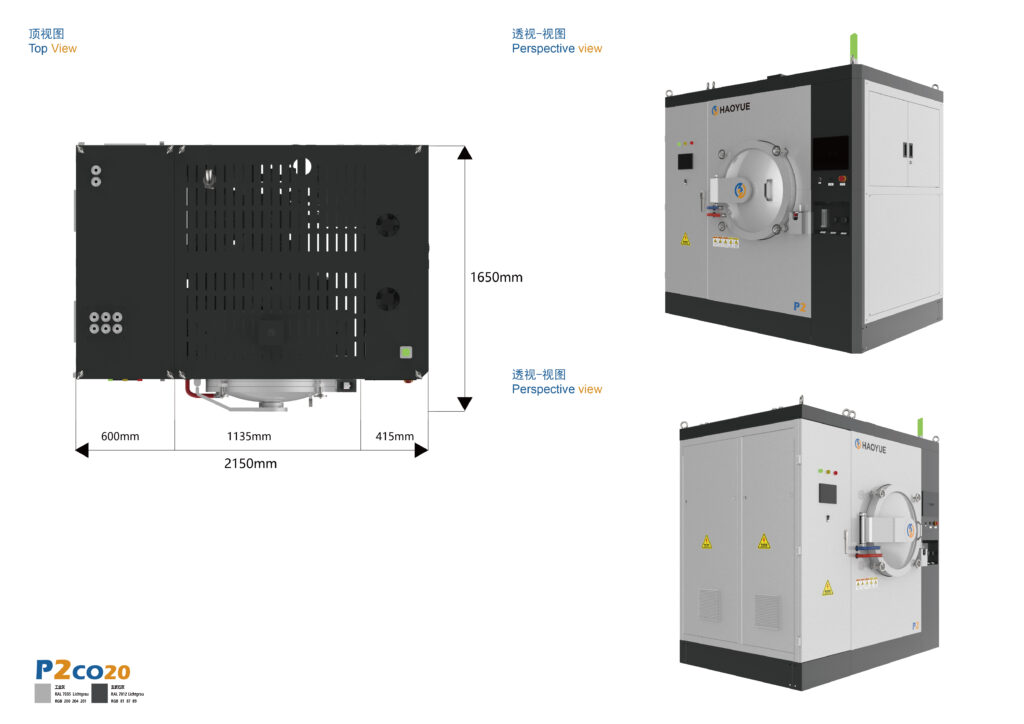
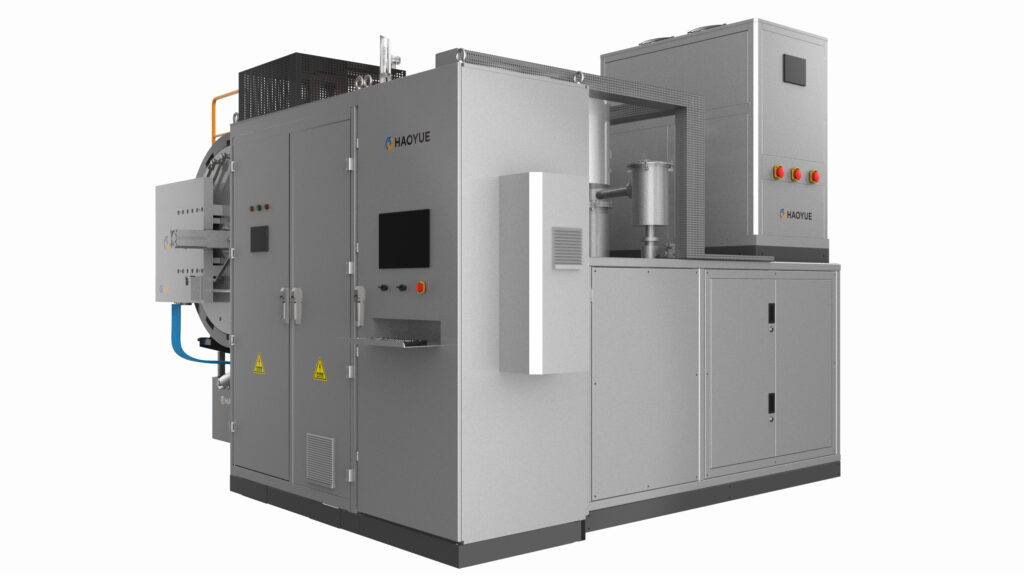
HAOYUE, as a leading SPS furnace manufacturer, designs and produces a range of Spark Plasma Sintering systems tailored for diverse research and industrial applications. Our furnaces are engineered for precision, reliability, and high performance, ensuring optimal material processing results. Below are typical technical parameters for HAOYUE SPS furnaces, which can be customized to meet specific client requirements:
- Maximum Sintering Temperature: Up to 2500°C (depending on model and heating element material, e.g., graphite, tungsten)
- Heating Rate: Up to 1000°C/min (and higher in certain configurations), controllable and programmable
- Cooling Rate: Forced cooling systems capable of rapid cooling to preserve microstructures
- Maximum Applied Pressure: 100 MPa to 1000 MPa (adjustable and precisely controlled via hydraulic or servo-electric systems)
- Pressure Application Mode: Uniaxial, programmable pressure profiles (constant, increasing, pulsed)
- Working Atmosphere: High vacuum (typically 10^-3 Pa to 10^-4 Pa), Inert gas (Argon, Nitrogen), or Reducing atmosphere (H2 diluted Argon)
- Power Supply: Pulsed DC power supply, often with current up to several thousand amps, voltage up to tens of volts
- Punch Diameter/Sample Size: Customizable, ranging from laboratory scale (Ø10-50 mm) to industrial scale (Ø100-300+ mm)
- Temperature Measurement: Pyrometer for high temperatures, thermocouple for lower temperatures, with multiple measurement points
- Control System: Advanced PLC-based control with HMI interface, fully automatic process control, data logging, and recipe management
- Safety Features: Comprehensive interlocks, over-pressure protection, over-temperature alarms, emergency stops
- Optional Features: In-situ dilatometry, real-time temperature mapping, gas purification systems, multi-axis pressure application, integrated rapid cooling units
Real Overseas Project Cases: HAOYUE SPS Furnaces in Action
HAOYUE’s commitment to innovation and quality is reflected in our successful deployments worldwide. Our SPS furnaces have been instrumental in advancing material research and production across various international institutions and industries.
Case Study 1: European Research Institute for Advanced Ceramics
A leading European research institute specializing in high-performance ceramics acquired a HAOYUE laboratory-scale SPS furnace. Their objective was to develop novel transparent ceramics for optical applications and ultra-hard materials for wear resistance. The HAOYUE SPS system, with its precise temperature and pressure control and rapid heating capabilities, enabled the institute to achieve full densification of complex oxide and non-oxide ceramics at significantly lower temperatures and shorter times than conventional methods. This resulted in ceramics with enhanced optical transparency and superior mechanical properties, accelerating their research breakthroughs and patent applications.
Case Study 2: North American Automotive Component Manufacturer
An automotive component manufacturer in North America utilized a customized HAOYUE industrial SPS furnace for the production of lightweight, high-strength metal matrix composites. The goal was to replace heavier traditional alloys in critical engine parts, improving fuel efficiency and performance. The HAOYUE system was designed with a larger chamber and higher pressure capacity to handle industrial-scale production. The rapid sintering capabilities of the HAOYUE furnace allowed for the retention of fine grain structures in the metal matrix and uniform distribution of ceramic reinforcements, leading to components with exceptional strength-to-weight ratios and improved fatigue life. This project successfully moved from R&D to pilot production, demonstrating the industrial viability of SPS technology.
Case Study 3: Asian University for Thermoelectric Materials Development
An esteemed university in Asia, focused on sustainable energy solutions, integrated a HAOYUE SPS furnace into their materials engineering department to research advanced thermoelectric materials. These materials convert heat directly into electrical energy. The challenge was to densify complex chalcogenide compounds while preserving their nanostructure and optimizing their thermoelectric figure of merit. The HAOYUE SPS furnace’s precise control over heating profiles and vacuum environment was crucial in preventing phase decomposition and achieving high-density, nanostructured thermoelectric bulk materials. This facilitated the discovery of new compositions with enhanced energy conversion efficiencies, contributing significantly to renewable energy research.
Frequently Asked Questions about Spark Plasma Sintering (SPS)
Q1: What types of materials can be processed using SPS?
A1: SPS is highly versatile and can process a wide array of materials, including metals, alloys (e.g., refractory metals, intermetallics, high-entropy alloys), ceramics (e.g., oxides, carbides, nitrides, borides), composites (metal matrix, ceramic matrix), polymers, and even some functional materials like thermoelectrics and transparent ceramics. Its effectiveness depends on the material’s electrical conductivity and thermal properties, as well as the specific SPS parameters used.
Q2: How does SPS differ from conventional hot pressing?
A2: The primary difference lies in the heating mechanism. Conventional hot pressing relies solely on external heating elements to heat the die and sample, leading to slower heating rates and longer dwell times. SPS, on the other hand, uses a pulsed direct current passed directly through the sample (if conductive) and/or the graphite dies, generating rapid internal heating. This results in significantly faster densification, lower sintering temperatures, and better microstructure control in SPS compared to hot pressing.
Q3: What are the typical sample sizes that can be processed in an SPS furnace?
A3: Sample sizes can vary widely depending on the furnace model and its intended application. Laboratory-scale SPS furnaces typically handle samples with diameters ranging from 10 mm to 50 mm. Industrial-scale or customized production units can process much larger samples, often up to 300 mm or more in diameter. The maximum sample size is limited by the available power, pressure capacity, and the size of the graphite die and punch system.
Q4: Is SPS suitable for non-conductive materials?
A4: Yes, SPS can effectively sinter non-conductive materials. For such materials, the pulsed DC current primarily heats the conductive graphite dies surrounding the sample. Heat is then transferred to the non-conductive powder through conduction and radiation from the hot dies. While the direct Joule heating effect within the sample is reduced, the rapid heating of the dies combined with uniaxial pressure still provides significant advantages over conventional sintering methods for non-conductive ceramics and insulators.
Q5: What safety considerations are important when operating an SPS furnace?
A5: Operating an SPS furnace involves high temperatures, high pressures, and high electrical currents, necessitating strict safety protocols. Key safety considerations include proper grounding of equipment, interlocks to prevent operation with open chambers, over-pressure relief mechanisms, robust cooling systems to manage heat, and strict adherence to vacuum and inert gas handling procedures. Operators must be trained in high-voltage safety and personal protective equipment (PPE) is essential. Reputable manufacturers like HAOYUE integrate multiple safety features into their designs.
The profound impact of Spark Plasma Sintering on advanced material development cannot be overstated. By offering unmatched control over material properties and microstructures, SPS continues to unlock new possibilities across diverse industries. As the demand for high-performance materials grows, the role of innovative manufacturers providing cutting-edge SPS solutions becomes increasingly vital. The ability to rapidly densify complex materials at lower temperatures not only accelerates research and development but also paves the way for scalable industrial applications. Investing in state-of-the-art SPS technology is an investment in the future of material science, promising breakthroughs that will shape tomorrow’s technologies and drive progress in fields ranging from aerospace and medical to energy and electronics. The continuous evolution of SPS furnace technology, supported by expertise in broader vacuum furnace solutions, ensures that researchers and engineers have the tools necessary to transform ambitious material concepts into tangible, high-performance realities.
Related Products & Services
- SPS Spark Plasma Sintering System – High-performance SPS solutions from HaoYue Group.
- SPS Spark Plasma Sintering System
- Vacuum Hot Press Furnace
Looking for high-quality vacuum furnace solutions? Contact HaoYue Group today.
Related Products & Services
- SPS Spark Plasma Sintering System – High-performance SPS solutions from HaoYue Group.
- SPS Spark Plasma Sintering System
- Vacuum Hot Press Furnace
Looking for high-quality vacuum furnace solutions? Contact HaoYue Group for more information.
Related Products & Services
Looking for high-quality vacuum furnace solutions? Contact HaoYue Group for more information.
Frequently Asked Questions
What makes Spark Plasma Sintering (SPS) different from traditional sintering methods?
SPS stands out due to its use of pulsed direct current and uniaxial pressure, which achieves rapid densification and fine microstructure control at lower temperatures. This contrasts with traditional methods that rely on prolonged heating times and higher temperatures, often leading to grain growth and energy inefficiency.
Why is partnering with a leading SPS furnace manufacturer important for researchers and engineers?
A reputable SPS furnace manufacturer provides advanced technology and expertise crucial for pushing material performance boundaries. Their equipment allows for precise control over the sintering process, enabling the development of novel materials and composites with superior properties that are challenging to achieve through conventional methods.
How does SPS contribute to energy efficiency in material processing?
SPS achieves energy efficiency through its rapid processing times and lower sintering temperatures. This reduces the overall energy consumption compared to conventional sintering methods, which require longer heating durations and higher temperatures, making SPS a more sustainable option for material development.
What types of materials are particularly suited for processing with SPS?
SPS is ideal for advanced ceramics such as zirconia, alumina, and silicon carbide, as well as composites and thermally sensitive compounds. Its ability to handle high melting points and prevent degradation of sensitive materials makes it versatile for a range of applications.
What are the key advantages of SPS in controlling material microstructure?
SPS allows for full densification at lower temperatures, which minimizes grain growth and preserves fine microstructures. This results in materials with uniform and enhanced mechanical properties, such as increased hardness and fracture toughness, which are critical for advanced applications.
How does the electric field in SPS influence material processing?
The electric field in SPS may activate surface atoms and promote mass transport, although the exact mechanisms are still being researched. This influence contributes to the unique ability of SPS to densify materials rapidly and efficiently, distinguishing it from other sintering techniques.