





The continuous evolution of materials science has placed an unprecedented demand on manufacturing processes, particularly in the realm of advanced ceramics. These materials, known for their exceptional hardness, high-temperature resistance, and unique electrical properties, are critical components in industries ranging from semiconductors to biomedical implants. Central to their production are ceramic sintering furnaces, which are undergoing significant technological advancements to meet the stringent requirements of modern applications. This article examines the latest processing technologies in ceramic sintering furnaces, particularly for advanced ceramic applications in semiconductor and medical fields. It highlights various sintering methods, including pressureless and vacuum sintering, and their impact on material properties. We’ll explore how ceramic sintering furnace manufacturers are developing more efficient and precise systems to handle diverse ceramic raw materials. For procurement engineers, selecting the right industrial vacuum furnace supplier is crucial, especially when considering integrating a vacuum sintering furnace manufacturer’s offerings for specific ceramic compositions.
Understanding Ceramic Sintering Fundamentals
Sintering is a crucial step in ceramic manufacturing, transforming powdered ceramic materials into dense, solid objects through heat. This process involves heating the compacted ceramic powder to a temperature below its melting point, allowing individual particles to fuse together without liquefying. The driving force for sintering is the reduction of surface energy, leading to a decrease in porosity and an increase in density, strength, and other desired material properties. The choice of sintering method profoundly influences the final microstructure and performance of the ceramic.
Key Sintering Methods for Advanced Ceramics
Several sintering techniques are employed, each offering distinct advantages depending on the ceramic material and desired properties:
- Pressureless Sintering: This is the most straightforward and cost-effective method, where ceramic compacts are heated in an atmospheric or controlled gas environment without external pressure. It’s suitable for ceramics that densify readily under heat alone. While widely used, achieving full density for certain advanced ceramics can be challenging, often requiring very high temperatures or long holding times.
- Vacuum Sintering: A more advanced technique, vacuum sintering involves heating ceramic compacts in a vacuum environment. This method is particularly beneficial for materials prone to oxidation or those requiring the removal of volatile binders or impurities. The absence of atmospheric gases prevents undesirable reactions and can facilitate better densification, leading to improved mechanical properties and purity. Many vacuum furnace manufacturers specialize in systems optimized for this process.
- Hot Pressing (HP): In hot pressing, both heat and uniaxial pressure are applied simultaneously to the ceramic powder. This combination significantly enhances densification, allowing for lower sintering temperatures and shorter times, or achieving higher densities for difficult-to-sinter materials. It’s particularly effective for ceramics requiring fine grain structures and superior mechanical properties. A specialized hot pressing furnace manufacturer can provide tailored solutions.
- Hot Isostatic Pressing (HIP): HIP involves applying high temperature and uniform (isostatic) pressure from all directions using an inert gas. This method is excellent for achieving nearly theoretical density and eliminating internal defects, resulting in superior mechanical properties, especially for complex shapes. The equipment for HIP is sophisticated, typically provided by an experienced hot isostatic press manufacturer.
- Spark Plasma Sintering (SPS): SPS is a relatively newer, rapid sintering technique that uses pulsed direct current to generate heat internally within the powder compact, often combined with uniaxial pressure. Its speed and ability to retain fine grain sizes make it ideal for nanomaterials and composites. The demand for specialized SPS equipment has led to the emergence of dedicated SPS furnace manufacturers.
Innovations in Ceramic Sintering Furnaces for Advanced Applications
The quest for higher performance, greater efficiency, and more precise control is driving significant innovations in ceramic sintering furnaces. Manufacturers are focusing on several key areas to meet the demands of advanced ceramic applications:
Precision Temperature Control and Uniformity
Achieving exact and uniform temperature distribution within the furnace is paramount for consistent ceramic properties. Modern furnaces incorporate advanced heating elements, multi-zone heating capabilities, and sophisticated temperature sensors (e.g., pyrometers, thermocouples) coupled with PID control systems. This ensures minimal temperature gradients, crucial for preventing warping, cracking, and inconsistent densification in delicate components for semiconductors and medical devices.
Advanced Atmosphere Control
Beyond vacuum, controlling the furnace atmosphere precisely is vital. This includes inert gases (argon, nitrogen), reducing atmospheres (hydrogen), or even reactive gases for specific material synthesis. Innovations include gas recirculation systems, precise flow meters, and integrated gas analysis systems to monitor and maintain the desired atmospheric composition throughout the sintering cycle. This is particularly important for ceramics that are sensitive to oxygen or require specific gas-phase reactions for optimal properties.
Energy Efficiency and Sustainability
With increasing energy costs and environmental concerns, energy efficiency is a major design consideration. Innovations include improved insulation materials (e.g., graphite felt, molybdenum shields), optimized furnace designs to minimize heat loss, and advanced power management systems. Regenerative burners and heat recovery systems are also being integrated into larger industrial furnaces to reduce energy consumption and operational costs.
Automation and Digital Integration
The shift towards Industry 4.0 has led to highly automated ceramic sintering furnaces. These systems feature programmable logic controllers (PLCs), human-machine interfaces (HMIs), and comprehensive data logging capabilities. Automation ensures repeatable processes, reduces human error, and allows for remote monitoring and control. Digital integration facilitates predictive maintenance, real-time process optimization, and seamless integration into larger manufacturing ecosystems.
Modular and Scalable Designs
To cater to diverse production needs, manufacturers are offering modular furnace designs that can be customized and scaled. This allows businesses to invest in systems that precisely match their current capacity while providing options for future expansion. These designs often feature interchangeable heating zones, vacuum pumping systems, and loading mechanisms.
HAOYUE Furnace Technical Parameters and Offerings
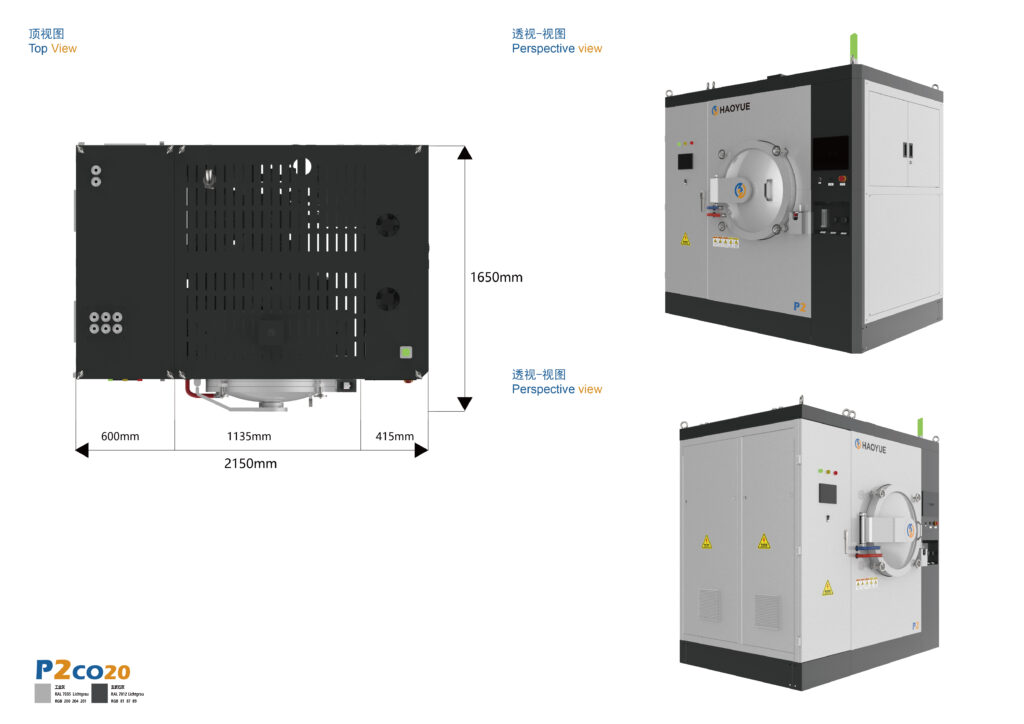
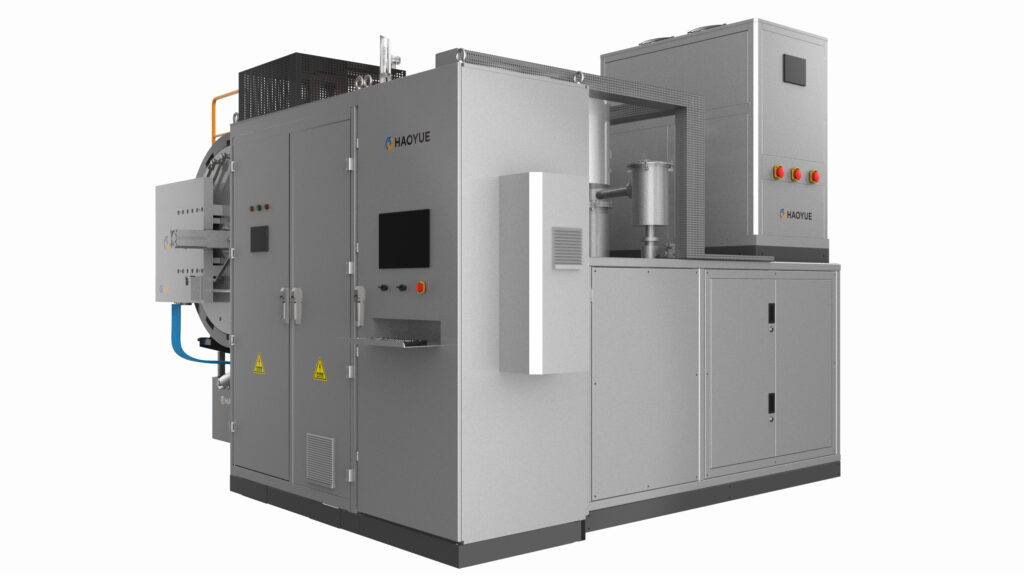
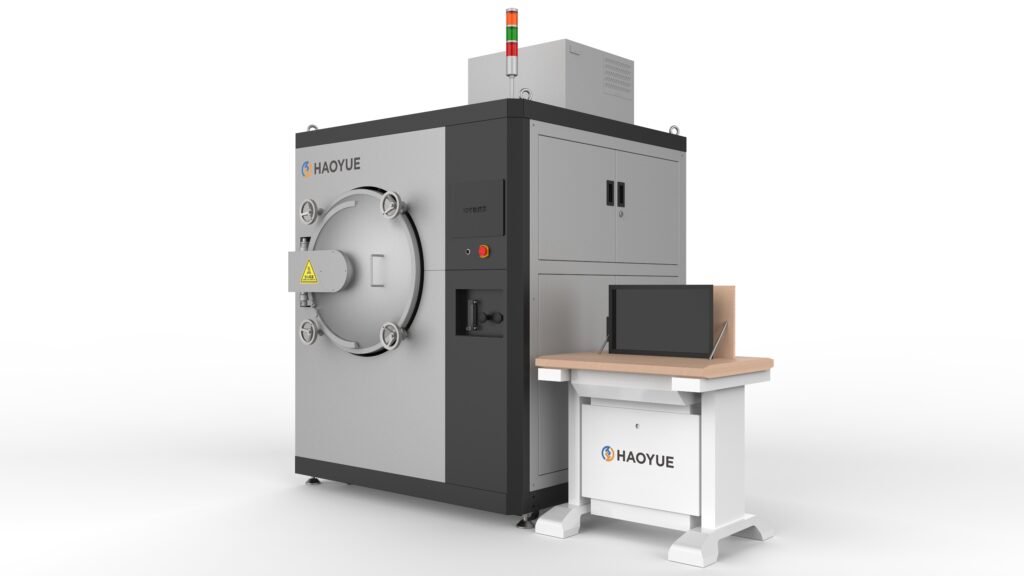
As a leading vacuum furnace manufacturer, HAOYUE specializes in high-performance ceramic sintering furnaces designed for demanding applications. Their product range includes advanced vacuum sintering furnaces, hot pressing furnaces, and SPS systems, engineered for precision, reliability, and efficiency.
HAOYUE’s vacuum sintering furnaces, for example, typically feature:
- Maximum Temperature: Up to 2200°C (or higher for specialized models), suitable for a wide range of advanced ceramics including alumina, zirconia, silicon carbide, and nitride ceramics.
- Vacuum Level: High vacuum capabilities down to 10-3 Pa to ultra-high vacuum (UHV) 10-5 Pa, critical for preventing contamination and achieving high purity.
- Heating Elements: Graphite, molybdenum, or tungsten heating elements, selected based on the specific process temperature and atmosphere requirements.
- Insulation: Multi-layer graphite felt or metallic heat shields for superior thermal insulation and energy efficiency.
- Temperature Uniformity: Achieved through advanced heating zone design and multi-point temperature control, often ±5°C or better across the working zone.
- Cooling Systems: Rapid cooling capabilities using inert gas (e.g., nitrogen, argon) to optimize cycle times and microstructure.
- Control System: Fully automated PLC-based control with touch screen HMI, offering recipe management, data logging, and remote diagnostic features.
- Working Zone Dimensions: Customizable to meet specific production volume and component size requirements.
These parameters ensure that HAOYUE furnaces can handle the rigorous demands of sintering advanced ceramics for semiconductor components, medical implants, aerospace parts, and wear-resistant tools, providing excellent density, strength, and purity.
Real Overseas Project Cases: HAOYUE’s Global Impact
HAOYUE’s commitment to innovation and quality is reflected in its numerous successful installations worldwide. One notable project involved supplying a custom-designed vacuum sintering furnace to a leading European semiconductor manufacturer. This client required a system capable of sintering high-purity silicon carbide (SiC) components used in wafer processing equipment. The HAOYUE furnace delivered exceptional temperature uniformity and ultra-high vacuum capabilities, drastically reducing defect rates and improving the mechanical integrity of the SiC parts, leading to a significant increase in overall production yield and component longevity. The client praised the furnace’s robust construction and the responsive technical support provided by HAOYUE’s team.
Another successful implementation saw HAOYUE providing a series of vacuum heat treatment furnace manufacturer solutions, including a specialized vacuum sintering furnace, to a medical device company in North America. This company specialized in producing ceramic prosthetics and dental implants. The HAOYUE furnace enabled precise control over the sintering atmosphere and temperature profiles, critical for achieving biocompatible and mechanically strong zirconia and alumina components. The ability to finely tune the sintering parameters allowed the client to meet stringent regulatory standards for medical devices, enhancing product quality and accelerating their market entry for new implant designs.
These cases underscore HAOYUE’s capability not only to manufacture advanced ceramic sintering furnaces but also to provide tailored solutions and comprehensive support to clients across diverse, high-stakes industries globally.
FAQ Section: Addressing Common Questions about Ceramic Sintering Furnaces
Q1: What are the primary advantages of vacuum sintering over pressureless sintering for advanced ceramics?
A1: Vacuum sintering offers several key advantages. It effectively removes volatile binders and impurities, leading to higher purity and better material properties. The absence of atmospheric gases prevents oxidation and undesirable reactions, which is crucial for sensitive materials. It can also facilitate densification at lower temperatures or achieve higher densities for certain ceramics, improving mechanical strength and reducing defects.
Q2: How do HAOYUE furnaces ensure temperature uniformity in large working zones?
A2: HAOYUE furnaces achieve superior temperature uniformity through a combination of design features: multi-zone heating elements that can be individually controlled, high-quality insulation materials to minimize heat loss and gradients, and strategically placed thermocouples or pyrometers for precise temperature monitoring. Advanced PID control algorithms continuously adjust power to each zone to maintain the desired uniform temperature profile.
Q3: Can HAOYUE furnaces be customized for specific ceramic materials or process requirements?
A3: Absolutely. HAOYUE prides itself on offering highly customizable solutions. Clients can specify working zone dimensions, maximum temperature, vacuum level, types of heating elements (graphite, molybdenum, tungsten), cooling rates, and specific atmospheric gas capabilities. HAOYUE’s engineering team works closely with clients to design and manufacture furnaces tailored to their unique material and process needs.
Q4: What maintenance is typically required for a ceramic sintering furnace?
A4: Regular maintenance is crucial for optimal performance and longevity. This typically includes periodic inspection and replacement of heating elements, insulation, and thermocouples. Vacuum pump oil and seals need to be checked and replaced as per schedule. Cleaning of the furnace chamber and regular calibration of temperature and pressure sensors are also essential. HAOYUE provides detailed maintenance schedules and offers comprehensive after-sales support and spare parts.
Q5: What role does an industrial vacuum furnace supplier play in the procurement process for advanced ceramic manufacturers?
A5: An industrial vacuum furnace supplier, such as HAOYUE, plays a pivotal role. They provide not just the equipment, but also expertise in process optimization, material science, and furnace customization. They assist in selecting the right furnace type and specifications, offer installation and commissioning services, provide operator training, and ensure long-term technical support and spare parts availability. This comprehensive partnership is vital for successful integration and operation.
The landscape of advanced ceramics is continuously expanding, driven by innovations in materials science and engineering. The evolution of ceramic sintering furnaces is central to this progress, enabling the creation of components with unparalleled properties for critical applications. From precise temperature and atmosphere control to advanced automation and energy efficiency, modern sintering technologies are pushing the boundaries of what’s possible. Manufacturers like HAOYUE are at the forefront of this revolution, delivering sophisticated, reliable, and customizable furnace solutions that empower industries to achieve new levels of performance and productivity. As the demand for high-performance ceramics grows, the continuous development of these advanced sintering systems will remain a cornerstone of technological advancement, ensuring that the materials of tomorrow can be produced with the precision and quality required to shape our future.
Related Products & Services
- Vacuum Sintering Furnace – Advanced sintering solutions from HaoYue Group.
- SPS Spark Plasma Sintering System – High-performance SPS solutions from HaoYue Group.
- SPS Spark Plasma Sintering System
Looking for high-quality vacuum furnace solutions? Contact HaoYue Group today.
Related Products & Services
- Vacuum Sintering Furnace – Advanced sintering solutions from HaoYue Group.
- SPS Spark Plasma Sintering System – High-performance SPS solutions from HaoYue Group.
- SPS Spark Plasma Sintering System
Looking for high-quality vacuum furnace solutions? Contact HaoYue Group for more information.
Related Products & Services
- Vacuum Sintering Furnace – Advanced sintering solutions from HaoYue Group.
- SPS Spark Plasma Sintering System
- SPS Spark Plasma Sintering System
Looking for high-quality vacuum furnace solutions? Contact HaoYue Group for more information.
Frequently Asked Questions
What are the main advantages of using vacuum sintering over pressureless sintering for advanced ceramics?
Vacuum sintering offers significant benefits for advanced ceramics, especially those prone to oxidation or requiring impurity removal. The vacuum environment prevents undesirable reactions, enhancing densification and improving mechanical properties and purity. It's ideal for achieving better results with materials that don't densify readily under standard atmospheric conditions.
How does hot isostatic pressing (HIP) contribute to the quality of advanced ceramics?
HIP enhances the quality of advanced ceramics by applying uniform pressure from all directions, which helps achieve nearly theoretical density and eliminate internal defects. This results in ceramics with superior mechanical properties, making HIP ideal for complex shapes and applications requiring high strength and reliability.
Why is selecting the right industrial vacuum furnace supplier critical for procurement engineers?
The right vacuum furnace supplier is crucial because it ensures the furnace is optimized for specific ceramic compositions and applications. A specialized supplier can provide systems that enhance efficiency, precision, and the ability to handle diverse raw materials, which is vital for achieving desired material properties in advanced ceramics.
What role does spark plasma sintering (SPS) play in the advancement of ceramic sintering technologies?
SPS is a rapid sintering technique that uses pulsed direct current to quickly densify ceramics. Its ability to achieve high densities and fine grain structures in shorter times makes it a valuable advancement in sintering technology, especially for applications requiring precise microstructures and enhanced mechanical properties.
In what scenarios would hot pressing be preferred over other sintering methods for advanced ceramics?
Hot pressing is preferred when ceramics require fine grain structures and superior mechanical properties. By applying both heat and pressure, it allows for lower sintering temperatures and shorter times, making it effective for difficult-to-sinter materials and applications where high density and mechanical strength are crucial.