





For procurement engineers tasked with sourcing high-performance ceramic components, understanding the intricacies of zirconia sintering is paramount. Zirconia, renowned for its exceptional strength, toughness, and biocompatibility, finds widespread application in dental prosthetics, medical implants, industrial wear parts, and advanced ceramics. However, achieving its full potential hinges on a delicate balance between the quality of the raw materials and the precision of the sintering process. This comprehensive guide delves into how zirconia powder purity and particle characteristics profoundly influence sintering behavior and final product performance, alongside crucial furnace features like temperature uniformity and controlled atmospheres, emphasizing the critical role of selecting the right equipment and partners.
The Foundation: Raw Material Aspects in Zirconia Sintering
The journey to superior zirconia components begins long before the furnace is fired. The characteristics of the raw zirconia powder are foundational, directly impacting densification, microstructure development, and ultimately, the mechanical and aesthetic properties of the final product.
Purity Levels and Their Implications
The purity of zirconia powder is a non-negotiable factor. Impurities, even in trace amounts, can significantly alter sintering kinetics, promote unwanted grain growth, and introduce defects that compromise mechanical strength and phase stability. For instance, silica and alumina, common contaminants, can form low-melting eutectics at grain boundaries, leading to abnormal grain growth or porosity. For applications demanding high translucency, such as dental ceramics, even slight discoloration from metallic impurities can render a product unusable. Procurement engineers must specify high-purity grades, typically 3N (99.9%) or 4N (99.99%), depending on the application’s criticality and aesthetic requirements, to ensure optimal zirconia sintering outcomes.
Particle Size, Distribution, and Morphology
Beyond purity, the physical characteristics of the powder particles are equally vital:
- Particle Size: Finer particles offer a larger surface area, leading to higher driving forces for sintering and enabling densification at lower temperatures or shorter times. This promotes a finer final grain structure, which is crucial for maximizing mechanical properties like fracture toughness and strength. However, excessively fine particles can lead to challenges in powder handling, such as increased agglomeration and poor flowability, impacting green body uniformity.
- Particle Size Distribution (PSD): A narrow, monomodal PSD is generally preferred. A broad distribution can lead to differential shrinkage during sintering, resulting in stresses, cracks, and distortion. Uniform packing of particles in the green body, facilitated by a narrow PSD, is key to achieving homogeneous densification.
- Particle Morphology: The shape of the particles (e.g., spherical, irregular, plate-like) influences green body packing density and strength. Spherical particles tend to pack more efficiently, leading to higher green densities and more uniform shrinkage. Irregularly shaped particles, while sometimes providing better green strength due to mechanical interlocking, can also introduce more voids and hinder uniform densification.
Stabilizers and Additives for Zirconia
Pure zirconia undergoes a detrimental phase transformation (monoclinic to tetragonal) upon cooling, causing volume expansion and cracking. To mitigate this, stabilizers are added:
- Yttria-Stabilized Zirconia (YSZ): The most common stabilizer, typically 3 mol% YSZ (3Y-TZP), provides excellent mechanical properties and phase stability for dental and structural applications. Higher yttria content (8YSZ) is used for oxygen sensors and solid oxide fuel cells.
- Magnesia-Partially Stabilized Zirconia (Mg-PSZ): Offers high fracture toughness due to its unique microstructure, often used in wear components.
- Ceria-Tetragonal Zirconia Polycrystals (Ce-TZP): Known for very high fracture toughness, often exceeding YSZ, but can be susceptible to low-temperature degradation.
The type and amount of stabilizer critically influence the sintering temperature, phase transformations during processing, and the final material properties. Procurement engineers must specify the correct stabilized zirconia powder tailored to the application’s performance requirements.
Furnace Considerations: The Heart of Zirconia Sintering
Even with the highest quality raw materials, suboptimal furnace conditions can negate all advantages. The sintering furnace is where the material transforms from a porous green body into a dense, high-performance ceramic. Precision control over temperature, atmosphere, and heating/cooling rates is essential for successful zirconia sintering.
Achieving Unprecedented Temperature Uniformity
Temperature uniformity within the hot zone of the furnace is paramount. Inconsistent temperatures lead to differential shrinkage, resulting in warped parts, varying grain sizes, and localized stress concentrations that can cause cracking. High-quality industrial vacuum furnaces employ sophisticated heating element designs, multi-zone temperature control, and advanced insulation packages to achieve uniformity typically within +/- 2°C at elevated temperatures (e.g., 1800°C). This precision ensures every part in a batch experiences the same thermal history, leading to consistent density and microstructure.
Controlled Atmospheres: Tailoring the Sintering Environment
The atmosphere inside the furnace profoundly impacts zirconia sintering:
- Vacuum Sintering: This is often the preferred method for high-purity zirconia. A vacuum environment effectively removes binders and volatile impurities, preventing their entrapment within the ceramic body as porosity. It also prevents oxidation of metallic dopants (if present) and allows for precise control over the sintering process. Achieving deep vacuum levels (e.g., 10^-3 Pa to 10^-4 Pa) requires robust vacuum pump systems and leak-tight furnace designs. A dedicated vacuum furnace manufacturer can provide the necessary expertise.
- Inert Gas Sintering: Using atmospheres like argon or nitrogen is beneficial for certain zirconia compositions, particularly when vacuum might lead to the dissociation of some components or when pressure-assisted sintering is employed. Inert gas can also be used for partial pressure control during vacuum sintering to suppress volatilization of specific elements.
- Oxidizing Atmosphere (Air/Oxygen): While some zirconia types can be sintered in air, this is less common for high-performance applications due to potential contamination, uncontrolled grain growth, and the difficulty in achieving precise control over the sintering environment. However, for specific aesthetic requirements (e.g., certain dental shades), air sintering might be considered, though it often comes with trade-offs in mechanical properties.
Heating and Cooling Rate Control
The rates at which the furnace heats up and cools down are critical. Slow heating rates are often necessary during the debinding phase to allow complete removal of organic binders without causing defects. During the sintering phase, controlled heating prevents thermal shock and allows for homogeneous temperature distribution. Cooling rates are equally important: rapid cooling can induce thermal stresses and unwanted phase transformations, while excessively slow cooling can lead to undesirable grain growth. Advanced furnaces offer programmable control over multiple ramps and dwells, allowing for optimization of the entire thermal cycle for specific zirconia materials and geometries.
Selecting the Right Furnace Technology and Supplier
The choice of sintering technology and the expertise of the equipment supplier are pivotal for successful zirconia processing.
Vacuum Sintering Furnaces: Precision and Purity
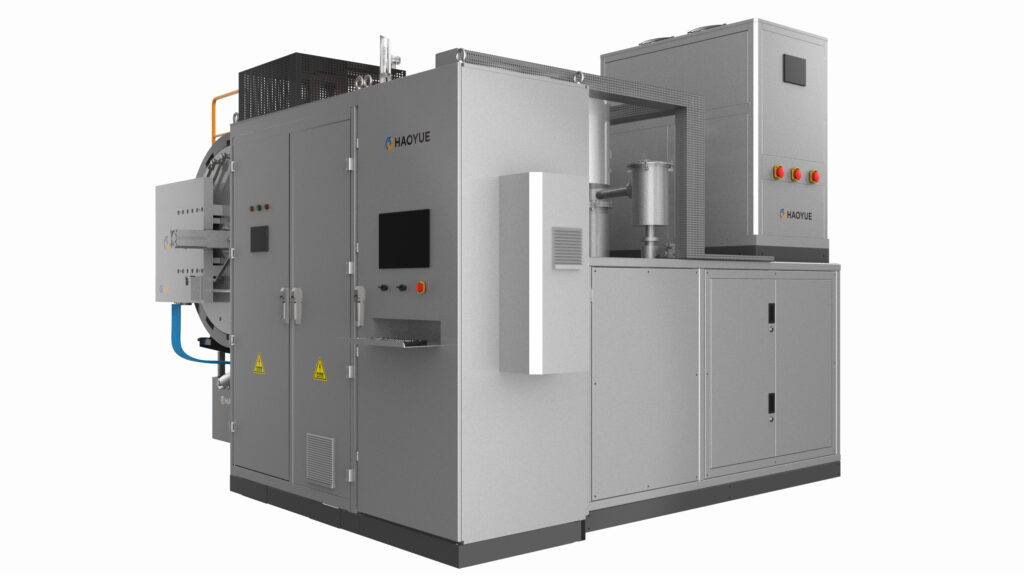
For most advanced zirconia applications, vacuum sintering furnaces are the gold standard. They offer unparalleled control over the atmosphere, critical for achieving high density, fine grain size, and superior mechanical properties. A reputable vacuum sintering furnace manufacturer can provide systems specifically designed for the high temperatures and precise control required for zirconia, often incorporating features like partial pressure control, rapid cooling, and advanced debinding capabilities.
Spark Plasma Sintering (SPS): Rapid Densification
For specialized applications requiring extremely fine grain structures or sintering at lower temperatures and shorter times, Spark Plasma Sintering (SPS) offers distinct advantages. An SPS furnace manufacturer can provide systems that use pulsed direct current to rapidly heat and consolidate powders under pressure, often resulting in superior mechanical properties compared to conventional sintering. This method is particularly useful for synthesizing novel zirconia composites or achieving ultra-fine grain zirconia.
Hot Pressing and Hot Isostatic Pressing (HIP)
While less common for bulk zirconia sintering, hot pressing and hot isostatic pressing (HIP) are used for achieving near-theoretical density in challenging zirconia compositions or for eliminating residual porosity. A hot pressing furnace manufacturer or hot isostatic press manufacturer can offer solutions for specific densification challenges, particularly for complex geometries or materials with inherent sintering difficulties.
The Importance of an Experienced Industrial Vacuum Furnace Supplier
Choosing an industrial vacuum furnace supplier is a strategic decision. Look for partners with a proven track record in high-temperature ceramic processing, especially zirconia. An experienced supplier will not only provide robust equipment but also offer invaluable technical support, process optimization guidance, and customization options. Their expertise can help fine-tune sintering profiles, troubleshoot issues, and ensure the furnace meets the specific demands of your zirconia components.
HAOYUE Furnace Technical Parameters for Zirconia Sintering
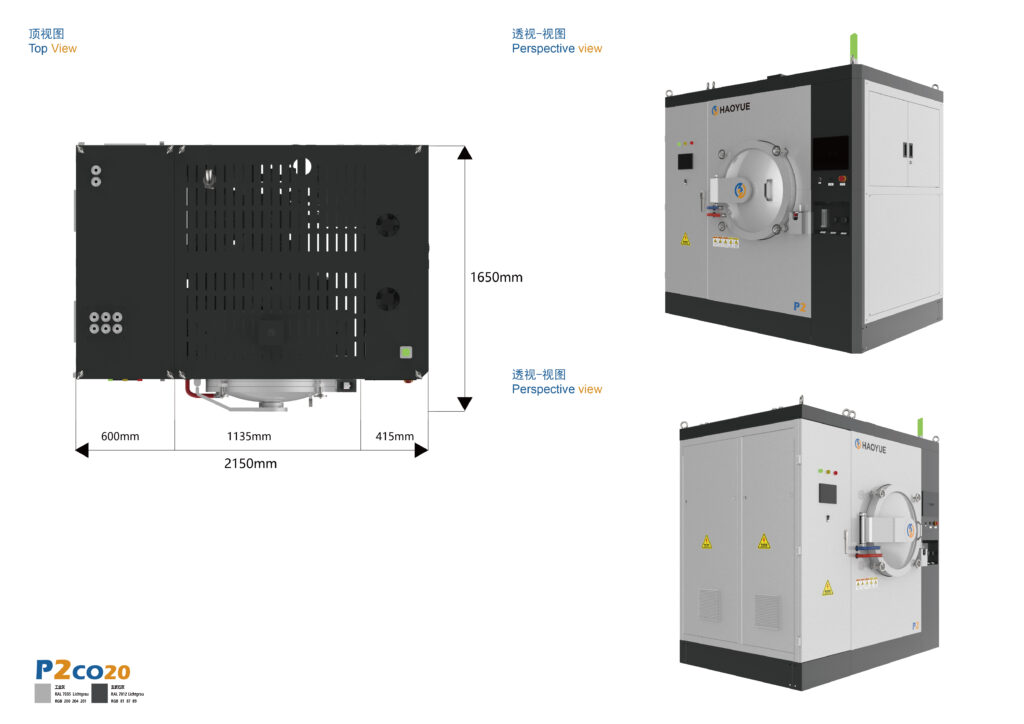
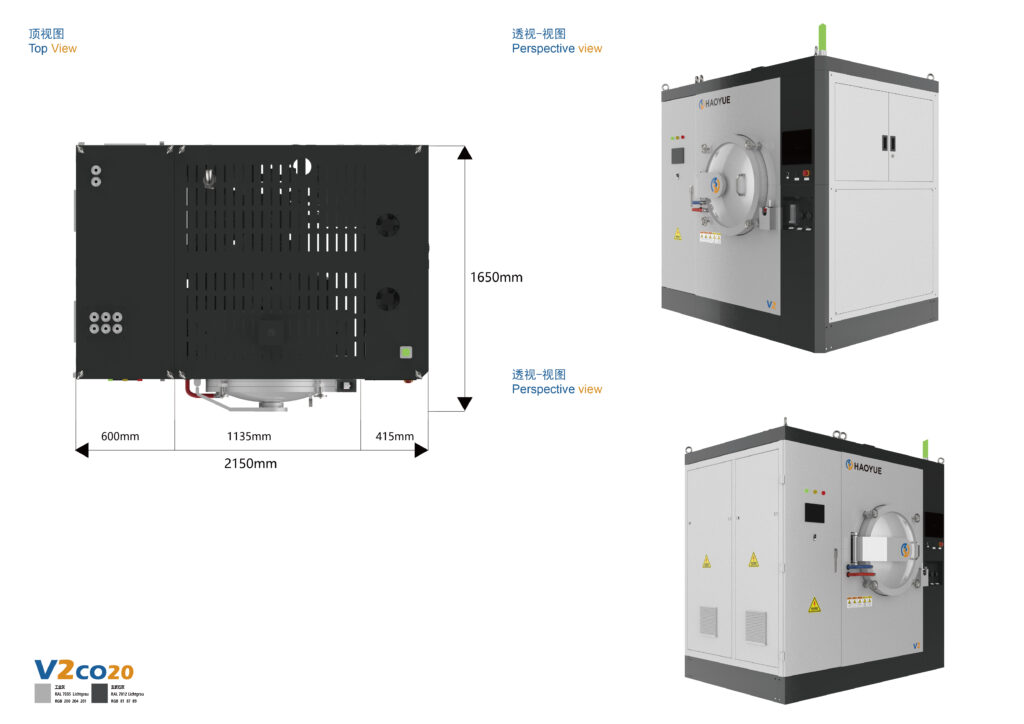
HAOYUE, a leading vacuum sintering furnace manufacturer, offers advanced solutions tailored for the demanding requirements of zirconia processing. A typical HAOYUE furnace designed for high-performance ceramic sintering might feature:
- Model: HAOYUE-ZSC-1200
- Max. Operating Temperature: Up to 2200°C
- Typical Working Temperature for Zirconia: 1700°C – 2000°C
- Vacuum Level: High vacuum down to 5 x 10^-4 Pa (with diffusion pump)
- Temperature Uniformity: ±2°C within the hot zone at 1800°C
- Working Volume: Customizable, e.g., Ø400mm x H600mm
- Heating Elements: High-purity graphite or Molybdenum, ensuring long lifespan and clean sintering environment.
- Insulation: Multi-layer graphite felt or metallic heat shields for superior thermal efficiency.
- Control System: Siemens PLC with intuitive HMI touch screen, offering multi-segment programmable temperature ramps, dwells, and cooling rates.
- Gas System: Integrated inert gas (Argon/Nitrogen) backfill and partial pressure control capabilities.
- Cooling System: Forced inert gas rapid cooling for optimized microstructure and cycle times.
Real Overseas Project Cases: HAOYUE’s Impact on Zirconia Sintering
Case Study 1: Dental Zirconia Production in Europe
A prominent European dental prosthetics manufacturer faced challenges in achieving consistent translucency and mechanical strength in their zirconia crowns and bridges. Their existing furnaces struggled with temperature uniformity, leading to batch inconsistencies and increased scrap rates. HAOYUE was engaged to provide a custom vacuum sintering furnace solution. The HAOYUE-ZSC-1200 model, equipped with advanced multi-zone temperature control and precise vacuum/partial pressure capabilities, was installed. The customer reported a significant improvement in product quality, with enhanced translucency and more uniform mechanical properties. The optimized cooling cycles provided by the HAOYUE system also reduced thermal stresses, leading to fewer defects and a substantial increase in production yield, solidifying their position as a market leader in high-quality dental zirconia.
Case Study 2: High-Performance Zirconia Components for Aerospace in North America
An aerospace component supplier in North America required a solution for sintering complex zirconia-toughened alumina (ZTA) parts used in wear-resistant applications. These components demanded extremely high density (>99.5% theoretical) and tight dimensional tolerances, along with superior fracture toughness. Conventional sintering methods were insufficient. HAOYUE collaborated closely with the client to design an integrated vacuum sintering and debinding system. The furnace was engineered with a dedicated debinding stage under controlled vacuum, followed by high-temperature sintering in a deep vacuum and inert atmosphere. This two-stage process effectively removed binders without introducing porosity and achieved the desired densification. The HAOYUE furnace enabled the client to consistently produce ZTA parts meeting stringent aerospace specifications, demonstrating exceptional wear resistance and structural integrity, thereby opening new market opportunities for their advanced ceramic division.
Frequently Asked Questions About Zirconia Sintering
Q: What is the ideal particle size for zirconia sintering?
A: Generally, a fine particle size (sub-micron, typically 50-500 nm) with a narrow particle size distribution is preferred. Finer particles increase the driving force for sintering, allowing for lower sintering temperatures or shorter times, and lead to a finer final grain structure, which is crucial for maximizing mechanical properties. However, excessively fine particles can be prone to agglomeration and make green body formation challenging.
Q: Why is temperature uniformity so important in zirconia sintering?
A: Temperature uniformity is critical because zirconia undergoes significant shrinkage during sintering. Inconsistent temperatures across the parts or within a batch lead to differential shrinkage, causing warping, cracking, and variations in density and microstructure. This results in products with inconsistent properties and high scrap rates. High uniformity ensures all parts experience the same thermal history, leading to predictable and consistent material properties.
Q: Can zirconia be sintered in air?
A: While some types of zirconia (especially those with lower performance requirements or specific aesthetic needs like certain dental shades) can be sintered in air, it is generally not preferred for high-performance applications. Air sintering can introduce impurities, lead to uncontrolled grain growth, and make it difficult to achieve the high densities and precise microstructures required for advanced ceramics. Vacuum or inert gas atmospheres offer superior control and purity.
Q: What are the benefits of vacuum sintering for zirconia?
A: Vacuum sintering offers several key benefits for zirconia. It effectively removes organic binders and volatile impurities, preventing them from becoming trapped as porosity. It also prevents oxidation of metallic dopants (if present) and allows for precise control over the sintering environment, leading to higher densities, finer grain structures, improved mechanical properties, and cleaner final products with reduced defects.
Q: How does yttria stabilize zirconia?
A: Yttria stabilizes zirconia by forming a solid solution, preventing the detrimental monoclinic-to-tetragonal phase transformation that occurs in pure zirconia upon cooling, which causes a significant volume change and cracking. By incorporating yttria ions into the zirconia lattice, the high-temperature tetragonal phase is stabilized to room temperature, creating a material (Tetragonal Zirconia Polycrystal or TZP) with excellent mechanical properties, particularly high fracture toughness due to transformation toughening.
The intricate dance between raw material characteristics and advanced furnace technology forms the bedrock of high-performance zirconia components. Procurement engineers must embrace a holistic approach, recognizing that the purity, particle size, and morphology of zirconia powder are as crucial as the precise temperature control, atmosphere management, and heating/cooling capabilities of the sintering furnace. Partnering with an experienced vacuum heat treatment furnace manufacturer or industrial vacuum furnace supplier like HAOYUE ensures access to the cutting-edge equipment and expertise necessary to navigate these complexities. By meticulously optimizing each stage, from powder selection to final cooling, industries can unlock the full potential of zirconia, driving innovation and reliability across a myriad of demanding applications.
Related Products & Services
- Vacuum Sintering Furnace – Advanced sintering solutions from HaoYue Group.
- SPS Spark Plasma Sintering System – High-performance SPS solutions from HaoYue Group.
- SPS Spark Plasma Sintering System
Looking for high-quality vacuum furnace solutions? Contact HaoYue Group today.
Related Products & Services
- Vacuum Sintering Furnace – Advanced sintering solutions from HaoYue Group.
- SPS Spark Plasma Sintering System – High-performance SPS solutions from HaoYue Group.
- SPS Spark Plasma Sintering System
Looking for high-quality vacuum furnace solutions? Contact HaoYue Group for more information.
Related Products & Services
- Vacuum Sintering Furnace – Advanced sintering solutions from HaoYue Group.
- SPS Spark Plasma Sintering System
- SPS Spark Plasma Sintering System
Looking for high-quality vacuum furnace solutions? Contact HaoYue Group for more information.
Frequently Asked Questions
How does the purity of zirconia powder affect its sintering process?
The purity of zirconia powder is crucial because impurities can alter sintering kinetics, cause unwanted grain growth, and introduce defects. Impurities like silica and alumina can form eutectics that lead to grain growth or porosity, affecting the mechanical strength and phase stability of the final product.
What challenges might procurement engineers face with finer zirconia particles?
While finer zirconia particles enhance densification and mechanical properties, they can lead to handling challenges such as increased agglomeration and poor flowability. This can impact the uniformity of the green body, making it difficult to achieve consistent densification during sintering.
Why is particle size distribution important in zirconia sintering?
A narrow, monomodal particle size distribution ensures uniform packing of particles in the green body, preventing differential shrinkage during sintering. This uniformity is essential to avoid stresses, cracks, and distortion in the final product, leading to consistent mechanical properties and aesthetics.
How do stabilizers like yttria and magnesia improve zirconia's performance?
Stabilizers like yttria and magnesia prevent detrimental phase transformations in zirconia. Yttria-stabilized zirconia provides excellent mechanical properties and phase stability, while magnesia-stabilized zirconia offers high fracture toughness, making them suitable for various applications like dental prosthetics and wear parts.
What role does particle morphology play in zirconia sintering?
Particle morphology affects packing density and green body strength. Spherical particles pack more efficiently, leading to higher green densities and uniform shrinkage, whereas irregular shapes may provide better strength due to interlocking but can introduce voids, hindering uniform densification.
How do furnace features influence the zirconia sintering process?
Furnace features like temperature uniformity and controlled atmospheres are crucial for consistent sintering. Uniform temperature ensures even densification, while controlled atmospheres prevent unwanted reactions, both of which are vital for achieving the desired mechanical and aesthetic properties in zirconia components.