





Titanium alloys are renowned for their exceptional strength-to-weight ratio, corrosion resistance, and biocompatibility, making them indispensable materials across diverse high-performance industries. However, their full potential is often unlocked and precisely tailored through meticulous titanium alloy heat treatment. This article delves into the critical processes of solution treatment, aging, and annealing, exploring how these thermal manipulations fundamentally alter the microstructure and, consequently, the mechanical properties of alpha, alpha-beta, and beta titanium alloys. The precision required for these processes underscores the vital role of specialized equipment, often sourced from a reputable vacuum furnace manufacturer, to ensure optimal material integrity and performance, particularly in demanding aerospace and medical applications where material failure is not an option.
Understanding Titanium Alloys and Their Microstructures
Before diving into the specifics of heat treatment, it’s essential to understand the different classifications of titanium alloys, as their metallurgical characteristics dictate the appropriate thermal processing. Titanium alloys are broadly categorized based on their predominant phase at room temperature:
Alpha (α) Alloys
These alloys are primarily composed of the hexagonal close-packed (HCP) alpha phase. They offer excellent creep resistance, good weldability, and high strength at elevated temperatures. Examples include Ti-5Al-2.5Sn. Their heat treatment typically involves annealing to relieve stress and refine grain structure, but they are generally not amenable to strengthening via age hardening due to the absence of a significant beta phase.
Alpha-Beta (α+β) Alloys
The most common and versatile class, these alloys contain both alpha and body-centered cubic (BCC) beta phases. This dual-phase microstructure allows for a wide range of mechanical properties through various heat treatments. Ti-6Al-4V, often considered the workhorse of titanium alloys, is a prime example. The presence of the beta phase enables solution treatment and aging processes that can significantly enhance strength and ductility.
Beta (β) Alloys
These alloys are predominantly composed of the metastable or stable beta phase at room temperature. They are characterized by high strength, excellent hardenability, and good formability in the solution-treated condition. Examples include Ti-10V-2Fe-3Al. Beta alloys offer the greatest flexibility for strengthening through solution treatment and aging due to their higher volume fraction of the beta phase, which can transform into fine alpha precipitates.
The Science Behind Titanium Alloy Heat Treatment
The fundamental principle behind titanium alloy heat treatment is the controlled manipulation of phase transformations and microstructural evolution. By heating alloys to specific temperatures and then cooling them at controlled rates, engineers can influence the size, shape, and distribution of alpha and beta phases, as well as the precipitation of intermetallic compounds. This control allows for tailoring properties such as ultimate tensile strength, yield strength, ductility, fracture toughness, fatigue life, and creep resistance.
The unique reactivity of titanium with atmospheric gases like oxygen and nitrogen at elevated temperatures makes precision atmosphere control paramount. Exposure to these gases can lead to the formation of a brittle alpha-case layer on the surface, compromising the material’s mechanical properties and fatigue performance. This is why specialized equipment, often from an industrial vacuum furnace supplier, is crucial for effective titanium alloy heat treatment, safeguarding the material’s integrity during processing.
Key Titanium Alloy Heat Treatment Processes
Solution Treatment
Solution treatment is a crucial initial step, particularly for alpha-beta and beta titanium alloys. The alloy is heated to a temperature within the alpha-beta or beta phase field, typically above the beta transus temperature for beta alloys or just below it for alpha-beta alloys. This temperature allows alloying elements to dissolve into the matrix, forming a single, homogeneous phase (either a refined alpha-beta structure or a fully beta structure). The material is held at this temperature for a specific duration to ensure complete dissolution and homogenization.
Following the soak, the alloy is rapidly cooled, usually by water quenching or inert gas quenching. This rapid cooling suppresses the formation of equilibrium phases and retains a supersaturated solid solution or a metastable beta phase at room temperature. The objective of solution treatment is to prepare the microstructure for subsequent aging, maximizing the potential for precipitation hardening. For critical components requiring this precise control, selecting a reliable vacuum heat treatment furnace manufacturer is essential.
Aging (Precipitation Hardening)
Aging, also known as precipitation hardening, is applied after solution treatment and quenching. The material is reheated to an intermediate temperature, significantly lower than the solution treatment temperature, and held for an extended period. During this aging process, fine, coherent precipitates (typically alpha phase in a beta matrix, or a mixture of alpha and intermetallic compounds) nucleate and grow within the supersaturated matrix. These precipitates act as obstacles to dislocation movement, thereby increasing the alloy’s strength and hardness.
The temperature and duration of aging are critical. Too low a temperature or too short a time may result in insufficient precipitation, while too high a temperature or too long a time can lead to over-aging, where precipitates coarsen, reducing strength and ductility. Precise temperature control in a vacuum environment is crucial to achieve the desired balance of properties for optimal titanium alloy heat treatment.
Annealing
Annealing is a broader category of heat treatment designed to restore ductility, reduce residual stresses, improve machinability, and enhance microstructural stability. For titanium alloys, common annealing treatments include:
- Stress Relief Annealing: Performed at lower temperatures to alleviate internal stresses induced by cold working, machining, or welding, without significantly altering the microstructure.
- Recrystallization Annealing: Used to recrystallize cold-worked structures, forming new, strain-free grains and restoring ductility.
- Mill Annealing: A standard treatment applied to many titanium products to achieve a consistent microstructure and properties, typically involving heating into the alpha-beta phase field followed by air cooling.
- Beta Annealing: Involves heating above the beta transus temperature, followed by slow cooling. This results in a coarse, acicular alpha structure within a beta matrix, offering improved fracture toughness and creep resistance, albeit often at the expense of some ductility and tensile strength.
Annealing processes are less about strengthening and more about achieving a stable, workable material condition. The choice of annealing type depends heavily on the alloy type and the desired final properties or subsequent processing steps.
Impact on Mechanical Properties for Aerospace and Medical Applications
The precise control offered by vacuum furnace manufacturer technology in titanium alloy heat treatment directly translates to enhanced mechanical properties critical for aerospace and medical components.
Aerospace Sector
In aerospace, weight reduction is paramount, making titanium alloys ideal for structural components, engine parts, landing gear, and fasteners. Heat treatment allows engineers to fine-tune properties:
- Increased Strength-to-Weight Ratio: Solution treatment and aging can significantly boost tensile and yield strength, allowing for lighter, yet stronger, components.
- Improved Fatigue Resistance: Controlled microstructures, particularly fine alpha precipitates, can enhance fatigue life, crucial for parts subjected to cyclic loading.
- Enhanced Creep Resistance: For engine components operating at high temperatures, specific annealing or aging treatments can improve resistance to deformation under sustained load.
- Optimized Fracture Toughness: Beta annealing, for example, can produce microstructures with superior resistance to crack propagation, vital for safety-critical parts.
Medical Sector
For medical implants and instruments, biocompatibility, corrosion resistance, and mechanical strength are non-negotiable:
- Biocompatibility: While inherent, heat treatment ensures the absence of undesirable surface layers (like alpha-case) that could compromise interaction with biological tissues.
- High Strength and Durability: Orthopedic implants (e.g., hip and knee replacements) require exceptional strength and fatigue resistance to withstand physiological loads over decades. Solution treatment and aging provide these properties.
- Corrosion Resistance: Heat treatment, especially in a vacuum, prevents surface contamination, maintaining the alloy’s inherent resistance to bodily fluids.
- Modulus Matching: While titanium’s modulus is higher than bone, specific heat treatments can slightly influence properties to minimize stress shielding effects.
The Role of Precision Furnaces in Titanium Alloy Heat Treatment
The success of titanium alloy heat treatment hinges on the use of highly specialized furnaces capable of precise temperature control, uniform heating, and, critically, a controlled atmosphere. This is where modern vacuum furnaces excel.
Vacuum Heat Treatment Furnaces
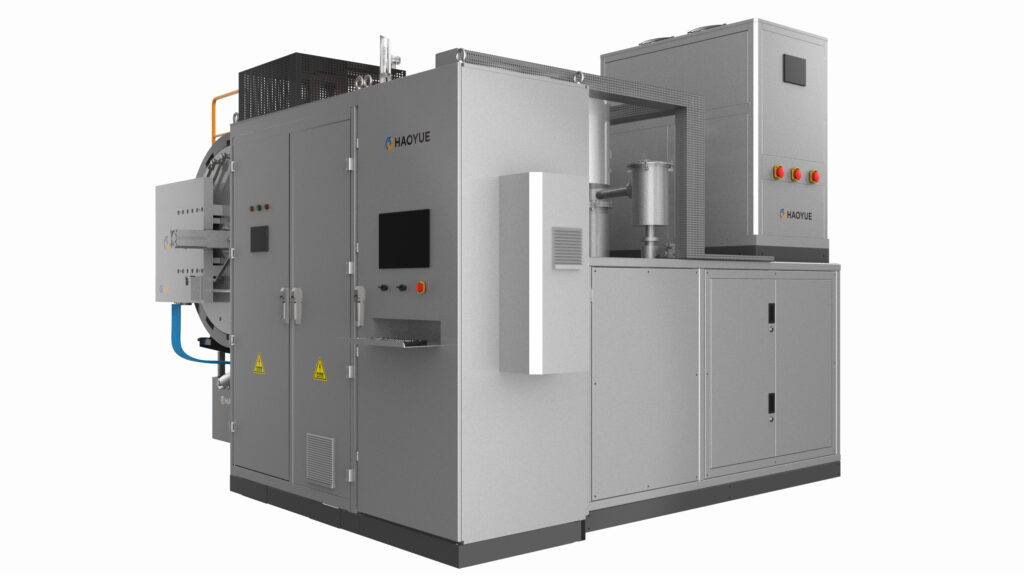
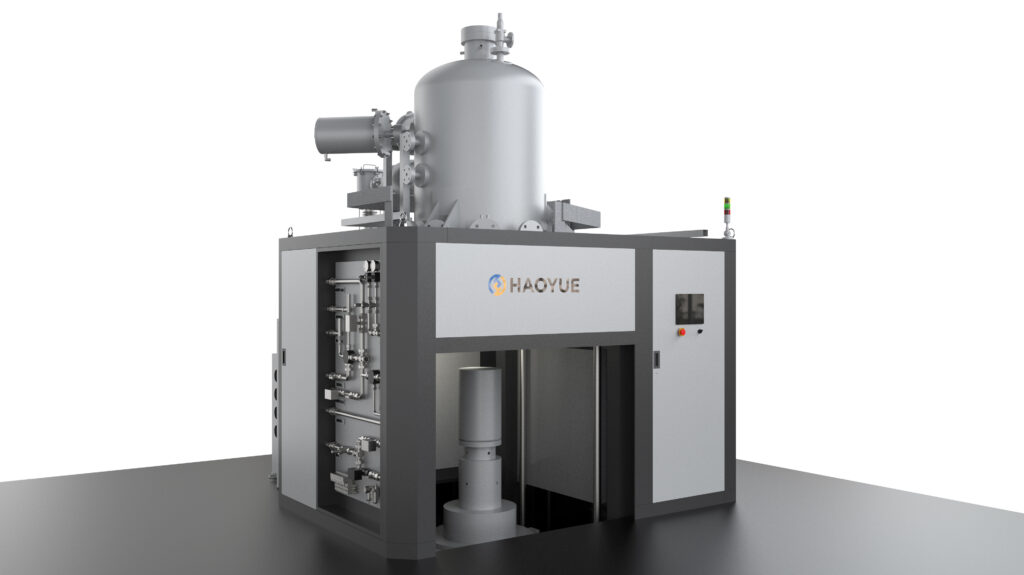
A vacuum heat treatment furnace manufacturer designs systems that evacuate air and other reactive gases from the processing chamber. This vacuum environment prevents oxidation and nitridation of the titanium surface, eliminating the formation of the brittle alpha-case layer. Furthermore, vacuum furnaces offer:
- Exceptional Temperature Uniformity: Advanced heating elements and insulation ensure consistent temperatures throughout the workload, critical for uniform microstructural development.
- Precise Temperature Control: PID controllers and sophisticated sensor arrays allow for very tight temperature tolerances, essential for hitting specific phase transformation points.
- Controlled Cooling Rates: Many vacuum furnaces incorporate high-pressure gas quenching systems, allowing for rapid and reproducible cooling rates, essential for solution treatment.
- Clean Processing Environment: The absence of contaminants in a vacuum leads to cleaner parts with superior surface finish and mechanical properties.
For complex geometries or large batches, a reliable vacuum furnace manufacturer offers customized solutions that meet the stringent requirements of both aerospace and medical industries. The investment in such precision equipment ensures the integrity and performance of high-value titanium components.
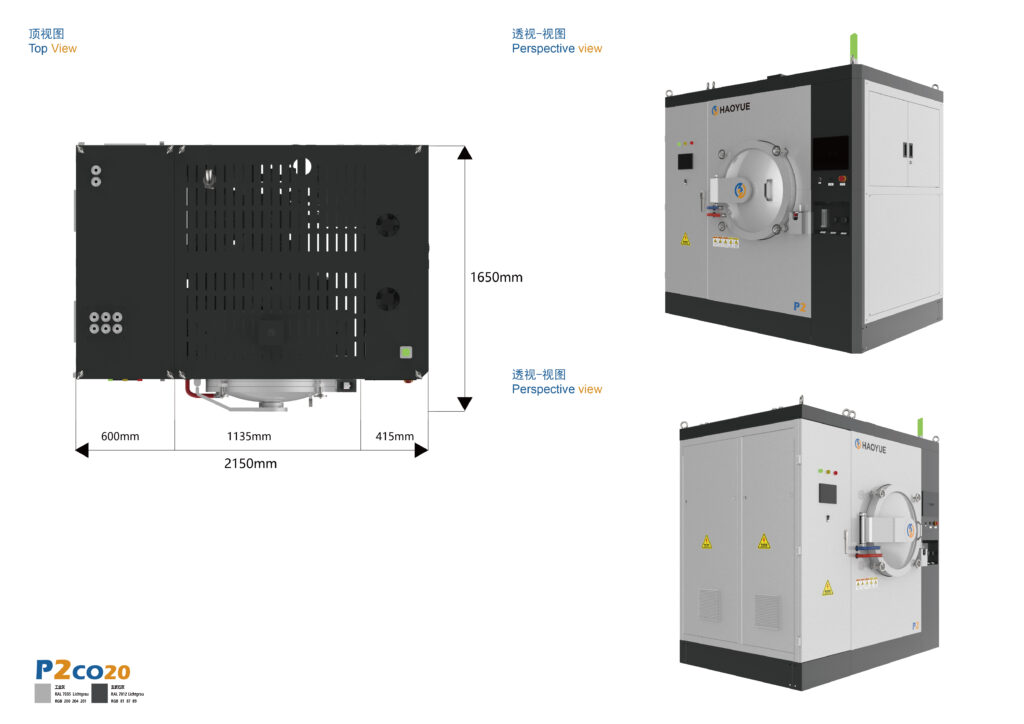
HAOYUE Furnace Technical Parameters
As a leading vacuum heat treatment furnace manufacturer, HAOYUE provides advanced solutions for titanium alloy processing. A typical HAOYUE vacuum heat treatment furnace designed for demanding applications like aerospace and medical components might feature the following technical parameters:
- Model Series: HY-VHT Series
- Working Temperature Range: 600°C to 1400°C (customizable for specific titanium alloys)
- Ultimate Vacuum: 6.7 x 10^-3 Pa (5 x 10^-5 Torr)
- Leak Rate: ≤ 1.33 Pa/h (1 x 10^-2 Torr/h)
- Temperature Uniformity: ±3°C within the effective heating zone at target temperature
- Heating Zone Dimensions: Customizable, e.g., Ø600mm x 900mm (H), Ø900mm x 1200mm (H), or horizontal configurations
- Heating Elements: Graphite (for temperatures up to 2200°C) or Molybdenum/Tungsten (for cleaner environments, up to 1600°C)
- Insulation: Multi-layer graphite felt or metallic reflective shields
- Cooling System: High-pressure inert gas quenching (e.g., Nitrogen or Argon), up to 10 Bar, with variable speed blower for controlled cooling rates
- Control System: PLC-based with HMI interface, multi-zone temperature control, data logging, and alarm functions
- Safety Features: Over-temperature protection, vacuum interlocks, emergency stop, water pressure monitoring
Real Overseas Project Cases
HAOYUE has successfully deployed state-of-the-art vacuum heat treatment furnaces globally, enabling critical advancements in titanium processing for various industries:
- Aerospace Component Manufacturer (Europe): A major European aerospace supplier integrated a custom HAOYUE HY-VHT 900×1200 vertical vacuum furnace for the solution treatment and aging of Ti-6Al-4V landing gear components. The furnace’s advanced gas quenching system achieved the required cooling rates, significantly improving the fatigue life and strength of the parts, leading to AS9100 certification for their heat treatment processes.
- Medical Implant Producer (North America): A leading North American medical device company specializing in orthopedic implants acquired a HAOYUE HY-VHT 600×900 horizontal vacuum furnace. This system is used for annealing and stress relief of titanium spinal fusion devices and dental implants. The ultra-clean vacuum environment ensured zero alpha-case formation, critical for biocompatibility and long-term implant success, meeting ISO 13485 standards.
- Automotive Performance Parts Manufacturer (Asia): An Asian manufacturer of high-performance automotive components, including titanium exhaust systems and engine valves, installed a HAOYUE HY-VHT batch furnace. The furnace’s precise temperature control allowed for various annealing and stabilization treatments of complex titanium geometries, enhancing ductility for forming operations and improving high-temperature stability for engine applications.
- Research & Development Institute (Middle East): A prominent R&D institute in the Middle East procured a HAOYUE laboratory-scale vacuum heat treatment furnace for experimental work on novel titanium alloys and additive manufactured titanium components. The system’s versatility and precise control enabled them to explore new heat treatment cycles, contributing to the development of next-generation materials.
Frequently Asked Questions about Titanium Alloy Heat Treatment
Q1: Why is a vacuum environment essential for titanium alloy heat treatment?
A1: Titanium is highly reactive with oxygen and nitrogen at elevated temperatures. In an air environment, this reactivity leads to the formation of a brittle surface layer called ‘alpha-case,’ which severely degrades the material’s mechanical properties, especially fatigue strength. A vacuum environment prevents this oxidation and nitridation, preserving the material’s integrity and ensuring optimal performance.
Q2: What is the primary difference between solution treatment and annealing for titanium alloys?
A2: Solution treatment aims to dissolve alloying elements into the matrix and achieve a homogeneous, supersaturated structure, which is then rapidly quenched. This prepares the material for subsequent aging to increase strength. Annealing, conversely, is typically performed to relieve internal stresses, restore ductility, refine grain structure, or achieve microstructural stability, generally without the intent of significant precipitation hardening, and often involves slower cooling rates.
Q3: Can all titanium alloys be strengthened by aging?
A3: No. Only alpha-beta and beta titanium alloys can be significantly strengthened by aging (precipitation hardening). Alpha alloys, being primarily composed of the stable alpha phase, do not possess the necessary metastable beta phase or supersaturated solid solution required for the formation of strengthening precipitates during aging. Their properties are typically optimized through annealing.
Q4: How does titanium alloy heat treatment impact its use in medical implants?
A4: For medical implants, heat treatment is crucial for optimizing strength, fatigue resistance, and ensuring surface integrity for biocompatibility. Precise control of solution treatment and aging cycles can tailor the mechanical properties to withstand physiological loads, while processing in a vacuum prevents the formation of an alpha-case layer, which could compromise the implant’s interaction with the body and its long-term performance.
The mastery of titanium alloy heat treatment is not merely a manufacturing step; it is a sophisticated science that unlocks the full potential of these extraordinary materials. By carefully controlling temperature profiles, holding times, and cooling rates within advanced vacuum furnaces, industries can transform raw titanium into components with unparalleled performance characteristics. This meticulous approach ensures that whether a titanium part is soaring through the atmosphere in an aircraft or providing stability within the human body, it performs with the utmost reliability and efficiency, continuously pushing the boundaries of what is possible in engineering and medicine.
Related Products & Services
Looking for high-quality vacuum furnace solutions? Contact HaoYue Group today.
Related Products & Services
Looking for high-quality vacuum furnace solutions? Contact HaoYue Group for more information.
Related Products & Services
Looking for high-quality vacuum furnace solutions? Contact HaoYue Group for more information.
Frequently Asked Questions
Why is a vacuum furnace essential for titanium alloy heat treatment?
A vacuum furnace is crucial because it prevents contamination from atmospheric gases like oxygen and nitrogen, which can form a brittle alpha-case layer on titanium alloys. This layer compromises mechanical properties and fatigue performance, so precise atmosphere control during heat treatment is vital to maintain the material's integrity.
What makes alpha-beta titanium alloys more versatile compared to other types?
Alpha-beta titanium alloys, like Ti-6Al-4V, contain both alpha and beta phases, allowing for a wide range of mechanical properties through heat treatments. The beta phase enables solution treatment and aging, significantly enhancing strength and ductility, making these alloys suitable for diverse applications.
How does the heat treatment of beta titanium alloys differ from that of alpha alloys?
Beta titanium alloys are more amenable to strengthening through solution treatment and aging due to their higher volume fraction of the beta phase, which can transform into fine alpha precipitates. In contrast, alpha alloys primarily undergo annealing to relieve stress and refine grain structure, as they lack significant beta phase for age hardening.
What role does microstructural evolution play in titanium alloy heat treatment?
Microstructural evolution is central to titanium alloy heat treatment, as controlling phase transformations and microstructure affects mechanical properties. By adjusting heating and cooling rates, engineers manipulate the size, shape, and distribution of phases, tailoring properties like tensile strength, ductility, and fracture toughness for specific applications.
Why are titanium alloys favored in aerospace and medical industries?
Titanium alloys are favored for their exceptional strength-to-weight ratio, corrosion resistance, and biocompatibility. These properties are crucial in aerospace, where material failure is not an option, and in medical applications, where biocompatibility is essential for implants and devices. Heat treatment further enhances these properties, optimizing performance for demanding uses.