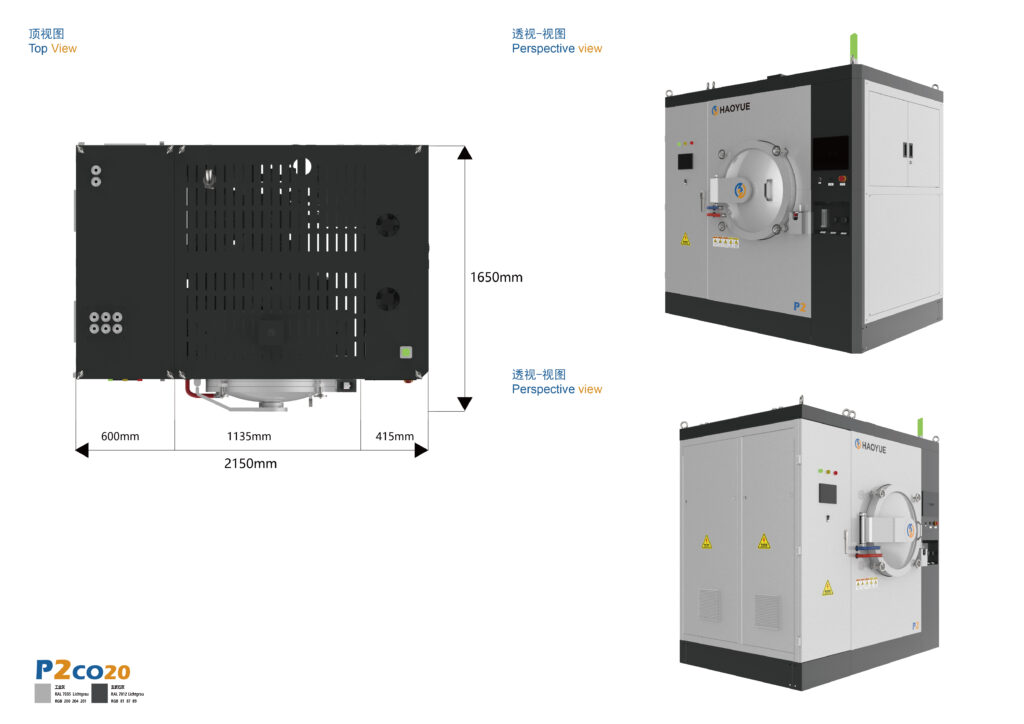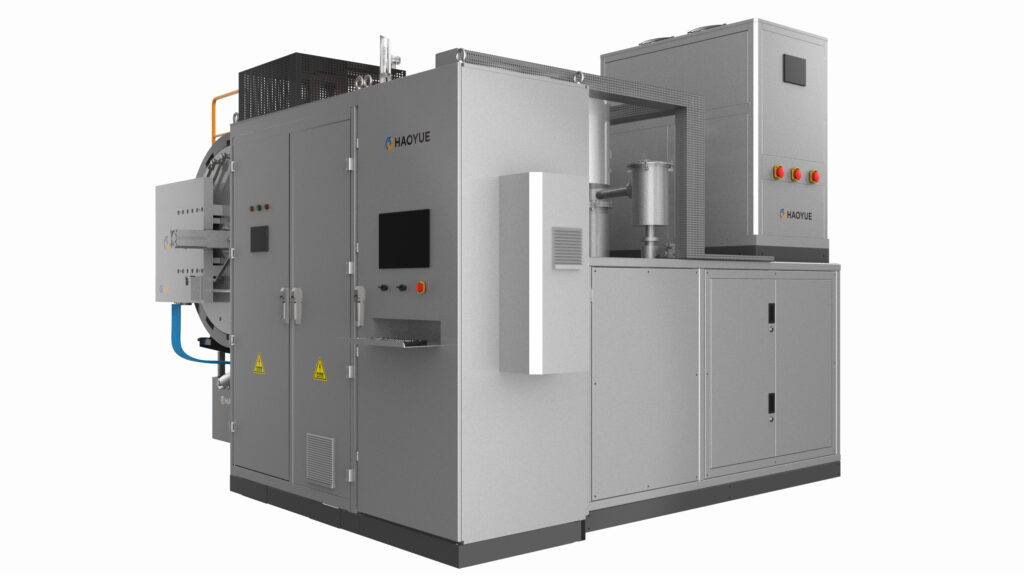






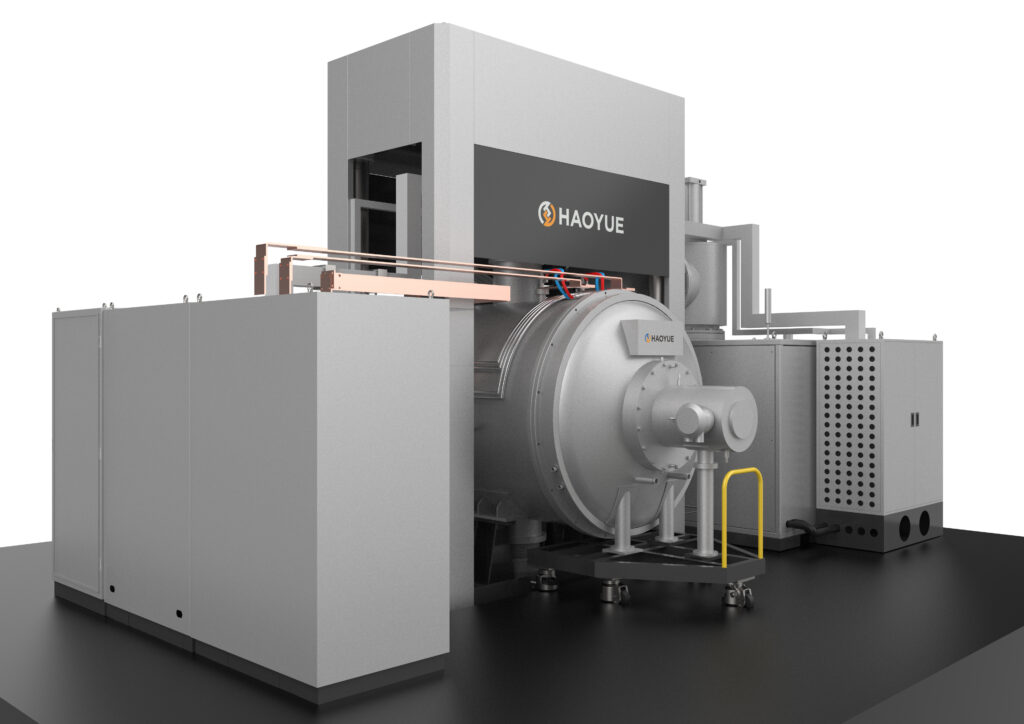
A diffusion bonding furnace is a vacuum furnace that joins two clean, closely fitted metal surfaces in the solid state — applying heat and uniaxial pressure until atoms diffuse across the interface and the original bond line disappears. No filler metal is used, and the base metal never melts.
That sounds simple. In practice, most diffusion bonding failures have nothing to do with the furnace itself — they trace back to surface preparation, platen parallelism, or a hold time that was cut short to hit a production schedule. This guide covers how the process actually works, the parameters that matter, and how to decide between diffusion bonding and brazing.
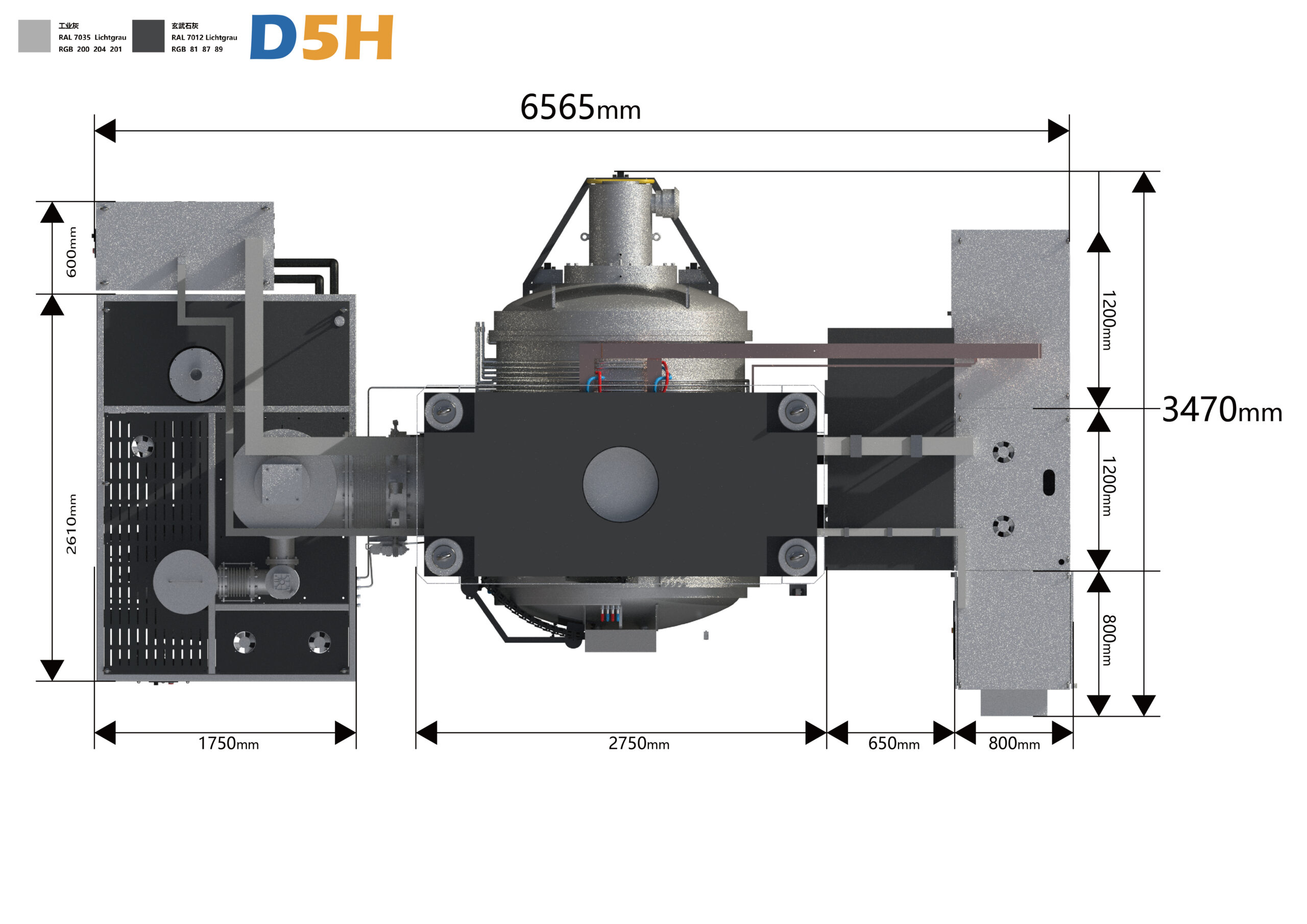
What Is Diffusion Bonding?
Diffusion bonding (also called diffusion welding) is a solid-state joining process. Two parts with matching, polished surfaces are brought into contact under pressure and heated — typically to 0.5–0.8 of the material’s absolute melting temperature. Over time, atoms migrate across the interface, voids shrink and close, and the joint becomes metallurgically continuous with the base metal.
Because nothing melts, there is no cast structure, no filler layer, and no heat-affected zone in the conventional fusion-welding sense. A well-made diffusion bond in Ti-6Al-4V can reach almost the full strength of the parent material, and the joint survives subsequent heat treatment and service temperatures that would destroy a brazed assembly.
How the Process Works: Three Overlapping Stages
Understanding the stages explains why surface prep dominates the result.
1. Asperity contact and deformation. On a microscopic scale, even a polished surface is a field of peaks. Pressure — typically 3–20 MPa uniaxial — flattens these peaks by plastic flow and creep, converting point contacts into real contact area.
2. Interface and grain-boundary diffusion. At temperature, atoms move along the interface and along grain boundaries. Voids shrink, and the original bond line begins to migrate as grains grow across it.
3. Void elimination and grain growth. With sufficient hold time — usually 1–4 hours — residual voids close completely and grains straddle the interface. At this point the bond line is no longer visible in a metallographic section, which is the practical definition of a complete bond.
If you stop after stage 1, you get a “kissing bond”: it may pass a visual check and fail in service. This is why NDT matters (see below).
Key Process Parameters
| Parameter | Typical range | Why it matters |
|---|---|---|
| Surface finish | Ra ≤ 0.4 µm (aerospace work often ≤ 0.2 µm) | Below this, real contact area collapses and unbonded patches appear |
| Flatness / fit-up | Within a few micrometres over the bond area | Gaps must close by diffusion, not by filler flow |
| Temperature | 0.5–0.8 × Tm (absolute) | Too low = no diffusion; too high = grain growth, distortion |
| Uniaxial pressure | 3–20 MPa | Drives asperity collapse and void closure; must be parallel |
| Vacuum level | ≤ 10⁻² Pa; ≤ 10⁻³ Pa for titanium and reactive alloys | Prevents oxide re-formation at temperature |
| Hold time | 1–4 h typical | Diffusion is time-dependent; under-holding is the most common shortcut |
| Temperature uniformity | ±5 °C across the hot zone | Determines batch-to-batch repeatability on large parts |
| Cooling | Controlled, under load or inert gas | Affects residual stress and final microstructure |
Diffusion Bonding vs. Brazing vs. Hot Pressing
| Diffusion bonding | Brazing | Vacuum hot pressing | |
|---|---|---|---|
| Filler metal | None | Yes | None |
| Base metal melts | No | No | No |
| Joint composition | Same as base metal | Filler remains as a distinct layer | N/A (consolidation, not joining) |
| Service temperature ceiling | Base metal limit | Limited by filler remelt | N/A |
| Surface prep demand | Very high | Low to moderate | Moderate |
| Gap tolerance | Very low | High (filler fills gaps) | N/A |
| Cycle time | Hours | Minutes to hours | Hours |
| Typical use | Titanium structures, dissimilar metals, microchannel plates | High-volume assemblies, forgiving tolerances | Powder consolidation, ceramic densification |
The decision usually comes down to one question: can you tolerate a filler metal in service? If yes, brazing is faster and cheaper. If no — because of temperature, corrosion, intermetallic formation, or a customer specification — diffusion bonding is the route.
Common Defects and Their Real Causes
- Unbonded areas / kissing bonds — surface finish or cleanliness. Degrease, handle with gloves, and load quickly; a fingerprint is a bond defect.
- Residual voids — hold time too short, or pressure too low for the cross-section.
- Brittle intermetallic layers — joining dissimilar metals without a suitable interlayer (Ni, Cu, or Ag, depending on the pair).
- Distortion — non-parallel platens or uneven thermal profile. Check platen parallelism before blaming the recipe.
- Excessive grain growth — over-temperature or over-long holds, sacrificing mechanical properties.
Inspection note: ultrasonic C-scan is the standard non-destructive method for verifying bond coverage, usually backed by metallographic sectioning of a process coupon from the same run.
Typical Applications
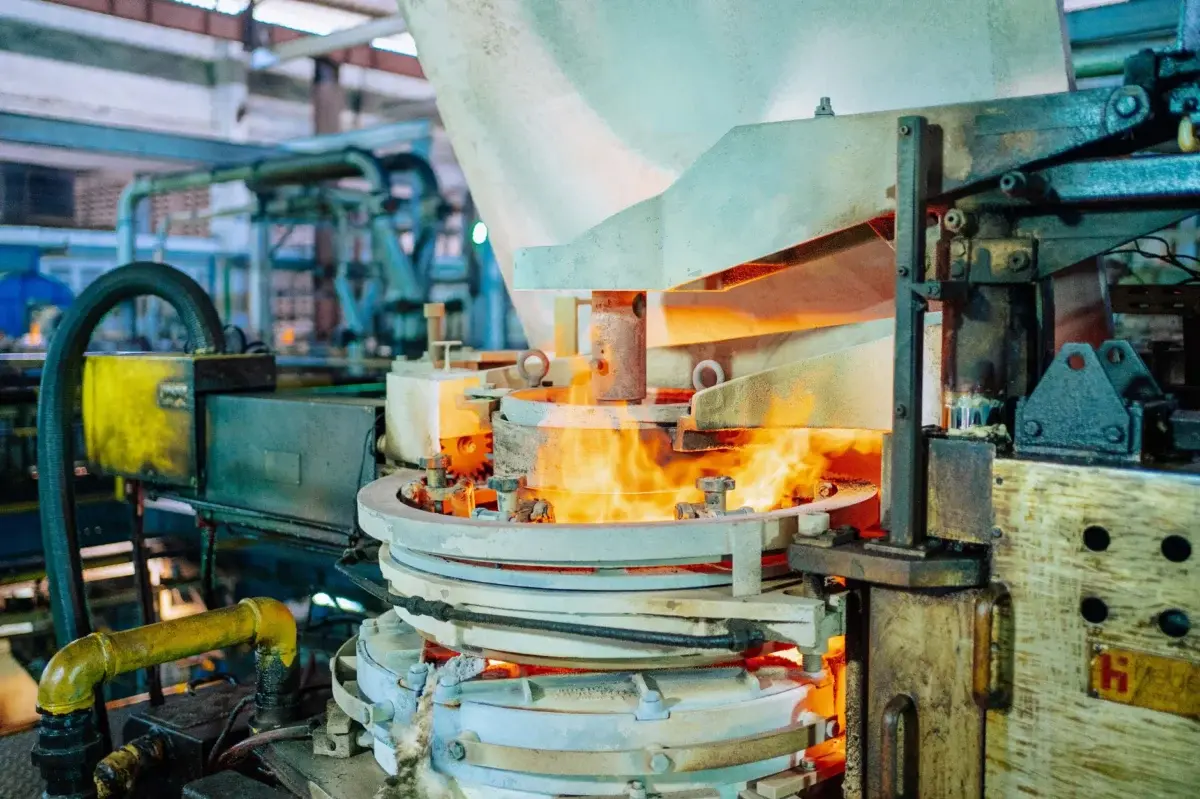
- Aerospace: superplastically formed / diffusion bonded (SPF/DB) titanium structures, hollow fan blades, honeycomb sandwich panels
- Dissimilar metals: copper-to-aluminium transitions, titanium-to-stainless joints using interlayers
- Thermal management: microchannel heat exchangers, cold plates, conformal cooling channels in tooling
- Energy and research: fusion and reactor components, refractory metal assemblies (W, Mo)
- Ceramic-to-metal: with active interlayers or matched expansion designs
When Diffusion Bonding Is the Wrong Choice
Be honest about the limits: cycle times are measured in hours; part size is bounded by the platen; surface preparation is expensive and slow; and for high-volume, loose-tolerance assemblies, brazing or welding will beat it on cost every time. Diffusion bonding is a precision process, not a general-purpose one.
FAQ
What is the difference between diffusion bonding and diffusion welding?
They describe the same solid-state mechanism and are often used interchangeably. “Diffusion welding” tends to appear in welding standards and literature; “diffusion bonding” is more common in aerospace, vacuum furnace and manufacturing contexts.
Can a diffusion bonding furnace join dissimilar metals?
Yes, but usually through an interlayer. Nickel, copper or silver interlayers are used to block brittle intermetallic formation between alloys that would otherwise react badly.
How strong is a diffusion bond?
A properly made bond approaches parent-metal strength — frequently 90–100% in titanium alloys — because there is no filler or cast structure at the joint.
What vacuum level does diffusion bonding need?
Typically 10⁻² Pa or better. Titanium, aluminium and other reactive alloys generally require 10⁻³ Pa or better to prevent oxide re-formation during the hold.
How long does a diffusion bonding cycle take?
Plan on hours. Heating, a 1–4 hour hold at temperature, and controlled cooling mean a full cycle is a shift, not a coffee break.
Can ceramics be diffusion bonded?
Yes, at higher temperatures and often with active metal interlayers — though for ceramic powder consolidation, hot pressing or gas pressure sintering is usually the more practical route.
Specifying a Diffusion Bonding Furnace: A Short Checklist
- Load frame capacity and parallelism at temperature — not just at room temperature.
- Hot zone material and uniformity — graphite vs. refractory metal, and verified ±5 °C or better across the working volume.
- Vacuum system — ultimate pressure, leak rate, and pump-down time under load.
- Process control and data logging — aerospace work requires full traceability of temperature, pressure and vacuum for every run.
- Platen size vs. your largest part — with margin for future work.
- Cooling control — programmable cooling under load.
Matching the furnace to the material system is where most of the value sits. If you are evaluating a diffusion bonding furnace for a specific alloy or joint design, the most reliable next step is a trial run on your own parts.
→ Related equipment: P Series Graphite Vacuum Hot Pressing Furnace · Gas Pressure Sintering Furnace · Vacuum Sintering Furnace
Have a joint you are trying to qualify? Send us the material pair and section size — we run sample trials in our own lab.