





Spark plasma sintering (SPS) — also called field-assisted sintering technique (FAST) — is a powder consolidation method that passes pulsed direct current through a conductive die and, for conductive powders, through the powder itself, while applying uniaxial pressure to achieve full density in minutes rather than hours.
The value of SPS is not speed for its own sake. It is that densification and grain growth are competing processes, and a short cycle lets you close porosity before grains can coarsen. If your material’s properties live in its microstructure — nanocrystalline ceramics, metastable phases, transparent ceramics, thermoelectrics — that difference is the entire business case.
This guide covers how the process works, the parameters that actually change results, and — just as importantly — where SPS disappoints.
How Spark Plasma Sintering Works
A powder compact is loaded into a conductive die (usually graphite) between two punches. The punches serve as electrodes. A pulsed DC current — low voltage, very high current, often thousands of amps — passes through the die and the powder, while a hydraulic ram applies uniaxial pressure.
Because heat is generated inside the compact rather than radiated from external heating elements, heating rates of 100–300 °C/min are routine, and rates up to 1000 °C/min are achievable with suitable tooling. Total cycles, excluding cool-down, are commonly under an hour.
On the mechanism: there is still no full scientific consensus. The name implies a plasma or spark discharge at particle contacts that cleans oxide surfaces and activates diffusion. Other work attributes the effect largely to Joule heating at contact points, localised high-temperature necks, and electric-field-enhanced diffusion. Practically, the surface-cleaning and rapid-heating effects are what matter — and you should be sceptical of anyone who is certain about the mechanism.
The pulsed nature of the current is not cosmetic. On/off pulse patterns (for example, 12 pulses on, 2 off) influence surface activation, thermal gradients, and how uniformly the compact densifies. Pulse pattern is a real process variable, not a default setting to inherit.
Key Process Parameters
| Parameter | Typical range | Why it matters |
|---|---|---|
| Heating rate | 100–300 °C/min (up to 1000 °C/min) | Determines whether fine microstructure survives; too fast cracks large sections |
| Peak temperature | Material-dependent; up to 2000–2400 °C with graphite tooling | Set by phase requirements, not by machine maximum |
| Uniaxial pressure | 30–100 MPa (higher with reinforced tooling) | Drives particle rearrangement and plastic flow |
| Pulse pattern | e.g. 12:2 on/off, millisecond scale | Affects surface activation and thermal homogeneity |
| Dwell time | 1–20 min, commonly 5–10 min | Longer dwell = more densification but more grain growth |
| Atmosphere | Vacuum or inert gas | Controls oxide behaviour and die life |
| Die / punch material | Graphite standard; SiC or refractory metal for special cases | Sets pressure ceiling and contamination risk |
| Sample size | Typically Ø10–100 mm; larger on production machines | Geometry constraint — see limitations |
A caution on temperature: pyrometers and thermocouples read the die, not the sample. The offset varies with die geometry and heating rate and can be tens of degrees. Calibrate against a reference — otherwise your “1200 °C” is not the sample’s 1200 °C.
SPS vs. Conventional Sintering vs. Hot Pressing vs. HIP
| SPS / FAST | Conventional sintering | Vacuum hot pressing | HIP | |
|---|---|---|---|---|
| Heating source | Internal (pulsed DC) | External elements | External elements | External + gas pressure |
| Heating rate | Very high (100–1000 °C/min) | Low (5–20 °C/min) | Low | Low |
| Cycle time | Minutes to <1 h | Hours to tens of hours | Hours | Hours |
| Grain growth | Minimal | Significant | Moderate | Moderate |
| Pressure | Uniaxial, 30–100 MPa | None (pressureless) | Uniaxial | Isostatic, 100–200 MPa |
| Shape complexity | Limited by die | High | Limited | High |
| Batch size | Small | Large | Small to medium | Medium to large |
| Best for | Fine microstructures, difficult materials, R&D | High-volume production | Large simple shapes, diffusion bonding | Post-densification, complex shapes |
A common and sensible route is SPS for development, then transfer to conventional sintering plus HIP for production — if the microstructure survives the slower cycle. Always test that assumption before committing to scale-up.
Where SPS Wins
- Nanocrystalline materials — cycles short enough that grains do not coarsen
- Transparent ceramics — full density without the porosity that scatters light
- Thermoelectrics and functional materials — retention of phases that decompose on slow heating
- Difficult-to-sinter composites and refractory systems — WC-Co, TiAl, tungsten and molybdenum alloys, high-entropy alloys
- Rapid composition screening — iterate a formulation in an afternoon instead of a week
Where SPS Falls Short
- Geometry. The die constrains you to discs, cylinders and simple plates. Complex near-net shapes are not what this process does.
- Throughput. Small batches. If your business case depends on volume, run the numbers before you fall in love with the microstructure.
- Carbon contact. Graphite tooling is standard and introduces carbon at the surface. Barrier foils (BN, graphite paper) help but add cost and change thermal behaviour.
- Temperature measurement. Die-reading pyrometry means a systematic offset you must calibrate out.
- Tooling cost. Dies and punches wear. At low volumes, tooling dominates the per-part cost.
- Thermal gradient cracking. Aggressive ramping on large cross-sections causes radial cracks. Back off the ramp as diameter grows.
- Scale-up is not linear. A recipe that works at Ø20 mm does not transfer to Ø100 mm without redevelopment.
Specifying an SPS Machine: What to Ask
- Pulse power supply — maximum current, pulse pattern flexibility, and control stability at temperature.
- Pressure system — rated force, and whether pressure holds stable as the compact densifies.
- Die and punch options — graphite grades, reinforced designs for higher pressure, alternative materials for carbon-sensitive work.
- Atmosphere and vacuum — ultimate vacuum, inert gas handling, and safe venting of reaction products.
- Temperature measurement — pyrometer vs. thermocouple, where it reads, and how the supplier recommends calibrating.
- Die size vs. your target part — buy for the part you will need in two years, not the coupon you run today.
- Safety — high-current interlocks, cooling water monitoring, and inert handling of fine powders.
FAQ
What is spark plasma sintering used for?
Densifying powders that need fine or unusual microstructures: nanocrystalline ceramics, transparent ceramics, thermoelectrics, refractory alloys, cemented carbides and composites — plus fast R&D composition screening.
Is SPS the same as hot pressing?
Both apply uniaxial pressure in a die. SPS heats internally with pulsed current, giving far faster heating, shorter cycles and finer grain structure; conventional hot pressing uses external heating elements and is slower but handles larger and simpler parts economically.
Does an actual plasma form during SPS?
It is debated. The original theory invokes spark discharge and plasma at particle contacts; much of the observed behaviour is also explained by Joule heating at contact points and electric-field effects. Treat the mechanism as unresolved and optimise the parameters empirically.
What pressure and temperature does SPS use?
Commonly 30–100 MPa uniaxial, with peak temperatures set by the material — graphite tooling allows up to roughly 2000–2400 °C, though most work sits well below that.
Can SPS be used for production?
For small, high-value parts, yes. For high-volume or complex-geometry parts, conventional sintering plus HIP is usually more economical.
What limits sample size in SPS?
Die strength, punch current density, and thermal gradients: as diameter increases, the current path and temperature distribution become harder to control, which is why large compacts need slower ramps and redeveloped recipes.
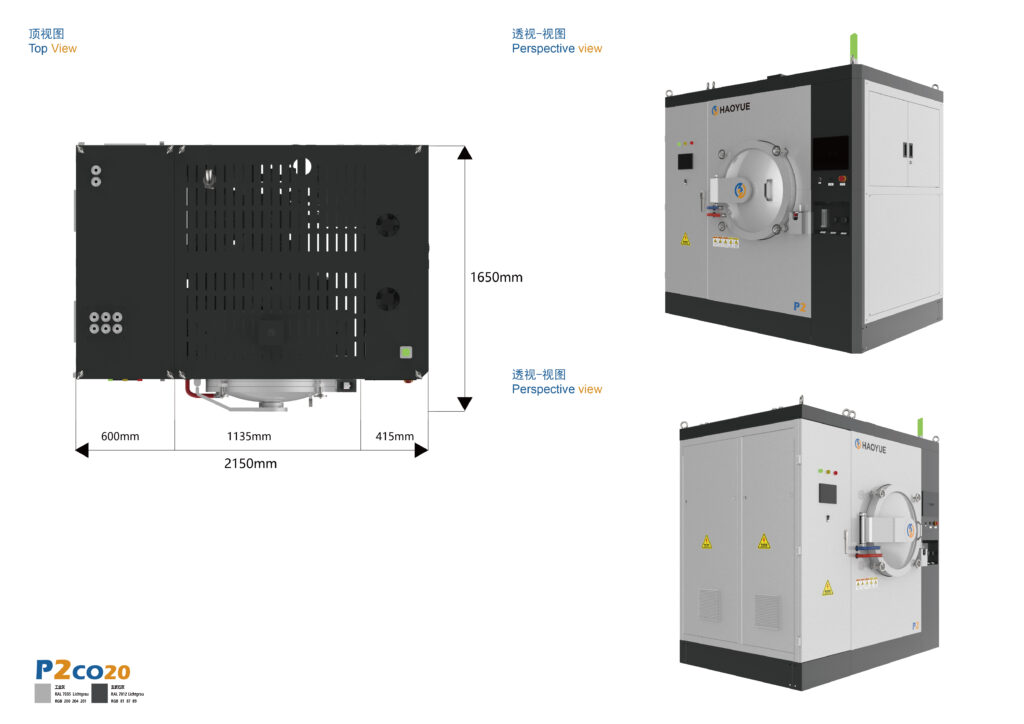
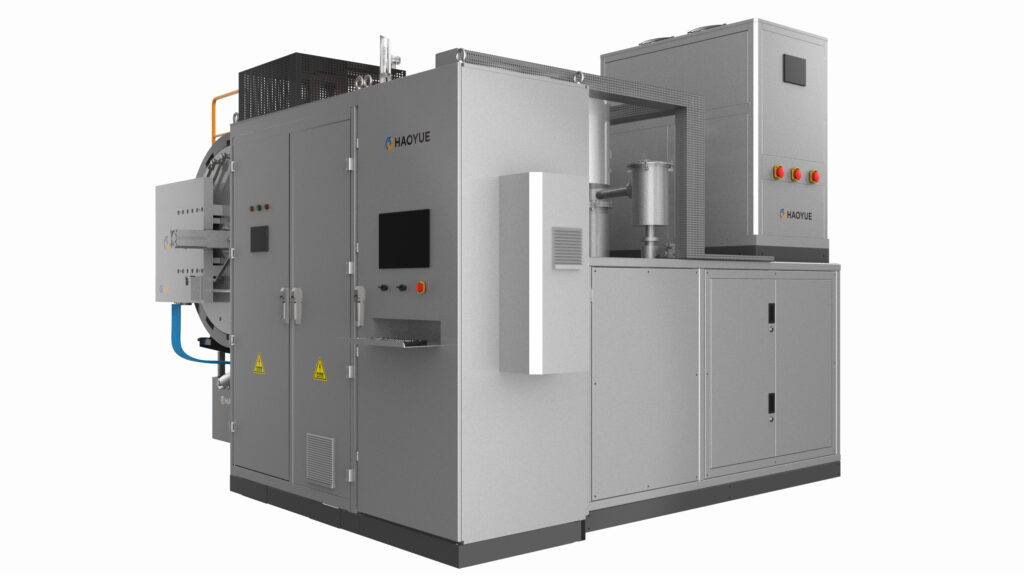
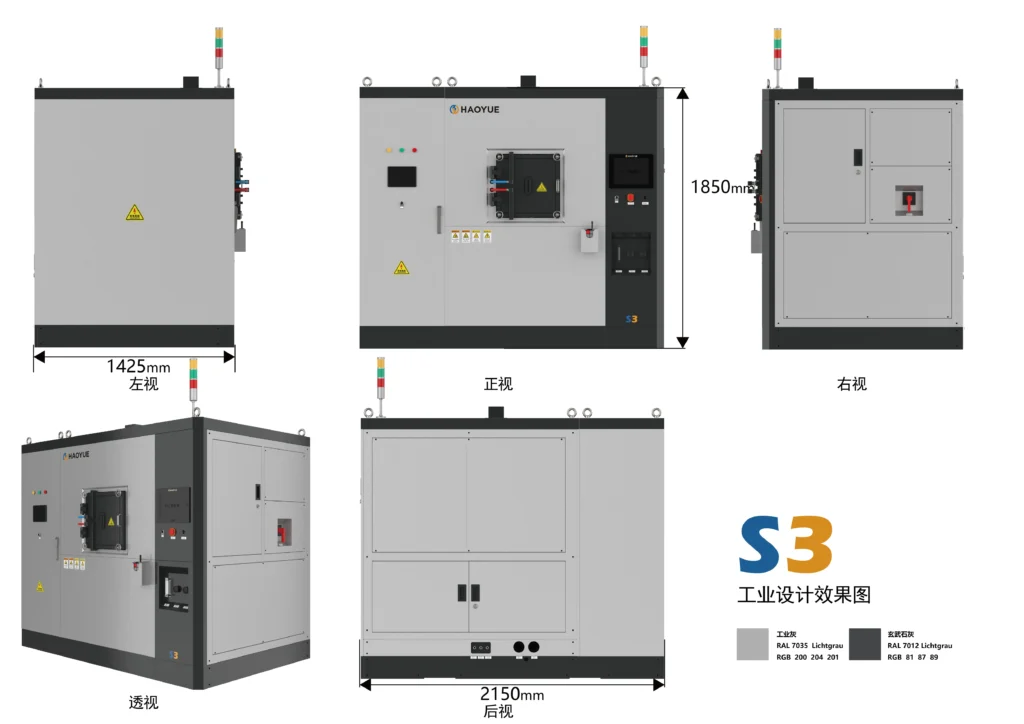
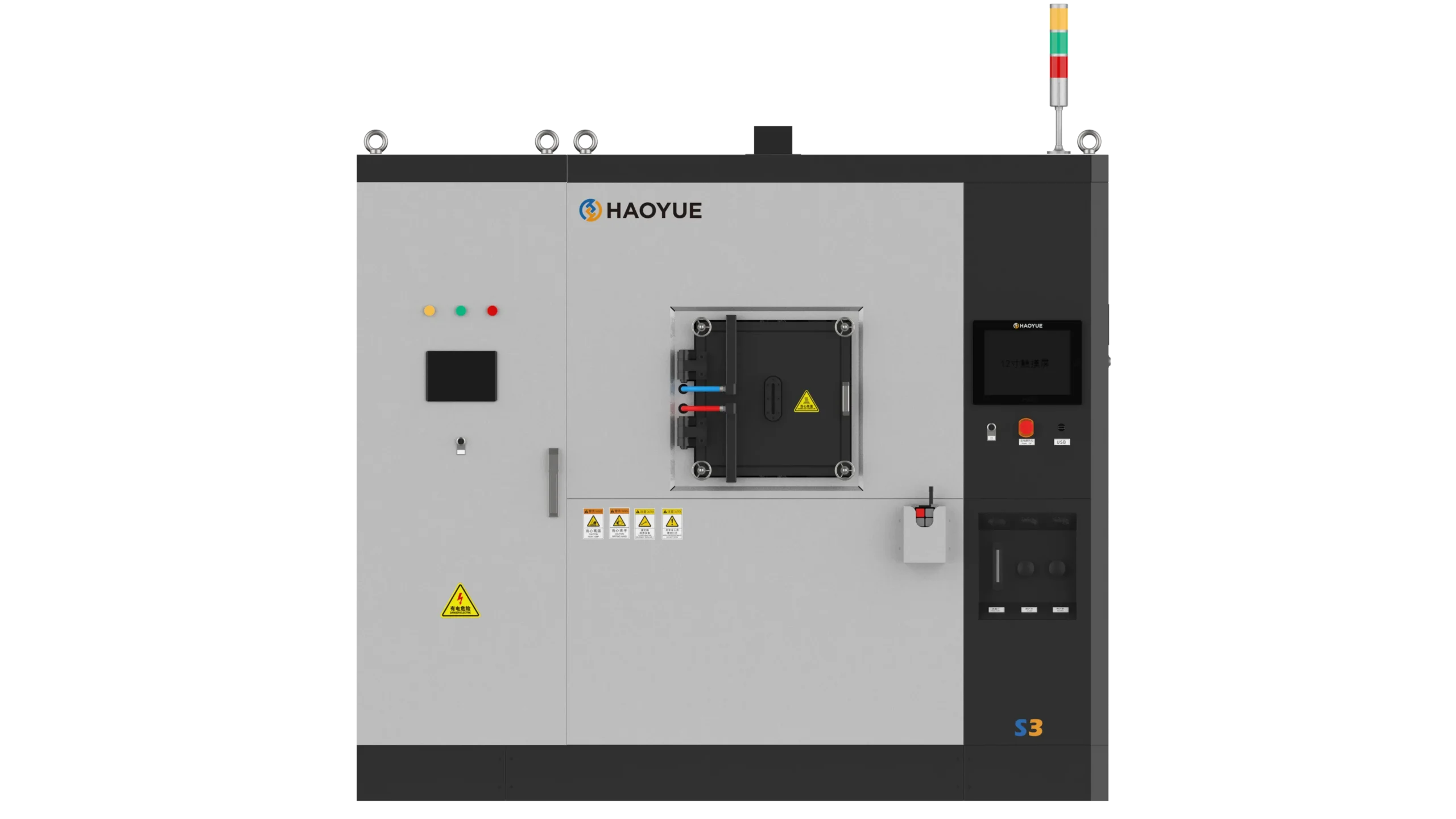
→ Related equipment: S2 SPS Sintering System · P Series Graphite Vacuum Hot Pressing Furnace · Gas Pressure Sintering Furnace
Evaluating SPS for a specific material system? The honest test is to run your own powder — we run sample trials in our in-house lab.