





How to Choose a Vacuum Sintering Furnace for Powder Metallurgy Applications
Selecting the right vacuum sintering furnace for powder metallurgy (PM) directly determines your final part density, mechanical properties, and production economics. This guide covers the essential technical parameters every procurement engineer should evaluate before making a purchase decision.
Critical Technical Parameters
When evaluating vacuum sintering furnaces for PM, focus on these five specifications:
| Parameter | Typical Range | Impact on PM Parts |
|---|---|---|
| Maximum Temperature | 1600-2200°C | Determines which materials can be fully sintered |
| Temperature Uniformity | ±5°C or better | Ensures consistent density across the load |
| Ultimate Vacuum | 10⁻¹ to 10⁻³ Pa | Controls oxidation and surface quality |
| Cooling Rate | Up to 6 bar gas quench | Affects cycle time and microstructure |
| Hot Zone Material | Graphite / Molybdenum / Ceramic | Compatibility with binder removal stage |
Matching Furnace Type to Your PM Process
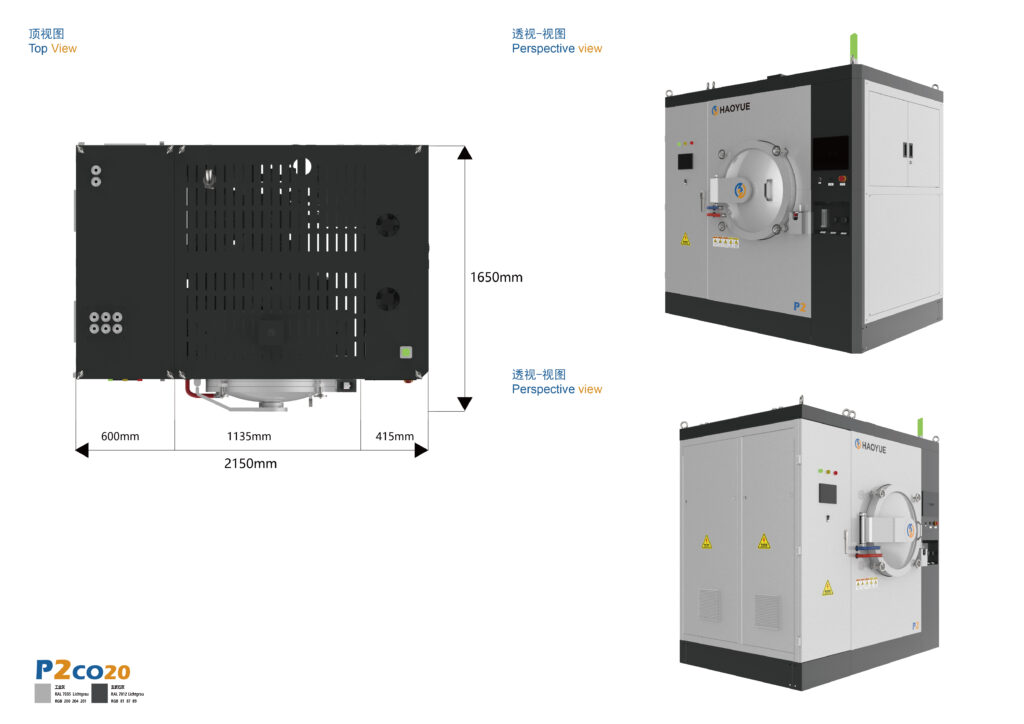
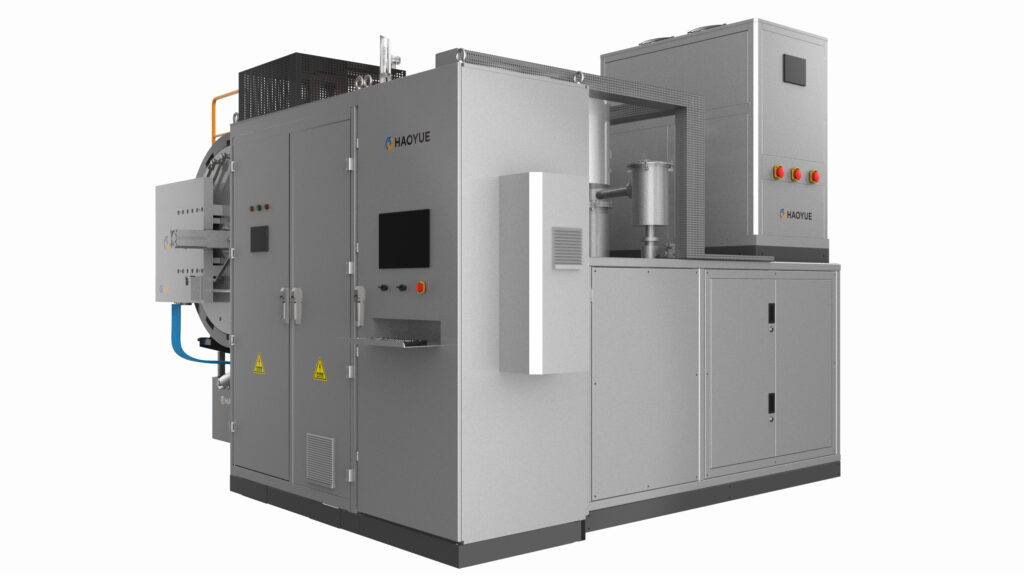
For MIM (Metal Injection Molding): Choose a furnace with integrated binder removal capability (catalytic or thermal debinding). The transition from debinding to sintering must occur without exposing the part to air. HAOYUE MIM furnaces include a dedicated debinding module with controlled atmosphere flow.
For Press-and-Sinter: Standard vacuum sintering furnaces with graphite hot zones work well for most ferrous and stainless steel PM alloys. Key consideration: the heating rate must be programmable to avoid thermal shock in green compacts.
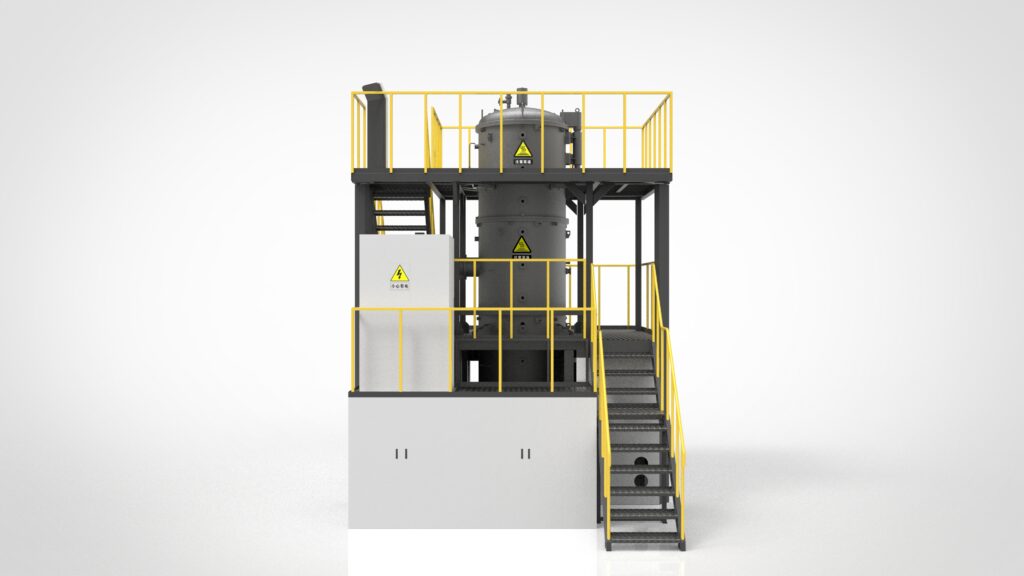
For Hard Metals (WC-Co, cermets): Requires precise carbon potential control and dehydrogenation stages. A molybdenum or graphite hot zone with gas quench above 6 bar is recommended.
Common Selection Mistakes
- Overlooking binder removal: If your feedstock contains binder, a standard vacuum furnace without debinding will cause carbon contamination.
- Ignoring cooling rate: For heat-treatable PM grades, insufficient quench rate leads to soft microstructure and poor wear resistance.
- Undersized hot zone: Production throughput depends on usable tray area, not just chamber dimensions. Always calculate sintering trays per cycle.
- Skipping process simulation: Request a factory acceptance test (FAT) with your actual powder and binder system before final acceptance.
Why Partner with HAOYUE
HAOYUE Group has delivered over 200 vacuum sintering furnaces to powder metallurgy facilities worldwide. Our engineering team provides:
- Custom hot zone configurations for your specific PM alloy system
- Integrated binder removal modules (catalytic and thermal)
- Remote monitoring and predictive maintenance support
- Full FAT and SAT at our Nantong factory
- ISO 9001 and CE-certified manufacturing
Frequently Asked Questions
Q: What vacuum level is needed for sintering stainless steel PM parts?
A: Typically 10⁻¹ to 10⁻² Pa (1 to 0.01 mbar). Lower vacuum levels may cause chromium depletion at sintering temperature.
Q: Can I use the same furnace for debinding and sintering?
A: Yes, if the furnace is designed with a dedicated debinding module. HAOYUE offers combined debinding-sintering furnaces that handle both stages in a single cycle without air exposure.
Q: What is the typical cycle time for MIM parts in a vacuum sintering furnace?
A: Total cycle time (debinding + sintering + cooling) ranges from 8 to 24 hours depending on part thickness, material, and furnace configuration.
Q: How often should heating elements be replaced?
A: Graphite elements typically last 12-24 months in normal PM production. Molybdenum elements can last longer but are more sensitive to oxidation.
Q: Do you offer training for overseas customers?
A: Yes, we provide on-site installation supervision and operator training at your facility, plus remote technical support.
Contact HAOYUE Group: vacuum-sintering.com | lyle@haoyue-group.com | +86-180-6810-6501
Related Products & Services
- Vacuum Sintering Furnace – Advanced sintering solutions from HaoYue Group.
- Vacuum Sintering Furnace for powder metallurgy
Looking for high-quality vacuum furnace solutions? Contact HaoYue Group for more information.
Related Products & Services
- Vacuum Sintering Furnace – Advanced sintering solutions from HaoYue Group.
- Vacuum Sintering Furnace for powder metallurgy
Looking for high-quality vacuum furnace solutions? Contact HaoYue Group for more information.