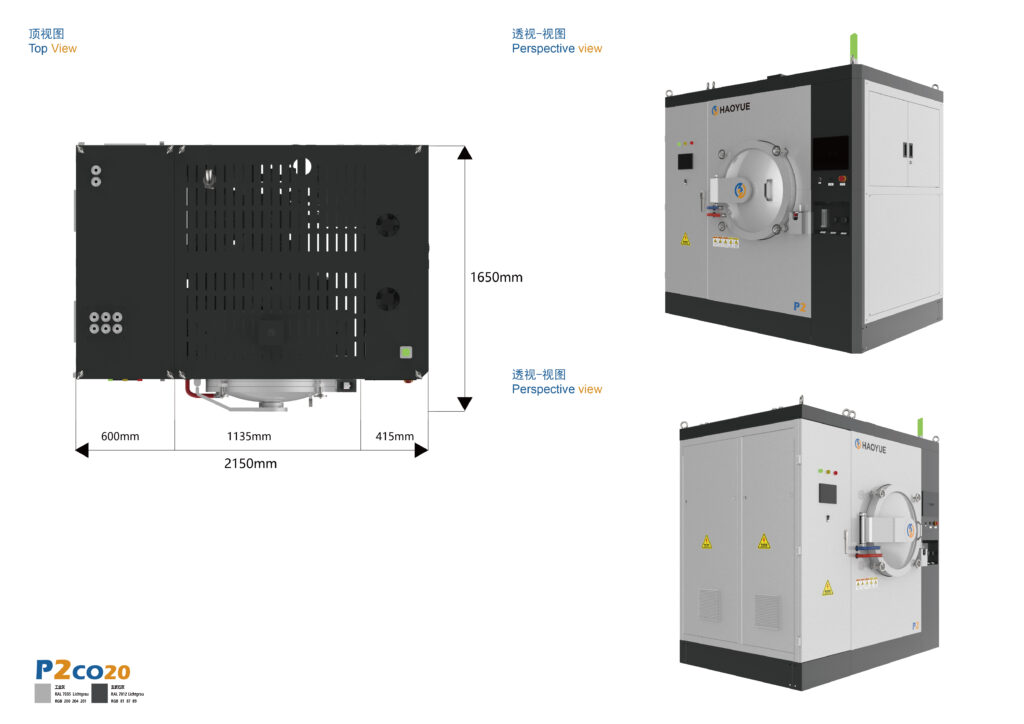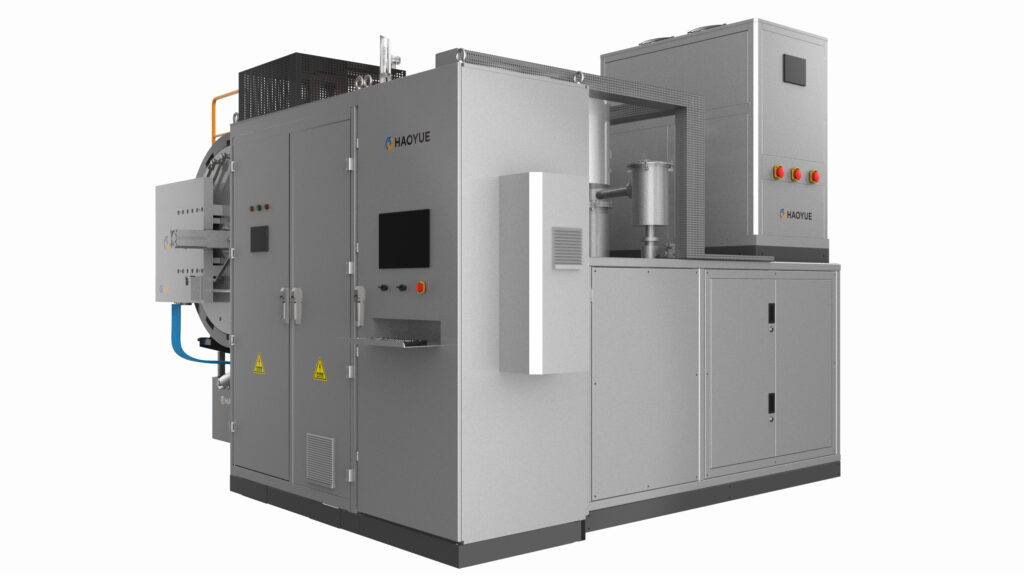






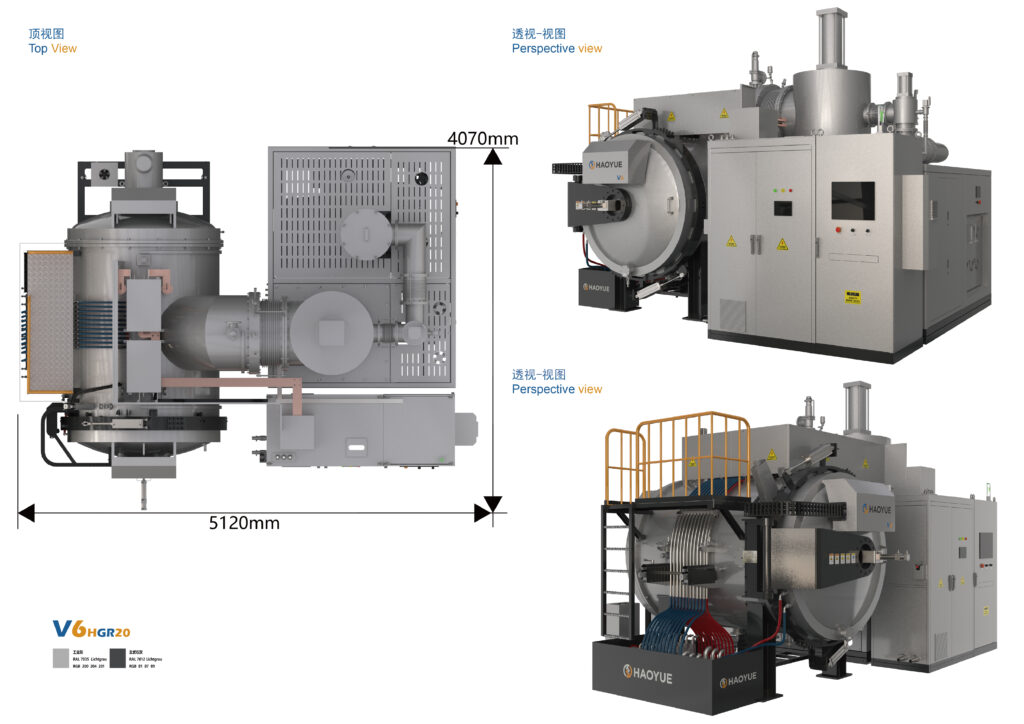
When it comes to processing advanced materials like high-performance steels and superalloys, the precision and integrity of the heat treatment process are paramount. The choice of a vacuum heat treatment furnace is not merely a technical decision but a strategic investment that directly impacts product quality, operational efficiency, and long-term profitability. This comprehensive procurement checklist aims to guide engineers and purchasing managers through the intricate selection process, ensuring that the chosen equipment meets the exacting demands of critical alloy processing.
The Imperative of Precision: Why Vacuum Heat Treatment Matters
Traditional atmospheric heat treatment methods often fall short when dealing with sensitive materials. The presence of oxygen and other reactive gases can lead to undesirable surface reactions such as oxidation, decarburization, and nitriding, which compromise the material’s mechanical properties, fatigue life, and corrosion resistance. Vacuum heat treatment, by contrast, operates in an oxygen-free environment, effectively eliminating these detrimental surface phenomena. This allows for cleaner, brighter parts with superior surface finishes, reducing the need for post-treatment cleaning and machining.
For critical alloys used in aerospace, medical, automotive, and energy sectors, maintaining precise metallurgical control is non-negotiable. Vacuum furnaces offer exceptional temperature uniformity and rapid, controlled cooling, which are crucial for achieving specific microstructures and desired material properties without distortion or cracking. Whether it’s solution annealing superalloys, hardening tool steels, or brazing complex components, the controlled environment of a vacuum heat treatment furnace provides the consistency and repeatability required for high-stakes applications.
Crafting Your Procurement Checklist for a Vacuum Heat Treatment Furnace
The selection of an appropriate vacuum heat treatment furnace requires a meticulous evaluation of various technical specifications, operational considerations, and long-term support. A detailed checklist helps ensure all critical aspects are addressed.
Understanding Your Material Requirements: Steels and Superalloys
The first step in procurement is a thorough understanding of the materials you intend to process. Steels, for instance, encompass a vast range from low-alloy steels to high-speed tool steels and stainless steels, each with unique heat treatment requirements for hardening, tempering, annealing, or stress relieving. For martensitic steels, precise control over heating and quenching rates is vital to achieve desired hardness and minimize distortion. Stainless steels benefit from vacuum processing to prevent chromium carbide precipitation and maintain corrosion resistance.
Superalloys, such as nickel-based, cobalt-based, and titanium alloys, present even greater challenges due to their high-temperature strength, creep resistance, and specific phase transformations. These materials often require precise solutionizing and aging cycles, sometimes involving very slow cooling rates or specific quenching protocols, all demanding exceptional temperature uniformity and vacuum integrity. Understanding these material-specific needs will dictate the furnace’s capabilities, from its maximum operating temperature to its vacuum pumping system and quenching options.
Essential Furnace Features to Evaluate
Once material requirements are clear, focus on the technical features of the vacuum heat treatment furnace itself.
Temperature Uniformity and Control
This is arguably the most critical feature. Inconsistent temperatures across the work zone can lead to varied material properties within a single batch, causing product failures. Look for furnaces with multi-zone heating elements, advanced PID (Proportional-Integral-Derivative) control, and internal gas circulation systems (for high-pressure gas quench) that ensure temperature deviations are kept within extremely tight tolerances, typically +/- 3°C or better, across the entire hot zone.
Vacuum Levels and Pumping Systems
The ultimate vacuum level achievable and the pump-down speed are crucial. Different processes require different vacuum ranges: rough vacuum for initial pump-down, medium vacuum for some tempering, and high to ultra-high vacuum (10^-4 Pa to 10^-6 Pa) for sensitive materials and processes like bright annealing or vacuum brazing. Evaluate the pumping system components – mechanical pumps, roots blowers, diffusion pumps, or turbomolecular pumps – based on your specific vacuum requirements and cycle times. A robust pumping system is a hallmark of a reliable vacuum furnace manufacturer.
Quenching Capabilities
The ability to rapidly and uniformly cool parts is essential for many hardening operations. High-pressure gas quenching, typically using nitrogen or argon, is the most common method in vacuum furnaces. Consider the maximum quench gas pressure (e.g., 6 bar, 10 bar, 20 bar), the gas flow rate, and the design of the gas nozzles for uniform cooling across complex geometries. Some specialized furnaces may offer oil quenching capabilities within a vacuum environment for specific alloys, but gas quenching is generally preferred for its cleanliness and reduced distortion.
Work Zone Dimensions and Load Capacity
The internal dimensions of the furnace hot zone must accommodate your largest parts or desired batch sizes. Consider both the usable volume and the maximum weight capacity. Over-specifying can lead to unnecessary costs, while under-specifying can limit future production capabilities. Think about future expansion plans and choose a size that offers some flexibility.
Advanced Control Systems and Software
Modern vacuum furnaces are equipped with sophisticated control systems. Look for PLC (Programmable Logic Controller) based systems with intuitive Human-Machine Interfaces (HMI), comprehensive data logging capabilities, and recipe management systems. Features like remote monitoring, alarm management, and integration with factory MES (Manufacturing Execution Systems) can significantly enhance operational efficiency and traceability. A good industrial vacuum furnace supplier will offer customizable software solutions.
Energy Efficiency and Environmental Considerations
Operating costs can be substantial. Evaluate the furnace’s insulation package (graphite felt, metallic shields), heating element design, and overall energy consumption. Features like efficient cooling systems and optimized cycle times contribute to lower energy bills. Also, consider the environmental impact, such as inert gas consumption and any waste disposal requirements.
Safety Features and Compliance
Safety is paramount. Ensure the furnace complies with relevant industry standards (e.g., CE, NFPA) and includes essential safety features such as pressure relief valves, emergency stop buttons, interlocks to prevent hazardous operations, and robust fault detection systems. Operator safety and equipment protection should be top priorities for any vacuum heat treatment furnace manufacturer.
Partnering with a Reputable Vacuum Heat Treatment Furnace Manufacturer
The technical specifications are only half the story. The reliability and expertise of the vacuum heat treatment furnace manufacturer are equally critical. A reputable manufacturer offers not just equipment but also comprehensive support throughout the furnace’s lifecycle. Look for companies with a proven track record, extensive R&D capabilities, and a deep understanding of metallurgical processes.
Key factors to consider include their experience with your specific materials and applications, their ability to customize furnace designs to meet unique requirements, and the quality of their after-sales service, including technical support, spare parts availability, and maintenance contracts. A strong partnership with a reliable vacuum furnace manufacturer or industrial vacuum furnace supplier ensures smooth installation, efficient commissioning, and sustained performance over years of operation.
Beyond Heat Treatment: Complementary Vacuum Technologies
While the focus is on a vacuum heat treatment furnace, procurement engineers often encounter related processes that benefit from vacuum technology. For joining applications, especially for dissimilar metals or complex assemblies where high integrity is required, consulting a vacuum brazing furnace manufacturer is essential. These furnaces offer precise temperature control and a clean environment to create strong, void-free joints.
Similarly, for components produced via powder metallurgy, a vacuum sintering furnace manufacturer provides the specialized equipment needed to consolidate metal powders into dense, high-performance parts. For advanced material development, particularly for ceramics and composites, the expertise of an SPS furnace manufacturer (Spark Plasma Sintering) or a hot isostatic press manufacturer is invaluable for achieving superior densification and microstructure control. Understanding these complementary technologies can lead to more holistic solutions for your material processing needs.
HAOYUE Furnace: Technical Parameters and Global Success
HAOYUE’s Advanced Vacuum Heat Treatment Solutions
HAOYUE is committed to delivering state-of-the-art vacuum heat treatment solutions that meet the stringent demands of modern industries. Our furnaces are engineered for precision, reliability, and energy efficiency, catering to a wide array of critical alloys from aerospace superalloys to high-performance tool steels.
Key Technical Parameters:
- Max Operating Temperature: Up to 1600°C (customizable for specific applications).
- Ultimate Vacuum: Achieves 5 x 10^-4 Pa to 1 x 10^-5 Pa, depending on the pumping system configuration.
- Temperature Uniformity: ±3°C across the effective hot zone, ensuring consistent metallurgical properties.
- Heating Zones: Multi-zone independent temperature control for optimal uniformity and precise heating profiles.
- Quenching Gas Pressure: Available with high-pressure gas quenching systems up to 20 bar (290 PSI) using nitrogen or argon, with advanced nozzle designs for uniform cooling.
- Work Zone Dimensions: Highly customizable, with typical standard sizes ranging from Ø400x600mm to 900x900x1200mm, and larger upon request.
- Control System: Integrated Siemens PLC with a user-friendly HMI, offering comprehensive recipe management, real-time data acquisition, and remote diagnostic capabilities.
- Heating Elements: Options include high-purity graphite or molybdenum, selected based on process temperature and material compatibility.
- Insulation: Utilizes multi-layer graphite felt or metallic heat shields for superior energy efficiency and temperature retention.
Real Overseas Project Cases: HAOYUE’s Global Footprint
Case Study 1: Aerospace Component Manufacturer (Europe)
Challenge: A leading European aerospace component manufacturer required a high-capacity vacuum heat treatment furnace for the solutionizing and aging of complex nickel-based superalloy turbine blades. The key demands were exceptional temperature uniformity, minimal distortion, and high throughput to meet demanding production schedules.
Solution: HAOYUE designed and supplied a custom multi-chamber horizontal vacuum furnace equipped with a 15-bar high-pressure gas quenching system and advanced multi-zone heating. The furnace’s sophisticated control system allowed for precise temperature profiling and optimized quench rates tailored to specific alloy compositions.
Impact: The client achieved superior metallurgical properties, significantly reduced part distortion compared to previous methods, and increased their production capacity by 30%. The HAOYUE furnace contributed to improved component longevity and reduced scrap rates, solidifying their position as a top-tier supplier.
Case Study 2: Medical Device Producer (North America)
Challenge: A North American manufacturer specializing in titanium alloy surgical implants needed a vacuum furnace for annealing and stress relieving processes. The critical requirements included an ultra-clean vacuum environment to prevent contamination, precise temperature control for specific microstructures, and full compliance with strict medical industry regulations.
Solution: HAOYUE provided a vertical vacuum furnace with an advanced turbomolecular pumping system, ensuring an ultimate vacuum level of 10^-6 Pa. The furnace featured all-metallic hot zone construction to eliminate carbon contamination, and a highly accurate temperature control system with multiple thermocouples directly monitoring the load.
Impact: The HAOYUE furnace enabled the client to consistently produce biocompatible implants with enhanced mechanical properties and excellent surface finish, meeting all regulatory requirements. The reliability and cleanliness of the process eliminated rework and reduced validation times, streamlining their production.
Case Study 3: Tool Steel Manufacturer (Asia)
Challenge: An Asian tool steel producer sought to upgrade their heat treatment capabilities for large batches of high-speed tool steels. Their primary concerns were achieving uniform hardness throughout large cross-sections, preventing decarburization, and minimizing the risk of quench cracking.
Solution: HAOYUE delivered a robust horizontal vacuum heat treatment furnace featuring a powerful 10-bar gas quenching system with optimized gas flow patterns. The furnace’s large work zone and precise temperature control ensured uniform heating and cooling for heavy loads, while the vacuum environment eliminated surface reactions.
Impact: The client reported a significant improvement in the quality of their tool steels, characterized by consistent hardness, excellent dimensional stability, and bright, clean surfaces. The enhanced processing capabilities led to increased customer satisfaction and a competitive advantage in the high-performance tool market.
Frequently Asked Questions About Vacuum Heat Treatment Furnaces
What distinguishes vacuum heat treatment from atmospheric heat treatment?
Vacuum heat treatment differs primarily by conducting processes in an inert, oxygen-free environment. This eliminates oxidation, decarburization, and other surface reactions common in atmospheric furnaces, resulting in cleaner, brighter parts with superior metallurgical properties, reduced distortion, and often less need for post-processing.
What types of materials benefit most from vacuum heat treatment?
Materials highly sensitive to atmospheric contamination benefit most. This includes high-strength steels (e.g., tool steels, stainless steels), superalloys (nickel-based, cobalt-based, titanium alloys), and refractory metals. For these critical alloys, vacuum processing ensures optimal mechanical properties, corrosion resistance, and surface finish.
How is temperature uniformity achieved in a vacuum heat treatment furnace?
Temperature uniformity is achieved through several design features: multi-zone heating elements with independent power control, advanced PID controllers that precisely regulate power to each zone, and in some cases, internal gas circulation fans that ensure even heat distribution within the hot zone, especially during heating and high-pressure gas quenching.
What is gas quenching, and why is it preferred for many alloys?
Gas quenching is the rapid cooling of parts using an inert gas (typically nitrogen or argon) under pressure within the vacuum furnace. It’s preferred for many alloys because it minimizes distortion, reduces the risk of quench cracking, and provides a cleaner process compared to liquid quenching, while still achieving the desired hardness and microstructure.
What maintenance is typically required for a vacuum heat treatment furnace?
Regular maintenance for a vacuum heat treatment furnace includes inspecting and replacing vacuum pump oil, checking heating elements and insulation for wear, cleaning the furnace chamber, calibrating thermocouples and pressure sensors, and verifying the functionality of safety interlocks and emergency systems. Adhering to the manufacturer’s recommended maintenance schedule is crucial for optimal performance and longevity. A reliable vacuum heat treatment furnace manufacturer provides detailed maintenance protocols and support.
The decision to invest in a vacuum heat treatment furnace is a complex one, requiring careful consideration of technical specifications, material requirements, and long-term support. By meticulously working through this procurement checklist and partnering with an experienced and reputable manufacturer like HAOYUE, organizations can ensure they acquire a system that not only meets their current production needs but also offers the flexibility and reliability to address future challenges in processing critical alloys. This strategic investment will undoubtedly elevate product quality, optimize operational efficiency, and secure a competitive edge in today’s demanding industrial landscape, fostering innovation and pushing the boundaries of material science.
Related Products & Services
- Vacuum Sintering Furnace – Advanced sintering solutions from HaoYue Group.
- SPS Spark Plasma Sintering System – High-performance SPS solutions from HaoYue Group.
- SPS Spark Plasma Sintering System
Looking for high-quality vacuum furnace solutions? Contact HaoYue Group today.
Related Products & Services
- Vacuum Sintering Furnace – Advanced sintering solutions from HaoYue Group.
- SPS Spark Plasma Sintering System – High-performance SPS solutions from HaoYue Group.
- SPS Spark Plasma Sintering System
Looking for high-quality vacuum furnace solutions? Contact HaoYue Group for more information.
Related Products & Services
- Vacuum Sintering Furnace – Advanced sintering solutions from HaoYue Group.
- SPS Spark Plasma Sintering System
- SPS Spark Plasma Sintering System
Looking for high-quality vacuum furnace solutions? Contact HaoYue Group for more information.
Frequently Asked Questions
Why is vacuum heat treatment preferred for critical alloys over traditional methods?
Vacuum heat treatment is preferred because it operates in an oxygen-free environment, eliminating surface reactions like oxidation and decarburization that can compromise mechanical properties. This leads to cleaner parts with superior surface finishes, crucial for maintaining the integrity of critical alloys used in high-stakes industries.
What are the key considerations when selecting a vacuum heat treatment furnace for superalloys?
For superalloys, it's important to evaluate the furnace's ability to handle high temperatures and specific cooling protocols. These materials require precise solutionizing and aging cycles, demanding exceptional temperature uniformity and vacuum integrity. The furnace should support slow cooling rates and specific quenching protocols to achieve desired properties.
How does temperature uniformity impact the quality of heat-treated materials?
Temperature uniformity is critical because inconsistent temperatures can lead to varied material properties within a single batch, potentially causing product failures. Furnaces with multi-zone heating, advanced PID control, and internal gas circulation ensure minimal temperature deviations, crucial for consistent quality in heat-treated materials.
What role does understanding material requirements play in the procurement of a vacuum furnace?
Understanding material requirements is essential as it dictates the furnace's capabilities needed for processing. Different materials like steels and superalloys have unique heat treatment requirements. Knowing these ensures the selected furnace can deliver the necessary temperature control, vacuum integrity, and quenching options for optimal results.
What are the advantages of using vacuum heat treatment for stainless steels?
Vacuum heat treatment for stainless steels prevents chromium carbide precipitation, maintaining corrosion resistance. It also avoids surface oxidation, resulting in cleaner parts with better surface finishes. This process is crucial for applications where maintaining the stainless steel's properties is vital, such as in the medical and aerospace industries.